





 Portuguese
  English
  Spanish
  5 min of reading
  0 comments


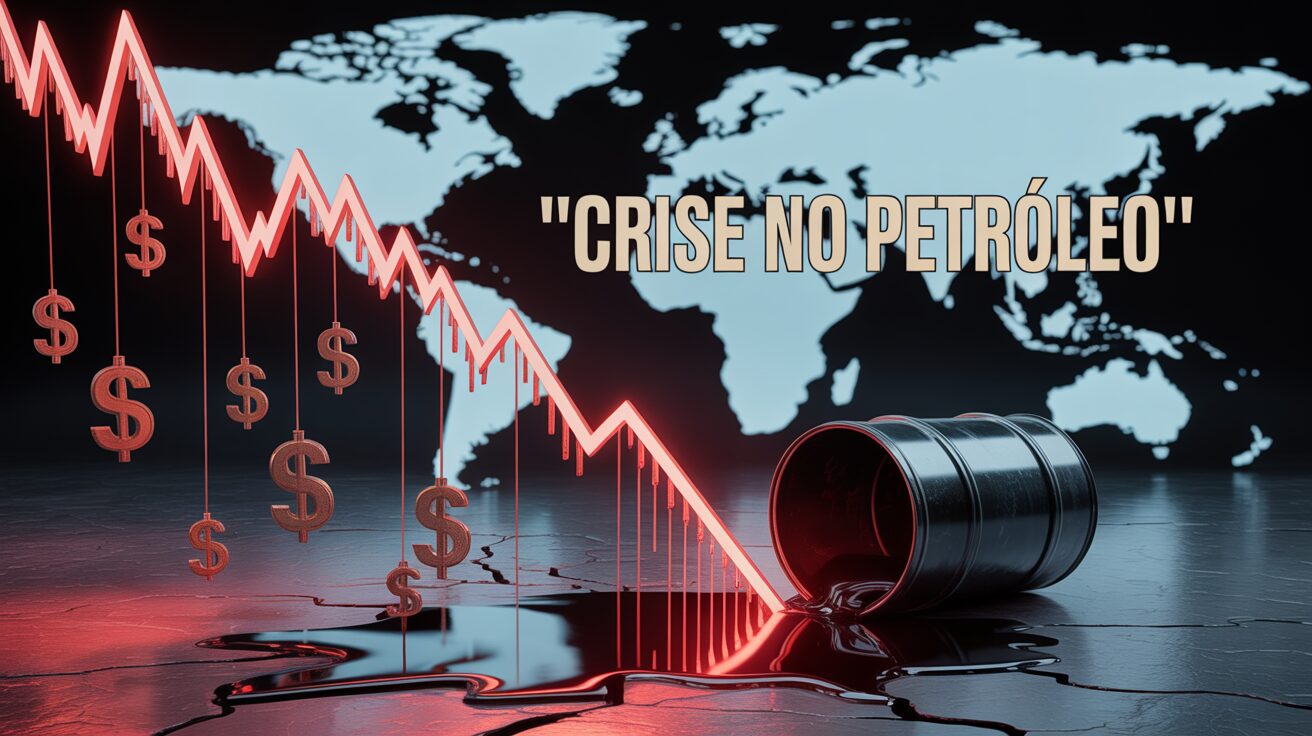
The OPEC+ Decision to Increase Oil Production Brings Down International Prices of the Commodity and Affects Companies Like Petrobras, While Experts Point to Uncertainties About the Future of the Sector Amid Energy Transition and Geopolitical Tensions.
The oil market has once again suffered a sharp depreciation due to the OPEC+ decision to increase, for the second consecutive month, its daily production of barrels.
The measure was led by Saudi Arabia and reflects a strategic shift by the cartel in light of the global demand slowdown and geopolitical pressure.
According to data confirmed by CNBC and other international agencies, the group of eight producing countries has decided to raise production by 411,000 barrels per day for June, repeating the same increase made in May.
-
Petrobras evaluates suspension of sales to distributors and considers canceling the cooking gas auction following guidelines from the Federal Government.
-
Lula reveals a masterstroke by Petrobras to undo a deal made by Bolsonaro, which involves the return of an important refinery that currently produces less than half of what was expected and makes Brazil dependent on international diesel.
-
A study confirms that the natural gas sector will reduce greenhouse gas emissions in Brazil by 0.5% and accelerate the energy transition by 2026.

-
Petrobras implements a severe adjustment and confirms a 55% increase in the price of aviation kerosene with a proposal for installment payments for the companies.


As a result, international oil prices have begun to register significant declines in the main contracts traded in the financial market.
Falling Prices Put Pressure on the International Market
On the afternoon of Monday (5), around 3:45 PM, Brent oil futures for July were down 1.68%, trading at US$ 60.26 per barrel.
WTI, the American benchmark, was down even more: 1.96%, priced at US$ 57.15.
The declines represent a clear signal that the market reacted immediately to the OPEC+ decision.
In an already delicate global scenario, the increase in supply contrasts with a demand that appears weakened, especially in light of the prospect of moderate economic growth in developed countries.
Impact on Brazilian Companies and Global Stock Markets
The OPEC+ decision also reverberated in the stock markets.
In Brazil, Petrobras – the country’s main oil company – registered a decline in shares, following the global trend of retraction in commodity exporters.
Other companies in the sector also felt the effects of the oil depreciation, fearing impacts on their investment plans and profitability.
Price instability of the commodity directly interferes with the performance of stock markets and currencies of exporting countries.
Oil is one of the main drivers of the global economy, and fluctuations in its price tend to cause ripple effects in the energy, transportation, industry, and food sectors.
Motivations Behind the OPEC+ Decision
The decision to increase production was made amid a combination of economic and political factors.
OPEC+, led by Saudi Arabia and Russia, believes that maintaining restricted production during a time of declining demand could be counterproductive.
The group appears willing to protect its market share amid increasing competition from independent producers, especially from the United States.
Additionally, there has been pressure from importing countries for oil prices to decrease and help reduce logistical and inflationary costs.
The measure also signals an attempt by OPEC+ to prevent new energy sources from gaining even more competitiveness, especially renewables.
U.S. Reactions and Recession Fears
Behind the scenes of the geopolitical landscape, U.S. energy policy has also influenced the oil market.
According to CNBC, the U.S. government has been taking measures that interfere with the global production chain.
Tariffs and trade embargoes have raised fears of a global recession, particularly in sectors heavily dependent on fossil energy.
The tariffs imposed by the U.S. government on strategic products directly impact international trade, increasing production costs and reducing consumption.
As a result, forecasts for global oil demand have been revised downward, and OPEC+ decided to increase supply as an attempt to maintain market balance.
Industry Giants Face Falling Profits
Global companies in the sector have also begun to feel the effects of the new scenario.
Multinationals like Chevron and ExxonMobil reported lower profits in the first quarter of 2025 compared to the same period last year.
The drop in oil prices is directly linked to the decrease in revenue for these companies, which operate in various countries and face high operational costs.
According to market analysts, this result may hinder expansion plans and investments in new exploration areas, as well as affect job generation in the sector.
Service companies for the oil sector are also projecting a significant reduction in exploration and production investments for this year.
Price Projections for Oil
Even with OPEC+’s attempt to regulate the market, projections remain cautious.
Goldman Sachs estimates that the price of WTI crude oil will hover around US$ 59, while Brent could reach up to US$ 63 in the coming months.
These values are below the averages recorded in the previous year, highlighting that the market has yet to stabilize.
The expectation is that new announcements from the OPEC+ or changes in international geopolitics could alter the course of prices again.
Moreover, the global energy transition, focusing on reducing carbon emissions, may structurally reduce demand for oil in the medium to long term.
Brazil and the Challenge of Maintaining Competitiveness
For Brazil, an oil-exporting country with strong dependence on Petrobras, the challenge is to maintain competitiveness and economic sustainability.
Volatility in international prices directly impacts royalty revenues, public investment, and inflation.
Furthermore, Brazil faces a scenario of pressure for decarbonization and increasing the use of renewable sources, requiring a long-term strategy to diversify its energy matrix.
The pricing policy of Petrobras, tied to the international price of oil, also creates instability in fuel prices, directly affecting consumers.
A Market in Transition and Under Tension
The drop in oil prices and the OPEC+ decision to increase production show that the energy market is going through a phase of transition and uncertainty.
The balance between supply and demand remains fragile, and any external factor, such as wars, economic sanctions, or climate crises, can drastically alter the scenario.
Experts point out that oil remains a protagonist in the global economy, but its dominance is expected to decrease in the coming years due to environmental and technological pressures.
The future of the sector will depend on the ability of producing countries, companies, and public policies to mitigate the effects of market fluctuations.









Seja o primeiro a reagir!