





 Português
  Inglês
  Espanhol
  3 min de leitura
  0 comentários


Scientists Monitor An Asteroid That May Hit Earth In 2032, With Possible Impact Course In South America.
The European Space Agency (ESA) has identified an asteroid with a real risk of hitting Earth.
The object has been named 2024 YR4.
It is approximately 15 meters in diameter and was discovered in January 2024. Since then, it has been placed on the agency’s monitoring list.
According to data released on June 10, 2025, there is a chance of impact for July 15, 2032.
-
A bright yellow mushroom imported from Asia escaped from a cultivation farm in the United States in 2010 and is now aggressively spreading across 25 states, destroying entire communities of native fungi in American forests.

-
Buried under China, a colossal machine weighing 20,000 tons began operating as the largest neutrino detector on the planet and, in just 59 days, surpassed results that science took half a century to achieve.

-
Iran enters the center of a climate alert after the war emitted 5.6 million tons of CO2 in two weeks, surpassing the annual pollution of entire countries.

-
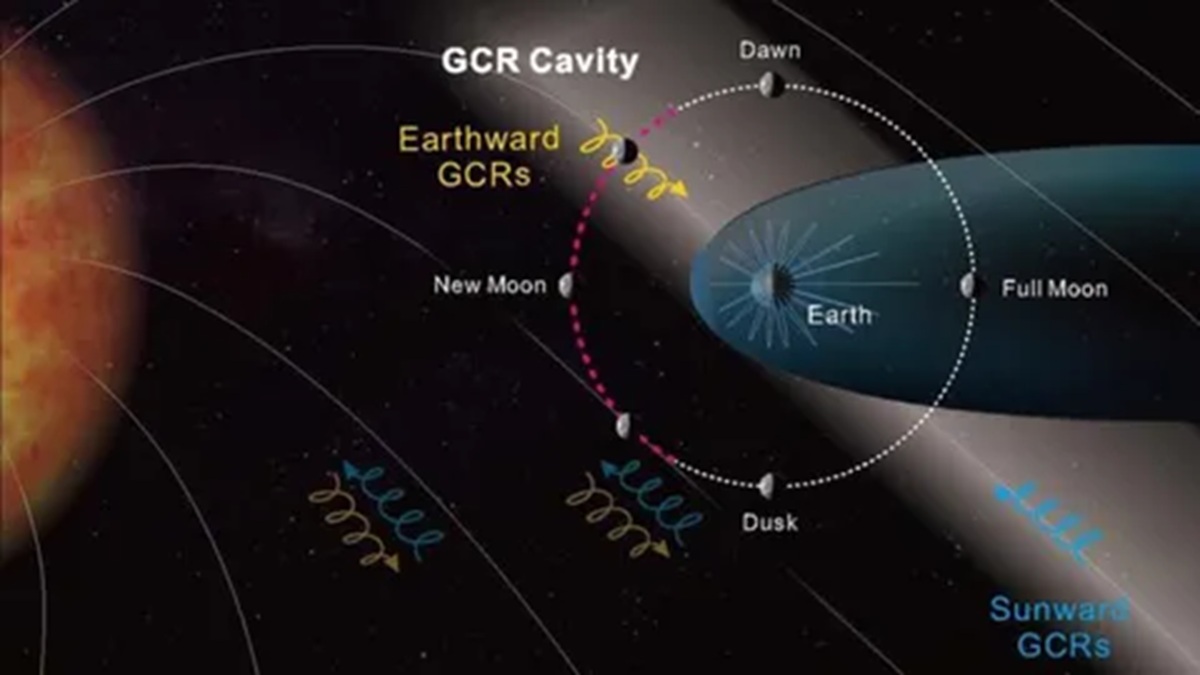
Lunar exploration may change after a Chinese probe finds a “cavity” of radiation that reduces the impact on astronauts by up to 20% at certain times on the Moon.
Even though the probability of collision is still considered low, the potential risk requires constant monitoring by space authorities.
The asteroid follows a trajectory that crosses Earth’s orbit. Therefore, there is a possibility that it could hit regions in South America, including Brazil.
The analyses use updated calculations of the orbit. Scientists consider variables such as speed, entry angle, and gravitational interference in the process.
Constant Monitoring Increases Chances of Deflection
Since the detection of the object, observatories in several countries have been involved in the continuous monitoring of its trajectory.
This international collaboration increases the chances of adjusting the predicted course. There is also the possibility of ruling out the risk of collision.
With each new observation, the data feed computational models that simulate the trajectory and approach points.
These simulations help predict the exact impact location, should the object not change its course.
The next 12 months will be crucial to confirm or rule out the risk.
According to them, asteroids of this size do not cause global destruction. However, their local impacts can cause considerable damage.
South America Is Among The Possible Affected Regions
If the impact is confirmed, the asteroid could hit countries in South America. Brazil, Argentina, Bolivia, and Paraguay are among the possible landing sites.
Although 2024 YR4 is considered small, previous episodes with similar objects show that the risk should not be underestimated.
The Chelyabinsk event, which occurred in 2013 in Russia, involved a meteor of similar size. The explosion left around 1,500 people injured.
This case serves as a basis for authorities’ attention. It demonstrates that even small objects can have significant effects on populated areas.
Therefore, vigilance remains active, and data continues to be refined frequently.
Preventive Measures And Alert Protocols Are Underway
Agencies such as NASA and JAXA are cooperating with the ESA. The goal is to strengthen monitoring and keep international alerts up to date.
Organizations such as the United Nations Office for Outer Space Affairs (UNOOSA) are also participating. They coordinate preventive actions with local governments.
In South America, various civil and military authorities are reviewing their emergency plans. This includes evacuation protocols in high-risk areas.
Even if a collision does not occur, this preparation ensures a quick response. Thus, it reduces the impact in case of future confirmation.
The collaborative work between scientific centers and governments enhances the capacity for prevention in the face of real space threats.
Future Analyses Should Reduce The Margin Of Uncertainty
New space sensors and ground telescopes will come into operation in the coming months.
As a result, they will provide additional data on asteroid 2024 YR4.
Moreover, based on this information, it will be possible to refine predictive models.
For this reason, scientists hope to offer more accurate projections by the end of 2025.
Therefore, the agency will publish all data clearly and responsibly.
However, it will not tolerate exaggerations or speculations.
In this way, the release will follow a rigorous editorial process, avoiding unrealistic promises.
Additionally, as part of the measures, the ESA has created a continuous information review system. Thus, the focus is to ensure that the content delivers exactly what it promises.







-

-

-

3 pessoas reagiram a isso.