





 Portuguese
  English
  Spanish
  3 min of reading
  0 comments


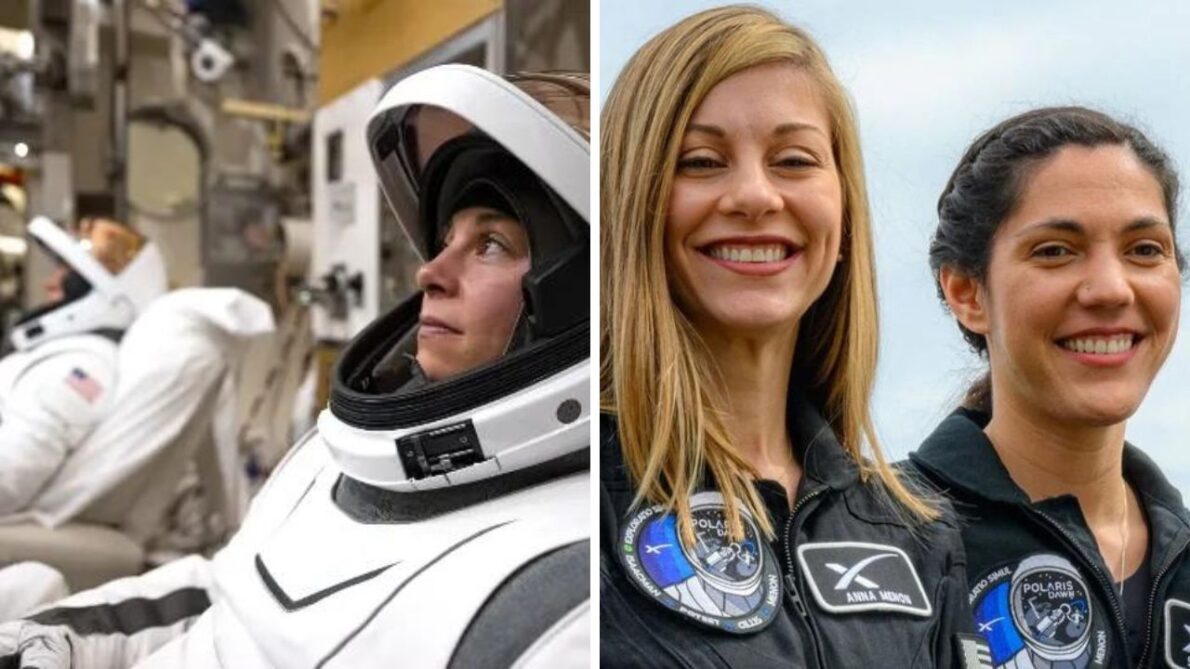
Sarah Gillis and Anna Menon from SpaceX’s Polaris Dawn Mission Will Exceed 1,400 Kilometers in Altitude, Setting a New Record for Female Astronauts.
Astronauts Sarah Gillis and Anna Menon are about to make history next week. They will participate in the Polaris Dawn mission from SpaceX, which promises to take astronauts to an altitude never before reached by women in space. The launch is scheduled for August 27 and, if successful, will break a record that has stood since 1990.
Two astronauts, Sarah Gillis and Anna Menon, are about to etch their names in the history of space exploration. They are part of the four-person crew of SpaceX’s Polaris Dawn mission, which is set to launch on August 27 aboard a Falcon 9 rocket. With an ambitious goal, this mission aims to conduct the first private spacewalk and reach an altitude of 1,400 kilometers (or 870 miles) above Earth, something not seen since the Apollo missions.
Astronauts on SpaceX’s Polaris Dawn Mission
The Polaris Dawn mission from SpaceX, funded and led by billionaire Jared Isaacman, is a significant step for private space exploration. Isaacman, who previously led the Inspiration4 mission in 2021, joins Gillis, Menon, and pilot Scott “Kidd” Poteet on this historic endeavor. SpaceX engineers, Gillis and Menon, are set to surpass the altitude record currently held by NASA astronaut Kathryn Sullivan, who in 1990, during the STS-31 mission, reached 621 kilometers (or 386 miles) above Earth.
-
What can really trigger large volcanic eruptions? Research suggests that gas returning to the magma may be more dangerous than gas escaping from it.

-
Found in one of the most radioactive places on Earth, this Chernobyl fungus may be doing something with radiation that no one has been able to explain to this day.

-
A bright yellow mushroom imported from Asia escaped from a cultivation farm in the United States in 2010 and is now aggressively spreading across 25 states, destroying entire communities of native fungi in American forests.

-
Buried under China, a colossal machine weighing 20,000 tons began operating as the largest neutrino detector on the planet and, in just 59 days, surpassed results that science took half a century to achieve.


RELATED: Decided: Elon Musk’s SpaceX Will Rescue NASA Astronauts and the Boeing Ship Will Return Empty
This Hasn’t Happened Since the Hubble Space Telescope
This altitude record from STS-31 was achieved during the deployment of the Hubble Space Telescope, one of the most important space observatories in history, which still operates today, more than three decades later, thanks to five servicing missions conducted by astronauts. At the time, Sullivan was one of the five astronauts on board and became the woman to fly highest in space.
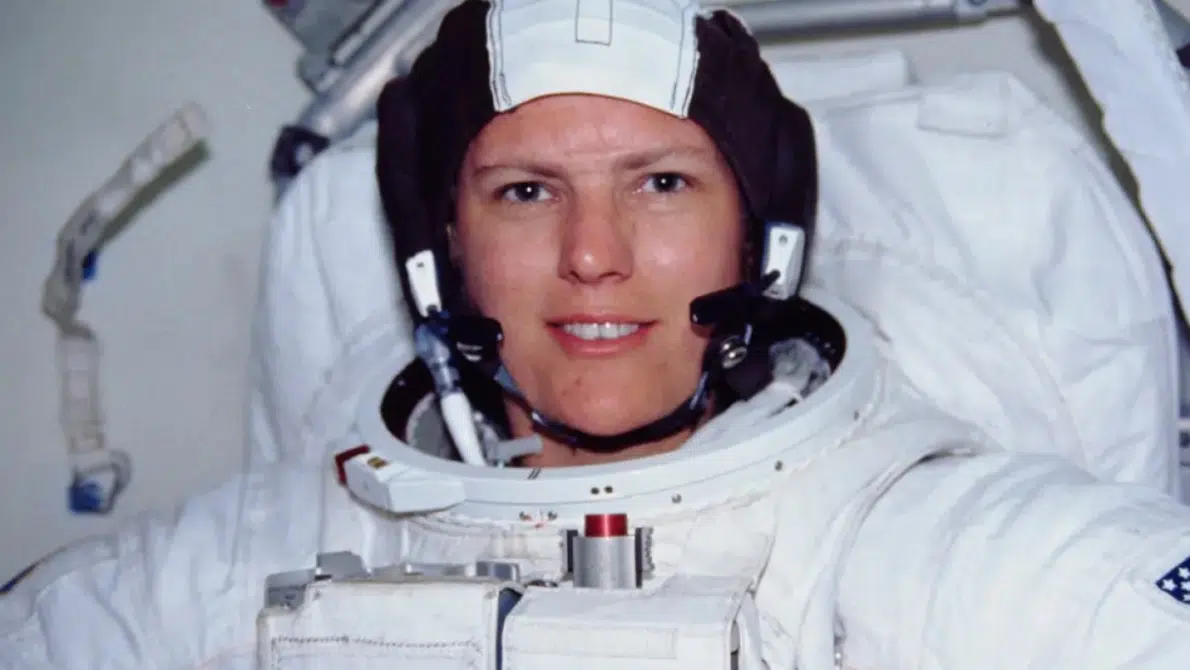
This Was the Highest Altitude Recorded Before the Apollo Missions
The Polaris Dawn mission from SpaceX aims to go further, even surpassing the altitude record established in 1966 by the Gemini 11 mission, which reached 1,368 kilometers (850 miles) above sea level. This was the highest altitude recorded before the Apollo missions, which took astronauts to the Moon. However, it is important to note that, during the Apollo program, all crews were composed exclusively of men, leaving the Polaris Dawn mission from SpaceX with the role of achieving an unprecedented feat for women in space exploration.
Women Have Been Gaining More and More… Space
The Polaris Dawn mission from SpaceX also highlights the evolution of women’s roles in space exploration. Since NASA sent its first female astronaut, Sally Ride, in 1983, women have been gaining more and more space (literally) and recognition. The journey of Gillis and Menon reflects this progress, and the Polaris Dawn mission from SpaceX could inspire future generations of girls and women to pursue careers in science, technology, and space exploration.
With the launch approaching, the world is watching the Polaris Dawn mission from SpaceX. In addition to setting a new altitude record for female astronauts, this mission may represent a new chapter in space exploration, where female participation is not only recognized but celebrated as a fundamental part of mission success.








Seja o primeiro a reagir!