





 Portuguese
  English
  Spanish
  6 min of reading
  0 comments


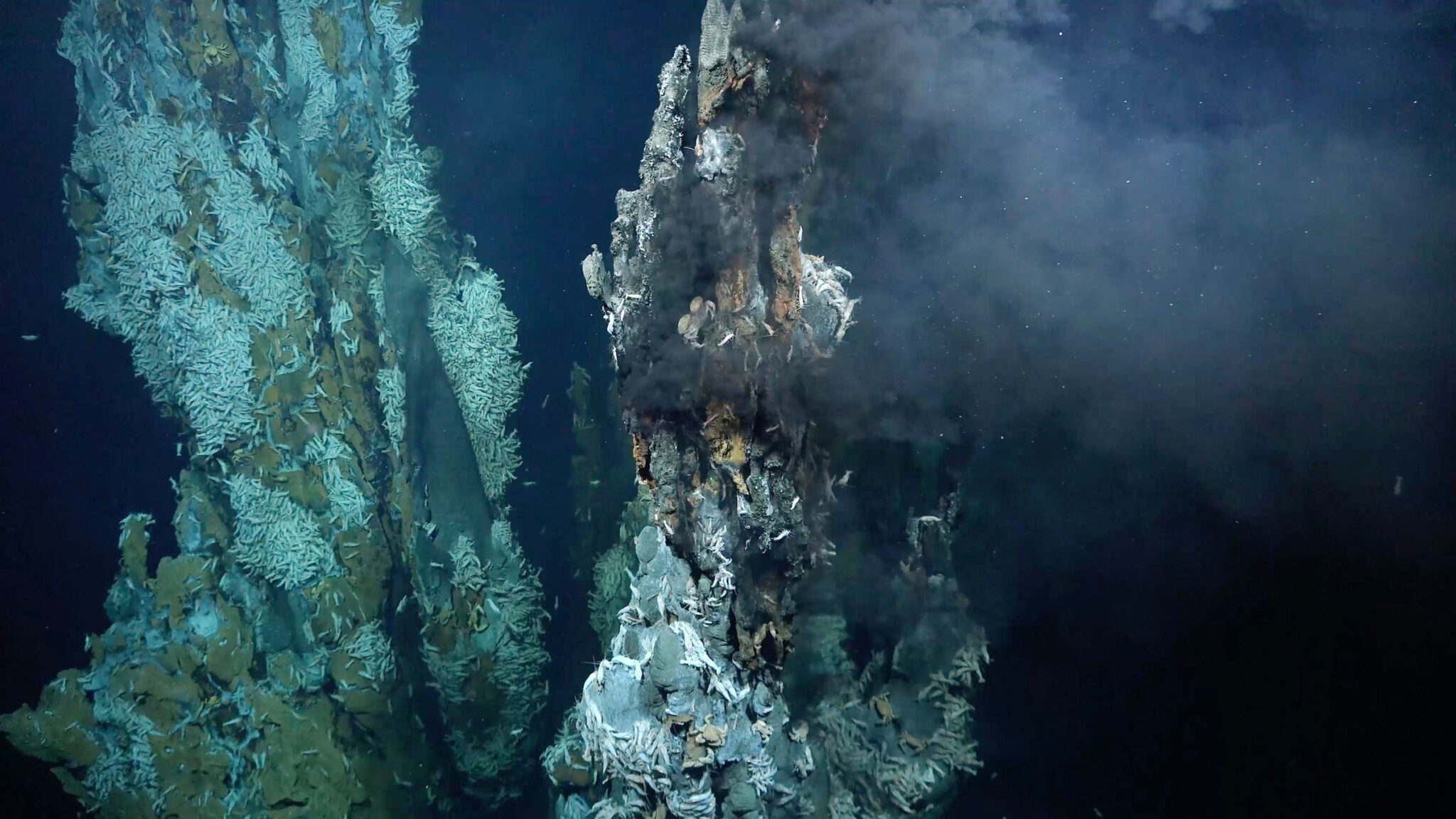
Submarine city with towers up to 60 meters has been growing for over 120 thousand years in the Atlantic and reveals one of the most extreme environments on Earth.
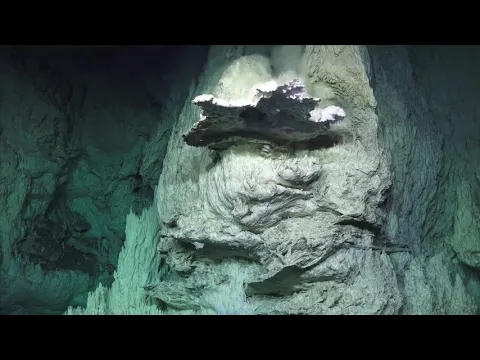
In 2000, a team of researchers led by geologist Deborah S. Kelley from the University of Washington revealed to the world one of the most unusual discoveries ever made on the ocean floor. During an expedition funded by the National Science Foundation in the Atlantis Massif region, in the middle of the Atlantic Ocean, scientists identified a hydrothermal formation completely different from the classical systems known until then. According to an official statement from the National Science Foundation about the discovery of the Lost City Hydrothermal Field and a study on the geological evolution of the system published in the NOAA repository, the site hosts large white carbonate structures, including the formation known as Poseidon, which reaches about 60 meters in height.
These formations are associated with the Atlantis Massif and comprise a unique hydrothermal field, very different from the so-called “black smokers” directly linked to oceanic magmatism.
This “city” does not depend on direct volcanic activity to exist and has remained active for over 120 thousand years, being sustained by deep chemical reactions between seawater and mantle rocks, in a process known as serpentinization.
-
Rare phenomenon intrigues science: video captures extremely rare square waves on Lake Michigan and geometric pattern near Indiana impresses.
-
A nutritionist reveals that the real villain of your breakfast is not butter or eggs, but rather the excess of white bread, cookies, and refined sugar that you consume every day without realizing the damage it causes.

-
The Android as we know it has its days numbered after a new rule from Google that could end free APKs and completely transform the system by 2027.

-
Archaeologists use satellite technology and find a mysterious structure of 500 m² buried up to 6 meters beneath an ancient city in Egypt.

This mechanism has transformed the Lost City into one of the most important pieces of evidence that hydrothermal systems can arise and persist without the presence of shallow magma chambers, altering the scientific understanding of the chemical dynamics of the ocean floor.
What is the Lost City and why is it different from everything else
The Lost City is not a city in the conventional sense, but an extremely rare hydrothermal field. Unlike the more well-known hydrothermal systems, such as “black smokers,” which depend on magma and high temperatures, the Lost City operates through a completely distinct mechanism.

It is formed by a process called serpentinization, in which seawater penetrates deep into the Earth’s crust and reacts with ultramafic mantle rocks. This process generates:
- heat
- hydrogen
- methane
- alkaline compounds
These elements fuel the continuous formation of mineral towers and sustain a unique ecosystem, which does not depend on sunlight.
How do towers up to 60 meters form on the ocean floor
The structures of the Lost City are formed by deposits of calcium carbonate. When hot, alkaline fluids emerge from underground and come into contact with the cold ocean water, mineral precipitation occurs.
This process leads to the formation of:
- chimneys
- towers
- branched structures

Over time, these formations can continuously grow, reaching impressive heights of up to 60 meters, comparable to multi-story buildings.
The growth occurs over thousands of years, creating a true “natural architectural complex” on the ocean floor.
An active system for over 120 thousand years
One of the most surprising aspects of the Lost City is its longevity. While many hydrothermal systems have a relatively short lifespan in geological terms, the Lost City has remained active for at least 120 thousand years, possibly even longer.
This stability is possible because the system does not depend on unstable magmatic sources, but rather on continuous chemical reactions between water and rocks. This makes the Lost City one of the most enduring hydrothermal environments ever identified on Earth.
Life that exists without light and without photosynthesis
Even in an extreme environment, the Lost City harbors forms of life. These organisms do not depend on sunlight, but rather on chemical processes to obtain energy, in a mechanism known as chemosynthesis.
Among the organisms found are:
- bacteria
- archaea
- microorganisms adapted to alkaline environments
These beings utilize hydrogen and methane as energy sources, demonstrating that life can exist under conditions completely different from those found on the surface. The discovery has profound implications for biology.
Why the Lost City is important for the origin of life
The Lost City is considered by many scientists to be one of the environments closest to the conditions that may have given rise to life on Earth.
This is because:
- it provides a constant chemical energy
- it has protected environments in mineral cavities
- it presents favorable alkaline conditions
These factors are similar to the scenarios proposed for the emergence of the first forms of life billions of years ago. Therefore, the study of the Lost City goes beyond geology, being relevant also for astrobiology.
The discovery of the Lost City also influences the search for life on other planets and moons. Similar environments may exist in places like Europa, a moon of Jupiter, and Enceladus, a moon of Saturn.
These celestial bodies have subsurface oceans and internal geological activity. The existence of life in the Lost City shows that sunlight is not necessary to sustain ecosystems, broadening the possibilities of finding life beyond Earth.
The role of Atlantis Massif in the formation of the system
The Lost City is located at the top of the Atlantis Massif, a geological structure formed by complex tectonic processes. This underwater mountain directly exposes mantle rocks, which is relatively rare.
This exposure allows seawater to penetrate deeply and react with these rocks, feeding the hydrothermal system. Without this specific geological configuration, the Lost City would not exist.
Most known hydrothermal sources are associated with volcanic activity. These sources:
- are hotter
- have a shorter lifespan
- depend on magma
In contrast, the Lost City:
- operates at lower temperatures
- is chemically stable
- does not depend on volcanoes
This difference makes the system unique and more enduring, offering a natural laboratory to study geological and biological processes.
One of the most extreme environments ever found on Earth
The Lost City encompasses extreme conditions that challenge the traditional understanding of life. Among these conditions are:
- high alkalinity
- absence of light
- high pressure
- geographical isolation
Even so, the presence of life demonstrates the adaptability of organisms and broadens the understanding of biological limits.
Before the discovery of the Lost City, it was believed that hydrothermal systems primarily depended on volcanic heat.

The identification of a system based on deep chemical reactions has redefined the understanding of these environments, opening new lines of research.
Moreover, the discovery:
- expanded knowledge about the ocean floor
- revealed new geological processes
- influenced studies on the origin of life
A mineral city that challenges everything that was known
The Lost City represents one of the most impressive examples of how the planet still harbors unknown environments.
A “city” formed by towers up to 60 meters, active for over 120 thousand years and sustained by deep chemical reactions shows that the Earth still has regions that completely challenge common logic.
More than just a curiosity, this discovery redefines scientific boundaries and reveals that, even in the most inaccessible parts of the planet, there are complex, ancient, and still active systems waiting to be understood.






Seja o primeiro a reagir!