





 Portuguese
  English
  Spanish
  3 min of reading
  0 comments


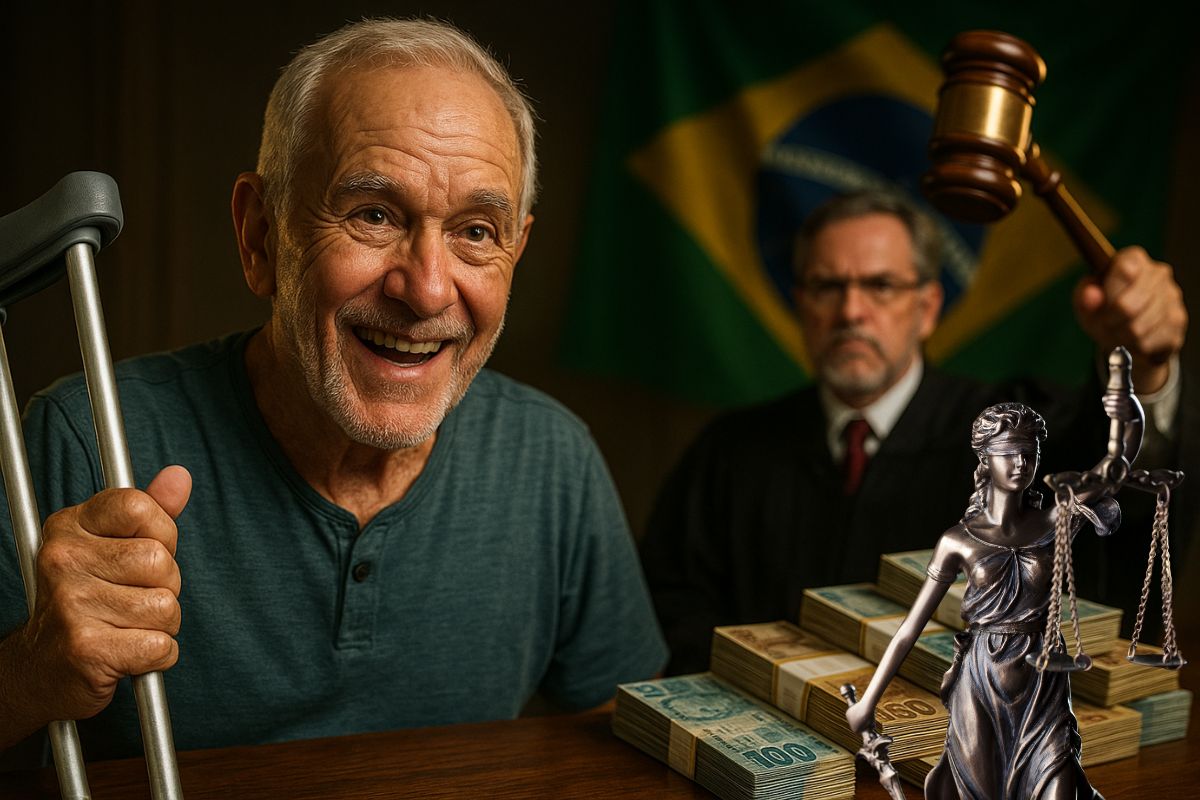
Decisions of the Superior Court of Justice on Topics 416 and 862 Make Accident Assistance Lifelong, Retroactive up to R$ 100 Thousand, Converted from Sick Leave.
The accident assistance has gained new weight in judicial decisions and may change the lives of those who have permanent sequelae after an accident. According to the portal Market Monitor, interpretations from the Superior Court of Justice (STJ) allow for the conversion of temporary sick leave into a lifelong indemnity benefit up to retirement, with the possibility of retroactive payments reaching R$ 100 thousand.
The decision paves the way for thousands of insured individuals who were unaware of this right.
Unlike other benefits, accident assistance does not require total absence: it can be received even if the worker remains active in their job.
-
Larger than entire cities in Brazil: BYD is building a 4.6 km² complex in Bahia with a capacity for 600,000 vehicles per year, but the discovery of 163 workers in conditions analogous to slavery has shaken the entire project.

-
With an investment of R$ 612 million, a capacity to process 1.2 million liters of milk per day, Piracanjuba inaugurates a mega cheese factory that increases national production, reduces dependence on imports, and repositions Brazil on the global dairy map.

-
Brazilian city gains industrial hub for 85 companies that is equivalent to 55 football fields.

-
Peugeot and Citroën factory in Argentina cuts production by half and opens a layoff program for more than 2,000 employees after Brazil drastically reduced purchases of Argentine vehicles.

This expands social protection, ensuring compensation for the impact of sequelae without preventing continued employment.
What Is Accident Assistance
The benefit is a financial compensation paid to insured individuals who, after an accident, experience a partial or permanent reduction in their working capacity.
It is valid until retirement or death and has an indemnity nature, meaning it does not replace salary, but serves as a supplement for loss of work capacity.
Another relevant point is that the accident does not need to be work-related. It is enough to prove permanent sequelae that affect the usual activities.
This interpretation expands the scope of the benefit and may include urban, rural, freelance employees, and even individual contributors.
Requirements and Documentation
To have the right, it is necessary to present medical proofs of permanent or partial sequelae. Reports, exams, clinical records, and testimonies can strengthen the request.
In addition, the insured must be in good standing with Social Security at the time of the accident.
If the INSS denies the conversion, pursuing a judicial route is an alternative, especially given the jurisprudence of the STJ.
Topics 416 and 862 serve as guidelines to ensure that sick leave is transformed into accident assistance when the sequelae are proven.
How the Conversion Works
The process begins after the medical discharge from sick leave. If limitations persist, the insured should request the INSS to transform it into accident assistance.
The request is made through the Meu INSS app or website, with all medical documents attached. In case of denial, administrative appeals and legal action are available.
The legislation also allows recovering up to five years of retroactive payments, provided the request is formalized within the allowed timeframe.
This way, many insured individuals can reach amounts close to R$ 100 thousand, depending on the waiting time and calculations due.
Difference in Relation to Other Benefits
What makes accident assistance unique is its indemnity nature. It can be accumulated with salary, is broader than sick leave, and, with the recent interpretations from the STJ, has gained a horizon of permanence until retirement.
This transforms the benefit into an additional source of security for those who cannot fully regain their work capacity.
Professional Guidance Is Decisive
The analysis from Market Monitor highlights that the path to securing accident assistance depends on robust documentation and, often, specialized legal support.
Social Security attorneys can provide guidance on deadlines, appeals, and strategies to maximize retroactive payments, preventing workers from losing rights due to lack of information.
In summary, the conversion of sick leave into accident assistance represents a significant change, with relevant financial impact and expanded protection for thousands of Brazilian insured individuals.
Do you believe that this STJ decision can bring more justice to workers who are left with sequelae? Have you experienced or know someone who has gone through this process?
Share your opinion in the comments.










Seja o primeiro a reagir!