





 English
  Francês
  Alemão
  Italiano
  Japonês
  Norueguês
  Portuguese
  Spanish
  9 min of reading


Terms Like “Innovation” or “Cutting-Edge Technology” Bring to Mind 3D Cameras, Foldable Smartphones, or Even Flying Cars. For the Oil and Gas Industry, This Means Big Data Analytics, Artificial Intelligence, and Underwater Robotics.
Commercial AUVs and ROVs were designed to overcome the limitations of human divers, and these underwater robots were initially used as basic video observation devices for underwater operations. Over the years, their technological evolution has allowed them to perform increasingly complex tasks at depths of up to 3,000 m (9,842 feet).
The growing global demand for oil and gas has accelerated the search for innovative and cost-effective offshore technologies. Additionally, monitoring and deployment are often challenging in adverse underwater conditions, leading to operational, environmental, and technical challenges. These factors have expedited the development of new technologies in the AUV and ROV market.
Product Development
TechnipFMC continues to invest in the development of ROVs to reduce deployment costs and increase productivity and efficiency of underwater operations.
“The evolution of ROVs stems from the quest to create greater operational efficiencies – through increased ROV productivity – resulting from ongoing product development on the technical side”, said George Shirreffs, Vice President of Sales and Marketing at Schilling Robotics, a unit of TechnipFMC. “TechnipFMC has been continuously focused on developing its products through features like modular design, modern control systems, and automation to maximize ROV productivity, thereby reducing project costs.”
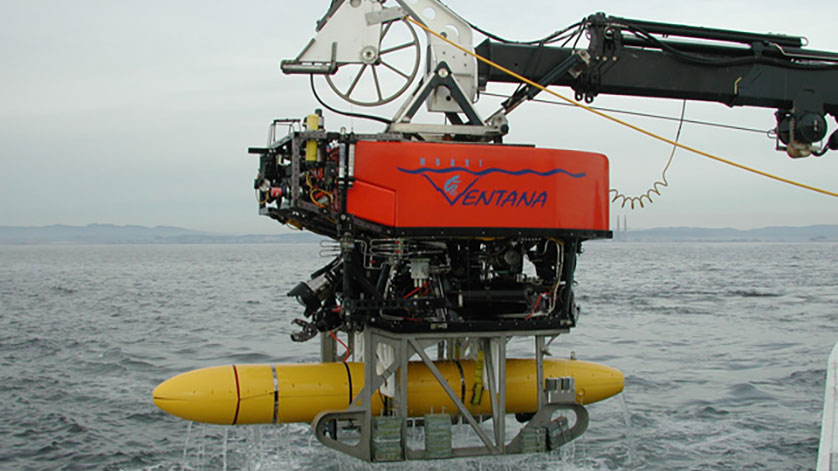
In the early 2000s, TechnipFMC launched its first ROV, which was an electric vehicle with a scalable control system and automation. Industry requirements led to the development of an electro/hydraulic Ultra Heavy Duty class ROV, followed by the introduction of a 150 hp work-class ROV in 2010. Productivity features were enhanced, including a modular design to assist in rapid maintenance and repair requirements and a higher level of automation. Schilling systems were developed to add a new Hammerhead software platform in 2012, which was a task-based intuitive system that allowed ease of operation and rapid setup of the ROV system. Another development was the introduction of the 250 hp Ultra Heavy Duty Gen-III (UHD-III) ROV, equipped with an ISOL-8 auxiliary pump system that meets the American Petroleum Institute Standard 53 requirements for secondary BOP intervention without the need for additional equipment. Moreover, the vehicle can be optimized for construction and intervention activities and provides dual fluids from onboard tanks, eliminating the need for multiple pumping skids.
-
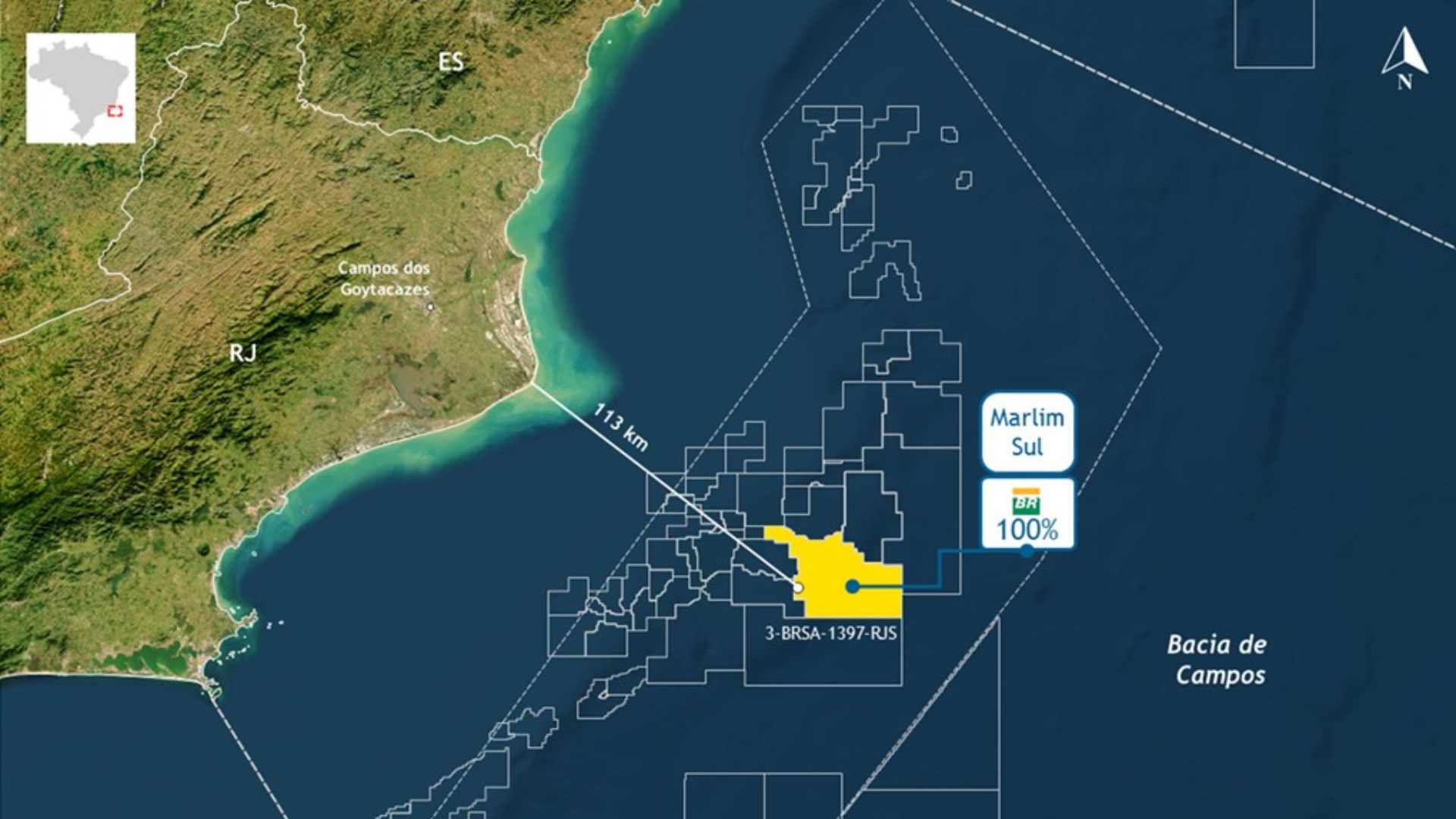
Petrobras finds high-quality oil in the pre-salt at 113 km from RJ and reignites expectations about strategic reserves in the Campos Basin.

-
Ocyan opens registrations for startups focused on innovation in the oil and gas sector and will select projects for Innovation Day with the support of Nexio.
-
Petrobras announces new oil discovery in the pre-salt of the Campos Basin and reinforces Brazil’s prominence with high-quality reserves that can increase production and energy revenues.
-
Alert in the fuel market: Analysts and a former director of ANP warn that oil prices may worsen in the coming months due to global instability.

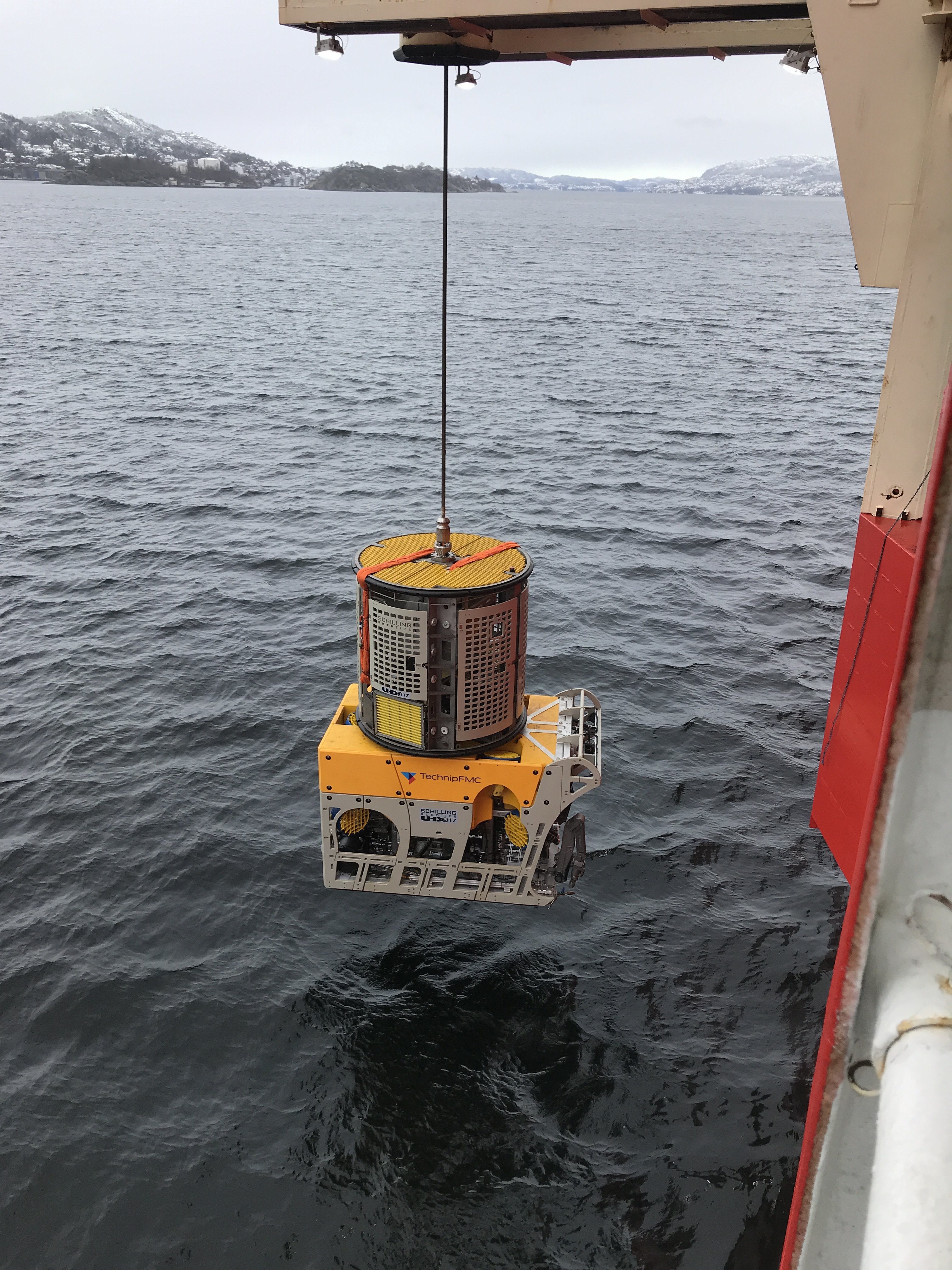
TechnipFMC supplied its ultra-high-definition ROV, known as UHD-III, in January onboard its heavy construction vessel. (Source: TechnipFMC)
“Our philosophy from our first manipulator in 1985 to our latest ROVs has been to increase productivity, including our lean manufacturing installation and our latest developments. However, we remain aware of the installed base of Schilling systems. Many of our developments have been designed to be backward compatible, so the productivity features we develop today can be installed on some of our older systems,” said Shirreffs.
Meanwhile, Kongsberg Maritime has added a new AUV to its fleet. Called HUGIN Superior, it is equipped with advanced functions. “Key developments and new capabilities of the HUGIN Superior include better coverage and access to data, increased productivity, and improved navigation and positioning,” said Richard Mills, Director of Marine Robotics Sales at Kongsberg Maritime.
The AUV is configured with long-range synthetic aperture sonar that generates high-resolution images and bathymetry of the seabed. This is complemented by an ultra-high-definition color camera with a laser profiler, magnetometer, and various chemical sniffers to detect hydrocarbons.
“HUGIN Superior can survey a football field in about 45 seconds or an area the size of Manhattan in just 13 hours, without sacrificing data quality,” said Mills.
Innovative Technology
From its early development to its current form, AUVs and ROVs have seen significant technological advancement and have become an indispensable part of offshore E & P. They have been equipped with progressive features, allowing them to operate thousands of meters from dedicated offshore vessels to handle complex tasks.
In April, tests for snake-like underwater robots, known as Eelume, began in the Trondheim Fjord to be used for seabed maintenance work at the Åsgard field in the Norwegian Sea. Designed by the Norwegian University of Science and Technology and supported by Kongsberg Maritime and Equinor, these snake-like robots can slide long distances in hard-to-reach locations without being tethered to a support vessel. Sensors and tools can be mounted anywhere on the Eelume. It consists of several modules that allow it to be connected in different combinations to form various types of vehicles. The underwater robot can inspect pipelines and operational valves, reducing the costs of previous, more labor-intensive underwater inspection methods, Equinor stated in a press release. The drone can remain permanently submerged and reside in an underwater anchoring station where its battery will be charged.
According to Equinor, “The tests conducted at the Åsgard Field will be a significant step in demonstrating the capabilities of a resident underwater drone. In parallel, the technology is being developed to continuously enhance its capabilities and level of autonomy.”
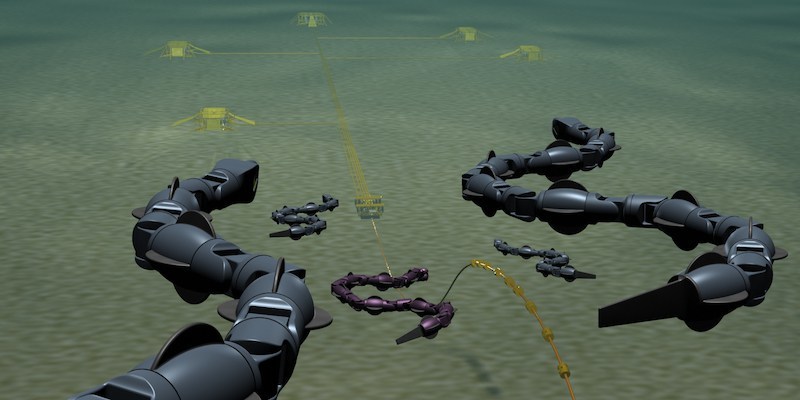
The Eelume snake robot provides IMR services for underwater facilities. (Source: Eelume)
The HyDrone system from Saipem’s Sonsub division is a modular intervention platform, resident underwater, directly integrated with the seabed and capable of operating in deep waters for long periods without surface vessel support. The design is a development of work-class ROVs to enable reliable remote interventions on complex or inaccessible underwater infrastructures.
According to Saipem, three factors are driving this technology: the need to support offshore fields where challenging environmental conditions or the novelty level of the underwater equipment involved lead to increased operational complexity; the need to efficiently manage operational risks, minimizing system downtime and environmental impact; and the need to substantially reduce the costs of inspection, maintenance, and repair campaigns conventionally conducted with work-class ROVs operated by dedicated support vessels.
“The conventional IRM [inspection, repair, and maintenance] market is heavily based on vessels and ROVs,” said Matteo Marchiori, Commercial Manager of Saipem’s Sonsub division. “Market pressure in recent years has sharply pushed for new operational models that would cut costs, which have had a huge impact on technological innovation and led to solutions capable of unlocking new methodologies and operational schemes. In this regard, HyDrone allows underwater inspections without vessels with unmanned operational configuration and provides better access to underwater assets.”
Houston Mechatronics has launched a hybrid technology called Aquanaut, which is a multifunctional underwater robot that transforms from an AUV to an ROV, thus eliminating the need for vessels and tethers.
“We realized that one of the biggest problems in the industry is the cost of offshore operations, which, in most cases, is largely driven by the cost of the vessel,” said Nic Radford, CTO of Houston Mechatronics. “Addressing this problem from a robotic perspective, we designed the Aquanaut, which acts as an AUV and reconfigures into a floating platform capable of manipulation even in very austere communication environments.”
Saab Seaeye has launched a new technology that allows its hybrid AUV/ROV Sabertooth to dock at remote anchoring stations in deep waters for data transfer, task assignment instructions, and battery charging. The underwater robotics company announced in February that its hybrid Sabertooth AUV/ROV is equipped to dock at different types of remote stations.
SEAMOR Marine has launched the Mako ROV, a miniature ROV of work-class size built with modular flotation and integration with a hydraulic arm. SEAMOR ROVs can be integrated with a wide range of third-party offshore intervention tools, including temperature sensors, additional cameras, positioning systems, multibeam, and scanning sonars. Its compact size allows them to be deployed quickly, which is important when emergencies occur.
A recent addition to the SEAMOR product line is a remotely operated seven-function articulated hydraulic arm designed specifically for observation-class vehicles and can be adapted for most similar ROV systems.
“We understand that ROVs are an important tool to support the energy sector. By providing an easy-to-use vehicle that offers a wide range of customizable integrations, SEAMOR ROVs are an investment for any onshore or offshore facility,” said Robin Li, President of SEAMOR Marine.
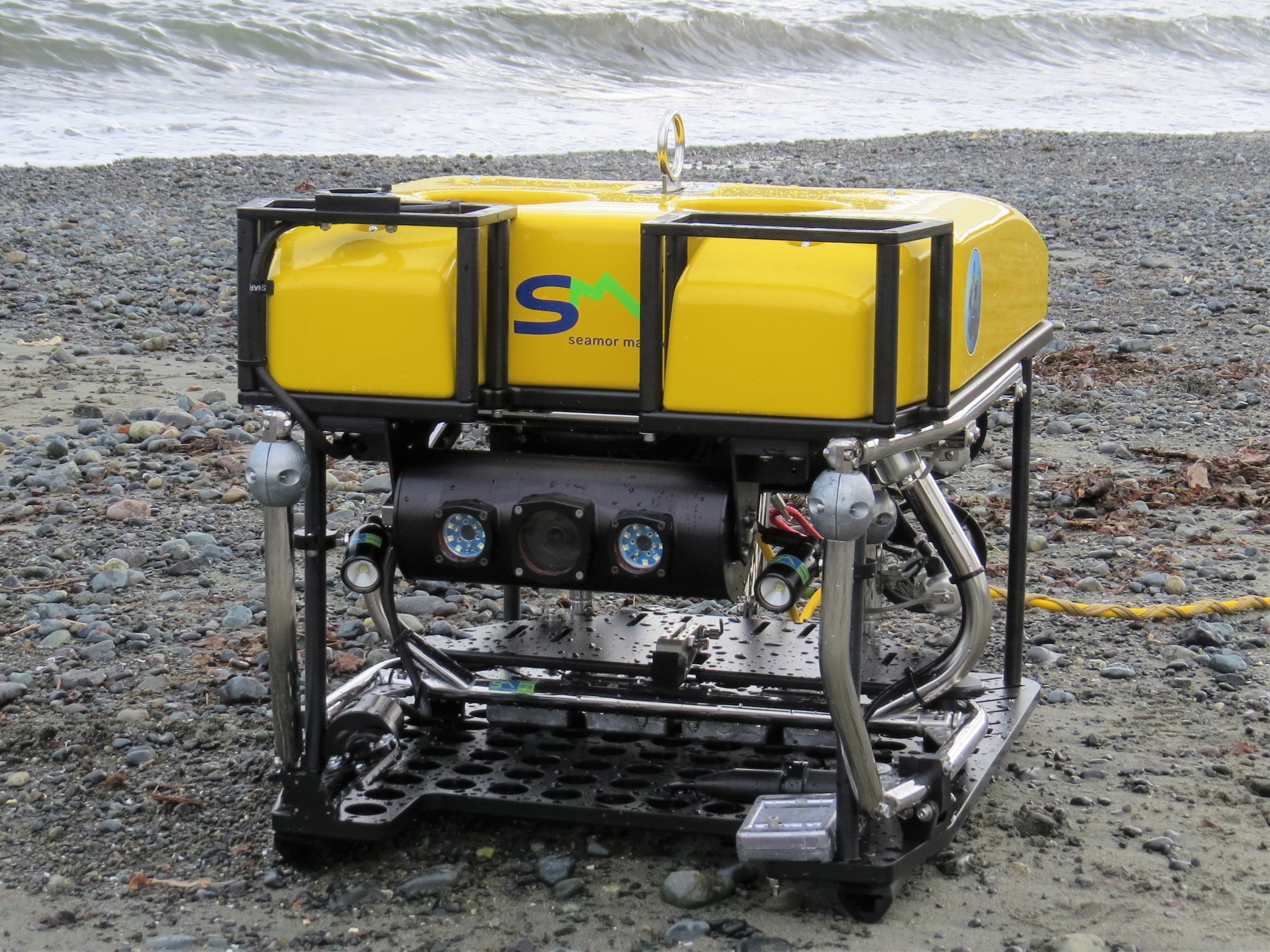
SEAMOR Marine’s latest ROV, the Mako, allows users to install heavy instrumentation, including multibeam imaging sonars. (Source: SEAMOR Marine)
Strategic Partnerships
Recent collaborations between oil and gas companies and underwater robotics businesses have not only contributed to new technological innovations in the market but also resulted in greater operational and cost efficiencies.
Earlier this year, Ocean Power Technologies and Saab Seaeye announced a joint development and marketing agreement to seek mutual charging and communication system opportunities for AUVs and ROVs.
In March, Sonardyne International formed a partnership with Shell Brasil and the Brazilian research institute Senai-Cimatec, with cooperation from Petrobras, to develop AUV technology to ensure efficiency in monitoring Brazil’s pre-salt oil fields.
According to a report by Unmanned Systems Technology, the aim of the project, which includes a 4-D seismic monitoring system, is to increase the autonomy of seabed nodes, allowing them to be deployed on the seabed for up to five years to record seismic and geodetic data on demand. During this period, no interventions, such as connections for data extraction or battery replacement, would be needed, and the nodes would communicate wirelessly with the AUV. These features will help generate operational efficiencies and eliminate various challenges currently faced in deploying 4-D seismic monitoring technology, which is vital for the development and optimization of oil and gas fields. The new technology will also allow for cost reduction and operational safety risk mitigation.
“For Shell, Brazil is an important center for attracting partners and technological development, and we are confident that the partnership with Sonardyne and Senai-Cimatec will be very successful,” said Jorge Lopez, consultant at Shell R & D.
C-Innovation (CI), a subsidiary of Edison Chouest Offshore, has partnered with several oil and gas companies worldwide to expand its ROV capabilities and provide a wide spectrum of support for underwater construction, drilling, intervention, maintenance, and heavy work projects.
“We design robotic solutions based on customer needs, and we expect a growing fleet of underwater vehicles with portfolio expansion in the coming years,” said Michael MacMillan, Operations Manager of C-I.
Last year, ECA Group and Petrus entered into a cooperation agreement for underwater robotics services for oil companies. After evaluating the market, the parties agreed to offer inspection and research services for the energy sector using AUVs designed and manufactured by ECA Group.
Market Drivers
The main factors driving the AUV and ROV market include the increasing number of offshore wells in adverse environments, rising demand for energy and petrochemicals, the need for ocean data and mapping, and the growing capabilities of AUVs and ROVs, according to a report by Mordor Intelligence. The report states that technological advancements in offshore systems have opened new frontiers, enabled safer operations, and increased the capabilities of AUVs and ROVs. Technological advancements are expected to continue to generate further growth in the unmanned oil and gas vehicle sector. Intelligent devices will enable improved operational management and better risk management, while advanced materials will offer safer operations in challenging environments.
The report further states that “the Middle East region is expected to experience significant growth in the ROV market. Offshore activity in the Middle East has been growing since 2015, despite low oil prices. This substantial improvement in the oil price scenario is expected to boost offshore activity in the region, which in turn drives the ROV market.”
Meanwhile, Mordor Intelligence stated that Petrobras’ financial crisis is likely to constrain offshore activity in Brazil, in turn restricting the AUV and ROV offshore market in the region. Brazil is the largest AUV and ROV market in South America and witnesses over 50% of South America’s offshore drilling and production activity, according to the report. However, earlier this year, the new CEO of the Brazilian state-owned company, Roberto Castello Branco, criticized its history of government interference and promised to pursue policies that increase profit, according to a Bloomberg report.
Annual reports on the global ROV and AUV market show a significant increase in the market growth of both vehicles. According to a report by QY Research, the global ROV market is expected to reach US $ 330 million by the end of 2025, growing at a compound annual growth rate of 6.3% between 2019 and 2025. The findings reveal that several factors will drive global ROV market growth, including increased spending in underwater fields, recovery of the oil and gas industry, new product launches, technological innovations, and the growing adoption of offshore ROVs.
The report “World AUV Market Forecast” by Douglas Westwood shows a 74% increase in AUV demand for the commercial sector.







Seja o primeiro a reagir!