





 Portuguese
  English
  Spanish
  4 min of reading
  1 comment


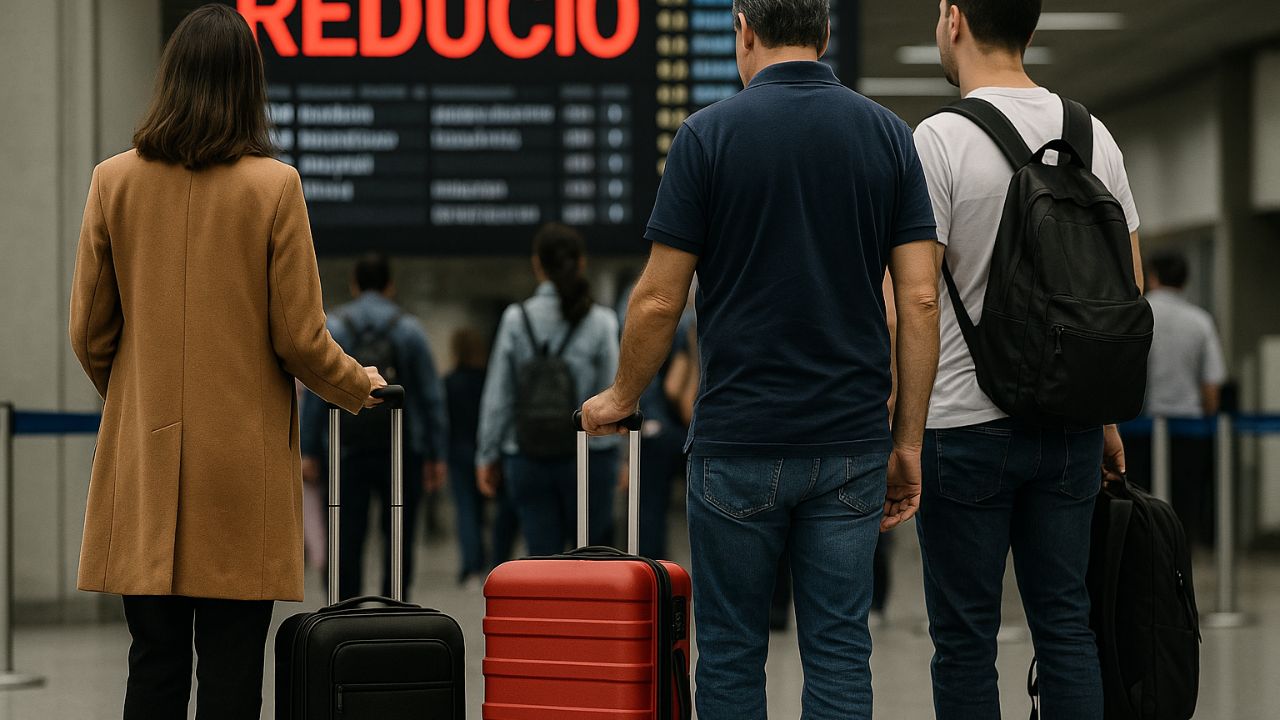


According to the Ministry of Finance, the Luggage Bill could harm the economy and keep fares at high levels.
The Ministry of Finance concluded that the Luggage Bill could increase the price of airline tickets and reduce competition in the sector. The analysis was carried out by the Secretariat of Economic Reforms, an agency led by Minister Fernando Haddad, and released this week in a technical note.
The study recommends the partial rejection of the project, which is currently under consideration in the Federal Senate after being approved by the Chamber of Deputies.
According to the report, the proposal affects the competitive environment of aviation by limiting the entry of new airlines and imposing additional costs on companies.
-
The Senate approves a bill that criminalizes misogyny, hatred, or aversion towards women, and includes the crime in the Racism Law with a penalty of up to 5 years.

-
Chamber Approves Bill That Allows Pepper Spray for Women Over 16 and Imposes Strict Rules for Purchase, Possession, and Use as Self-Defense

-
Chamber Approves Law to Combat Leucaena, Fast-Growing Plant That Dominates Land and Threatens Native Species in Various Regions of the Country

-
Asset Division: Know What Cannot Be Divided in Case of Divorce


As a result, the text could directly impact consumers and keep fare prices at high levels.
Luggage Bill Provides Free Transport of Bags on Flights
The luggage bill establishes that passengers can carry one checked bag of up to 23 kilograms for free on domestic and international flights operated within Brazilian territory.
In addition, the text guarantees the right to one carry-on bag and one personal item — such as a backpack or purse — at no additional cost.
Although the proposal aims to protect consumers, the Ministry argues that the effect could be the opposite.
The agency emphasizes that the requirement for free bag transport could eliminate promotional fares, especially for travelers who only fly with carry-on baggage.
Government Sees Risk of Distortions in the Airline Market
According to the technical note, the Luggage Bill does not contribute to gains in efficiency or clarity in consumer relations.
On the contrary, the document points out that the text may harm innovation and competition among airlines.
“While the concern for consumer protection is legitimate and understandable, we believe that the legislative proposal may generate effects contrary to its initial objectives, as it restricts consumer choices and hinders the offering of fares adjusted to different traveler profiles — including those who fly with little or no baggage — and, therefore, cheaper,” says the note.
The Ministry of Finance assesses that the proposal forces passengers to pay for services they do not use, as the checked bag fee would be incorporated into the final ticket price.
Thus, the cost would be diluted among all travelers, raising the average ticket values.
Direct Impact on Consumers and Competition
The Finance analysis states that the legal imposition of free baggage transport “forces certain consumers to pay for services they do not need.”
Moreover, it warns that the project could reduce passenger movement in the country, as many people can only travel today due to low-cost fares that exclude additional services such as checked baggage and seat selection.
“In practice, this implies a change in the company’s cost structure, with repercussions on the pricing of this prohibition reflected in the ticket prices, which may restrict the supply in commercial aviation,” adds the report.
Ministry Recommends Regulatory Alternative to the Project
The Secretariat of Economic Reforms suggests that the government use existing infralegal and regulatory cooperation instruments to address the issue instead of changing the law.
The proposal is to combine such mechanisms with a technical and legal analysis of the international compatibility of the measure, avoiding distortions in the global aviation market.
“The expected result is the intensification of price increases and their maintenance at high levels, both due to cost increases caused by the legislation and due to reduced competitive pressure,” concludes the note.
What Is Still Needed for the Luggage Bill to Become Law
The PL 5,041/2025 still needs to be analyzed by the Federal Senate before being sent for presidential sanction.
In addition to the baggage issues, the text also provides that airlines cannot cancel the return leg when the passenger does not board the outbound flight, a practice known as no show, without the express consent of the customer.
As the debate continues in Brasília, the impasse exposes a dilemma between consumer protection and market freedom.
On one side, lawmakers advocate for more guarantees for passengers; on the other, the Ministry of Finance warns that excessive interventions could harm the economy of the aviation sector, raise travel costs, and reduce the competitiveness of Brazilian airports.










Uma discrepância, o Ministério da Fazenda, deveria propor medidas que auxiliasse o consumidor. Em 2017, as companhias aéreas disseram que iria reduzir os valores das passagens, houve um movimento contrário, num setor dominado por três empresas que ditam as regras que nada beneficia os passageiros.