





 Português
  Inglês
  Espanhol
 3 min de leitura
  0 comentários


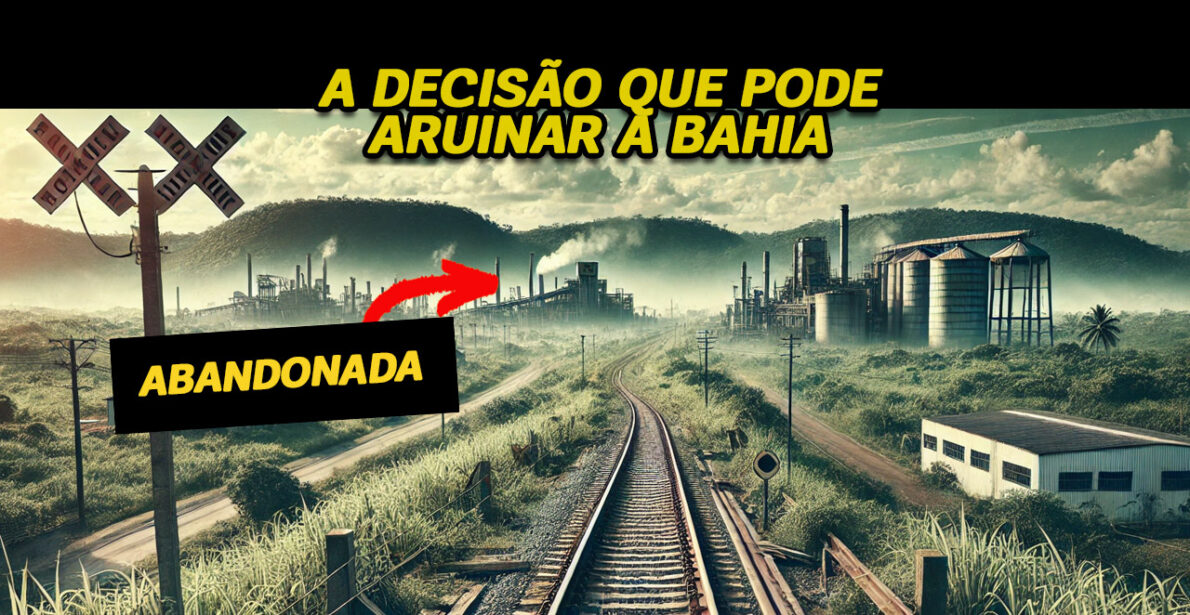
Possible Paralysis of Sections of the Centro Atlântica Railway (FCA) Puts the Baiana Economy at Risk. The Industry and Local Jobs May Suffer Severe Consequences If the Sections Are Discontinued, Affecting the Competitiveness of the State.
Bahia is on the brink of a logistical collapse, and the situation is alarming.
With the possible discontinuation of sections of the Railway Centro Atlântica (FCA), local industries and the Baiana economy may suffer severe consequences.
However, the true impact of this decision is still being debated.
-
Brazilian city gains industrial hub for 85 companies that is equivalent to 55 football fields.

-
Peugeot and Citroën factory in Argentina cuts production by half and opens a layoff program for more than 2,000 employees after Brazil drastically reduced purchases of Argentine vehicles.

-
A Brazilian city gains a factory worth R$ 300 million with the capacity to process 200 thousand tons of wheat per year, a mill of 660 tons/day, silos for 42 thousand tons, and an industrial area of 276 thousand m².

-
Havan will leave the shopping mall in Blumenau to inaugurate something that the chain has never done before: a megastore in half-timbered style in the Historic Center of the city, which is expected to be completed in May and change the landscape of local retail.

The renewal of FCA’s concession by VLI, which is being discussed in public hearings between September 30 and October 4, 2024, brings uncertainties that worry the entire productive chain of the state.
Bahia May Lose Strategic Railway Connection
According to VLI’s proposal, the company responsible for managing the Centro Atlântica Railway, sections that connect Bahia to states like Minas Gerais and Sergipe may be discontinued.
The Federation of Industries of the State of Bahia (FIEB) has expressed concern, highlighting that the interruption of these sections may negatively impact logistics and industrial production in the region.
Critical Sections Threatened
According to VLI, out of the 7,220 km of railway network under concession, 2,132 km may be returned to the government, of which 291 km belong to Bahia.
The section between Bonfim and Petrolina, in addition to Alagoinhas to Propriá, is among the most threatened.
This alarming situation jeopardizes the flow of essential products, such as those from the mining sector, compromising Bahia’s competitiveness on the national stage.
Serious Economic and Logistical Impacts for Bahia
The president of FIEB, Carlos Henrique Passos, warned of the risk of incalculable losses for the Baiana economy.
He emphasized that “what is at stake is the interconnection of Bahia by railway with other important centers” and that the discontinuation of strategic sections may weaken the state’s capacity to transport its production.
This decision also threatens the future operation of the West-East Integration Railway (FIOL), which is still in the planning phase.
According to Passos, “the interruption of FCA’s operation in Bahia paves the way for the loss of cargo from the FIOL Barreiras/Mara Rosa section”, jeopardizing the logistical development of the region.
The Need for Public Investment
FIEB argues that the renewal of the concession must ensure the maintenance of operations in the Baiana section until the government defines a new operational model.
This involves making public investments to improve railway conditions, especially since the current scenario makes it difficult to attract private investors.
According to FIEB, “it will not be possible to attract a private investor to operate based on the current conditions”.
The proposed solution includes the use of Capex resources (capital expenditures), as proposed by VLI, to ensure improvements and operational viability.
Proposals to Avoid Logistical Collapse
To avoid a logistical collapse that affects the economy and industry of Bahia, FIEB suggests urgent measures, such as ensuring that the section between Corinto (MG) and Campo Formoso (BA) continues to operate until a new operator is defined.
Additionally, the federation advocates for allocating resources for the modernization of this section, increasing its speed and efficiency, and ensuring the functionality of FIOL sections, ensuring that cargo continues to reach the ports of Baía de Todos os Santos.
These proposals aim to preserve the competitiveness of the state in the logistics sector and ensure that railway operations continue to be a fundamental pillar of the Baiana economy.
What Will Be the Logistical Future of Bahia?
What will happen if the railway sections are indeed paralyzed? Bahia runs the risk of becoming logistically isolated, with direct impacts on the economy, industry, and jobs.
Are the government and authorities prepared to deal with the consequences of this possible paralysis?








Seja o primeiro a reagir!