





 Portuguese
  English
  Spanish
  3 min of reading


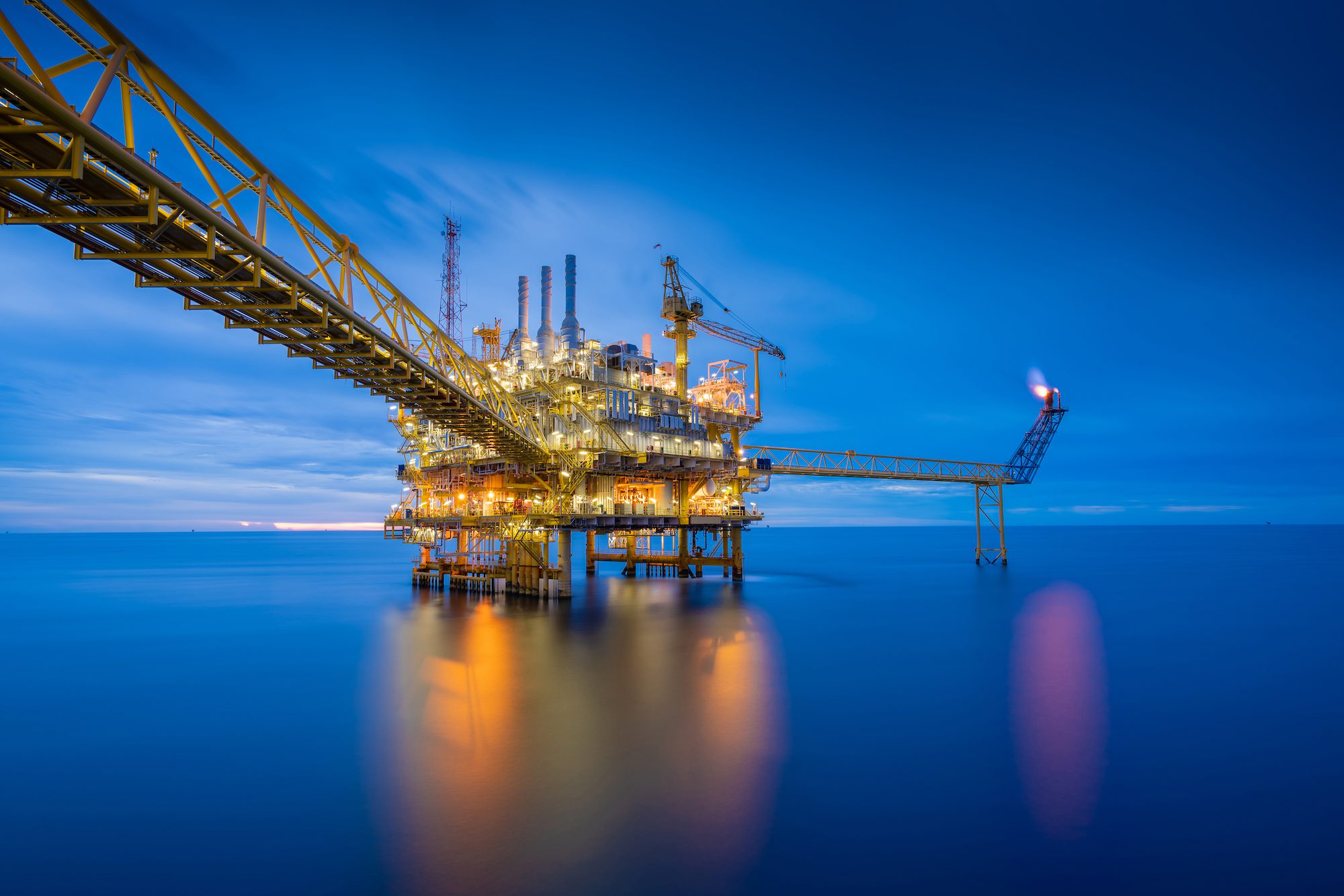
The Petronas Offshore CCS Kasawari Project in Malaysia Will be Supported by the Company Following the New Partnership Closure. Baker Hughes Will Provide the Necessary Equipment to Optimize Carbon Capture and Ensure Environmental Commitment.
The year started strong for the offshore equipment and technology company Baker Hughes. The company has established a partnership with Malaysia Marine and Heavy Engineering for a carbon capture project in Malaysia. The Petronas Offshore CCS Kasawari initiative aims to reduce CO2 emissions by 3.3 million tons per year through carbon capture. Thus, the technology company will provide equipment that will contribute to the business.
Offshore CCS Kasawari Project Can Reduce Up to 3.3 Million Tons of Carbon Through Gas Capture
The contract awarded by Malaysia Marine and Heavy Engineering to Baker Hughes provided the technology company with one of the most important partnerships for carbon capture in 2023.
The company will supply state-of-the-art equipment to support the Petronas Offshore CCS Kasawari project in Malaysia, which aims to reduce up to 3.3 million tons of gas using carbon capture methods.
-
Petrobras evaluates suspension of sales to distributors and considers canceling the cooking gas auction following guidelines from the Federal Government.
-
Lula reveals a masterstroke by Petrobras to undo a deal made by Bolsonaro, which involves the return of an important refinery that currently produces less than half of what was expected and makes Brazil dependent on international diesel.
-
A study confirms that the natural gas sector will reduce greenhouse gas emissions in Brazil by 0.5% and accelerate the energy transition by 2026.

-
Petrobras implements a severe adjustment and confirms a 55% increase in the price of aviation kerosene with a proposal for installment payments for the companies.


In this way, Baker Hughes’ equipment will be responsible for the compression process with minimized footprint and weight, as well as a power density that allows for greater flows per unit.
The goal is to use compressors to enable transportation and reinjection of the carbon separated from natural gas into a depleted field, using a subsea pipeline to facilitate this process.
Thus, Baker Hughes will provide two low-footprint compression trains to carry out carbon removal using membrane separation technology.
The company will also be responsible for supplying two trains for reinjecting the separated CO2 into a dedicated storage site at the end of the process.
Baker Hughes Aims to Support the Carbon Reduction Initiative through Gas Capture in Malaysia by Supplying New Equipment
The offshore CCS Kasawari project is an important initiative to reduce the volume of CO2 currently emitted through the burning of the general gas development from Kasawari.
Thus, the supply of offshore equipment from Baker Hughes will be a way to support Petronas in developing a carbon capture center in Malaysia over the coming years.
The company currently has net zero carbon emissions goals by 2050 and intends to rely on the support of the technology company to achieve this level.
“This contract demonstrates the viability of significant commercial-scale carbon capture projects, which are critical for the energy transition,” emphasized Rod Christie, Executive Vice President of Industrial and Energy Technology at Baker Hughes. “This project proves that CCS technology can be deployed even in challenging environments, including offshore gas facilities, and provides an important step towards reducing emissions from natural gas production.”
Get to Know Baker Hughes Equipment Company
Baker Hughes is a service company for the oil industry. The company offers products and services to discover, evaluate, drill, extract, and produce oil, natural gas, and unconventional and geothermal reservoirs. It is a leading provider of high-performance technology that enhances the value of hydrocarbon and geothermal assets for operators of all sizes worldwide.
Its products and services enable operators to reduce costs and risks and increase productivity in activities directly related to hydrocarbon extraction and geothermal production.










Seja o primeiro a reagir!