





 Portuguese
  English
  Spanish
  4 min of reading
  3 comments


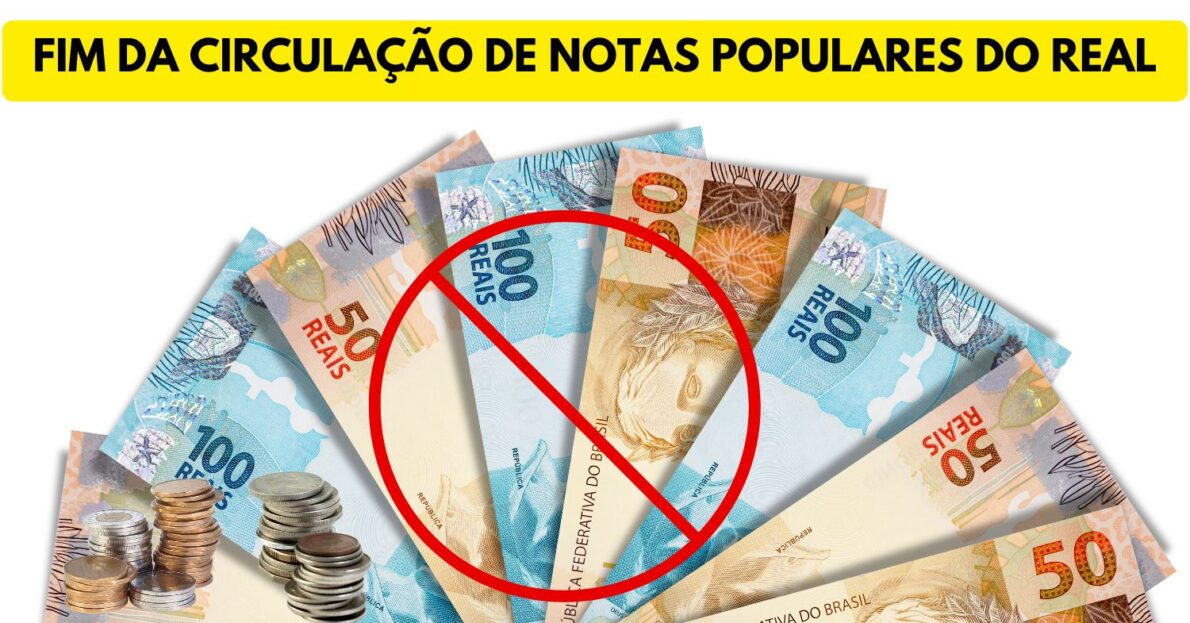

Central Bank Declares End of Circulation of Popular Real Banknotes. If You Still Have Old Notes Stored in Your Wallet or at Home, Stay Alert!
If you are used to keeping old Real banknotes in your wallet or in a safe at home, it’s good to stay alert! The Central Bank recently announced the end of circulation of popular Real banknotes, especially those that have been in use for nearly 30 years. This announcement was confirmed during the edition of Jornal Anhanguera, from Globo, on July 17, 2024. But what does this mean in practice? And what should you do if you still have any of these notes lying around? We will explain everything simply and directly!
The Real Plan and the Impact of Old Banknotes
Back in 1994, Brazil was experiencing one of the greatest financial crises in its history, with the old currency being rapidly devalued. To combat this situation, the Real Plan emerged, introducing the new currency we know today. It was a landmark in the country and helped to stabilize the Brazilian economy. However, time passes, and those banknotes that circulated since the launch of the plan are no longer the same.
According to the Central Bank, many of the notes printed in the first years of the Real Plan, about 30 years ago, are deteriorating due to constant use. They are worn out, full of marks from use, and this can bring problems both for the population and for the banking system, especially in ATMs and cash counting machines.
-
50 viaducts, 4 tunnels, 28 bridges, and 40 kilometers of bike paths: BR-262 in Espírito Santo will receive 8.6 billion reais for the largest engineering project in the state’s history, inspired by the Immigrant Highway in São Paulo.

-
Brazil produces too much clean energy and doesn’t know what to do with it: over 20% of solar and wind capacity was wasted in 2025 while investors flee and 509 renewable generation projects were abandoned in the last year.

-
Piauí will produce a new fuel that replaces diesel without needing to change anything in the truck’s engine and reduces pollutant gas emissions by half: truck drivers from all over the Northeast are already celebrating the news that will arrive later this decade.

-
A new Brazilian shopping center worth R$ 400 million will be built in an area equivalent to more than 4 football fields, featuring 90 stores, 5 cinemas, a supermarket, a college, and parking for 1,700 cars, potentially generating 3,000 jobs.


Why Did the Central Bank Decide to Recall Old Notes?
The decision to end the circulation of popular Real banknotes was based on the lifespan of the bills. According to the Central Bank, the notes issued in 1994 and still in circulation today represent only 3% of the total money in circulation in Brazil. Despite this, the physical wear of these notes can cause a series of inconveniences. And as the Central Bank itself highlighted in an official statement, many of these banknotes are likely in poor condition to continue circulating.
One of the main problems identified is that these worn-out notes make it difficult to use in ATMs and counting machines, which may fail to read them correctly. Additionally, over time, the security features of these notes, such as watermarks and embossing, become harder to identify, which can increase the risk of fraud and counterfeiting.
What to Do If You Still Have These Notes?
Now comes the question everyone wants to know: if you still have one of these old notes in your wallet or stored at home, what should you do? The good news is that you don’t need to worry about their validity, at least for now. These notes will still be accepted for payment anywhere, but once they are collected by a bank, they will not return to circulation.
In other words, if you go to a bank and deposit or exchange this note, it will be replaced with a new bill. So the best thing to do is to go to the bank as soon as possible to ensure that your old note is replaced with a new one.
The Popular Real Banknotes and the End of Circulation: What Changes in Your Daily Life?
With this decision from the Central Bank, some popular Real banknotes that have been in circulation for three decades will start to disappear. But what does this practically mean for your daily life? The change may not be immediately visible, since only 3% of the notes in circulation are these old ones. However, you may notice that these notes will begin to disappear gradually, being replaced by newer and better-conditioned bills.
The decision is a way to modernize the Brazilian financial system and ensure more security in daily transactions.
Why Is the End of Old Notes Important for Security?
One important point raised by the Central Bank is that the old banknotes, due to being worn out, may pose security risks. With continuous use over 30 years, many of the security features of the notes, such as watermarks and embossed details, may become worn down. This makes it harder for the public to identify whether the note is real or fake.
This factor is especially relevant at a time when fraud involving fake notes still occurs in Brazil. With newer notes in good condition, it becomes easier for merchants and citizens to verify the authenticity of the money, which helps to avoid losses and headaches.
If you have one of these old notes in hand, it is advisable to exchange it at the bank as soon as possible to ensure that you won’t have problems in the future. This change is part of the evolution of our monetary system and will certainly bring more security and quality to the circulating bills.
So, stay tuned: the end of circulation of popular Real banknotes is approaching, but you still have time to get organized!









Falou, falou e não informou. só enrolou…
Não trouxe informação das “notas populares”, quais serão descontinuadas, como diz o título acima. Parabéns! Ótimo artigo.
Não encontrei na matéria quais notas serão recolhidas. Por exemplo, existe diferença entre a primeira família e a segunda família do Real. Poderia ser mais clara na notícia.
https://g1.globo.com/economia/noticia/2024/07/15/primeiras-notas-do-real-vao-sair-de-circulacao.ghtml — Leia aqui, que está coerente a notícia com o assunto.