





 Portuguese
  English
  Spanish
  4 min of reading
  1 comment


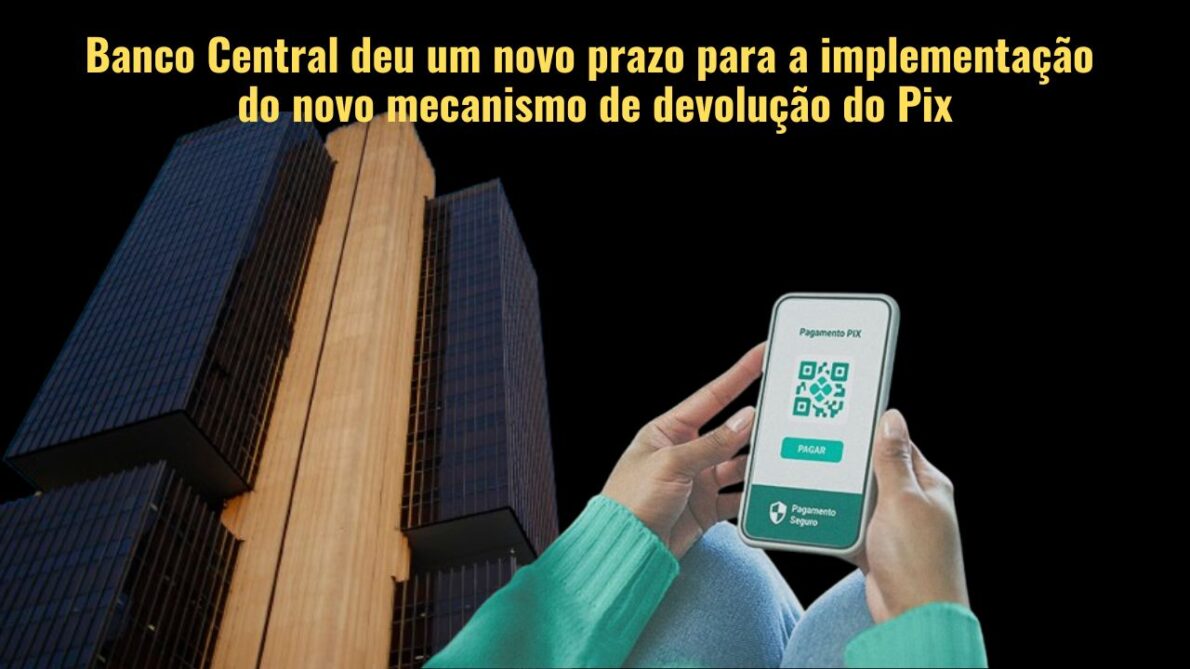

And now? New Pix Refund Mechanism Will Only Come Into Effect in 2026 and Shocks Brazilians
The Central Bank set a new deadline for the implementation of the new Pix refund mechanism, MED 2.0. The tool, which promises to increase security and facilitate the recovery of money in cases of fraud, will only be available to all users between the end of 2025 and the beginning of 2026. This news caught many by surprise, especially those who already felt insecure with the constant scams involving Brazil’s most widely used instant payment system.
New Pix Refund Mechanism from the Central Bank
During the launch of the second phase of the “Looks Like a Scam” campaign, promoted by the Central Bank and the Brazilian Association of Banks (ABBC), the person responsible for the Pix security area, Luis Otávio Vissotto, detailed the timeline for the new Pix refund mechanism. According to him, the development of MED 2.0 will start next month and will take eight to twelve months. After that, there will be approval tests, followed by controlled production, before the tool is released to the general public.
In other words, despite the expectations of many to see the system working soon, MED 2.0 will still take time. However, the good news is that the new Pix refund mechanism promises to be more robust. With it, it will be possible to trace the path of the money and block balances in various accounts through which the amount passed, increasing the chances of recovering lost funds in fraud cases.
-
Brazilian city gains industrial hub for 85 companies that is equivalent to 55 football fields.

-
Peugeot and Citroën factory in Argentina cuts production by half and opens a layoff program for more than 2,000 employees after Brazil drastically reduced purchases of Argentine vehicles.

-
A Brazilian city gains a factory worth R$ 300 million with the capacity to process 200 thousand tons of wheat per year, a mill of 660 tons/day, silos for 42 thousand tons, and an industrial area of 276 thousand m².

-
Havan will leave the shopping mall in Blumenau to inaugurate something that the chain has never done before: a megastore in half-timbered style in the Historic Center of the city, which is expected to be completed in May and change the landscape of local retail.

Security Measures Already for 2023
While MED 2.0 is not yet available, the Central Bank announced that, starting November 1, 2023, some new security rules for Pix will already come into effect. One of the main changes is that banks will be able to delete a Pix key without the customer’s permission if there is suspicion of fraud. Additionally, transfers made by phones or computers that have never conducted transactions via Pix will be limited to R$ 200.
Another highlight was the requirement for the use of the Directory of Transactional Account Identifiers (DICT) by banks. This directory, according to Vissotto, has already become a true security database, but not all institutions were utilizing this information comprehensively.
Central Bank Continues Working on Improvements
Vissotto emphasized that the Central Bank continues working on improvements to make Pix safer, but admitted that the system is still the target of many scams. “The fraudster goes where the money is, and unfortunately today Pix is the focus. But we are constantly enhancing security, with seven layers of protection and a strategic group made up of the top market specialists,” he said.
The challenge of combating fraud in Pix, according to Vissotto, is constant. He highlighted that the fraudster is always thinking of new ways to deceive people, and therefore, the Central Bank also needs to stay ahead, innovating security measures.
What Changes with MED 2.0?
The new Pix refund mechanism aims to be a significant advancement in combating fraud. The current version already allows users to have part of their money refunded in cases of scams, but MED 2.0 goes much further, expanding the scope of the refund system.
With MED 2.0, it will be possible to trace the accounts through which the stolen money passed and block balances in those accounts, which increases the chance of recovery. This mechanism will be especially useful in cases of chain fraud, where the transferred amount passes through several accounts before being withdrawn.
And Pix Continues to Grow
Even with security concerns, Pix has become an indispensable tool for millions of Brazilians. Since its launch by the Central Bank, the instant payment system has revolutionized financial transactions in Brazil. In addition to allowing fast and free transfers, Pix is now also used for payments in commercial establishments and even for bill payments such as electricity and phone.
The success of Pix, however, has also caught the attention of scammers, and that’s why the new Pix refund mechanism is highly anticipated. Until then, users should pay attention to the new rules that come into effect in November and follow the recommendations from the Central Bank to avoid falling into scams.
New Pix Refund Mechanism from the Central Bank
The wait for the new Pix refund mechanism may seem long, but what the Central Bank promises is a much safer and more efficient system. In the meantime, the security measures coming into effect this year are already an important step to protect users. The way is to stay tuned for updates and continue using Pix with care, after all, it is already part of our daily lives.
What did you think of the news about the new Pix refund mechanism? Do you think the deadline until 2026 makes sense or is it taking too long to be implemented? And will the new security rules coming in November make a difference in your use of Pix? Share your thoughts!









Demorou até demais, já era pra ser assim, eu caí em um golpe ativei esse mecanismo, não adiantou nada. Nada foi recuperado. Simplesmente porque não faziam esse caminho de ver para quais contas foram transferido o dinheiro, fiquei mó prejuízo de 40 mil. E o banco central com os bancos onde sou cliente simplesmente disseram que não tinha dinheiro na conta que o Pix foi feito. Fiquei pensando nesse ponto do MED 2.0. eles deveriam saber o caminho que o dinheiro fez. Mas tá aí, se tivesse esse MED 2.0 talvez eu tivesse recuperado meu dinheiro. Mas agora é tarde. Mas cedo para quem cair depois da implementação dele.