





 Portuguese
  English
  Spanish
  5 min of reading
  0 comments


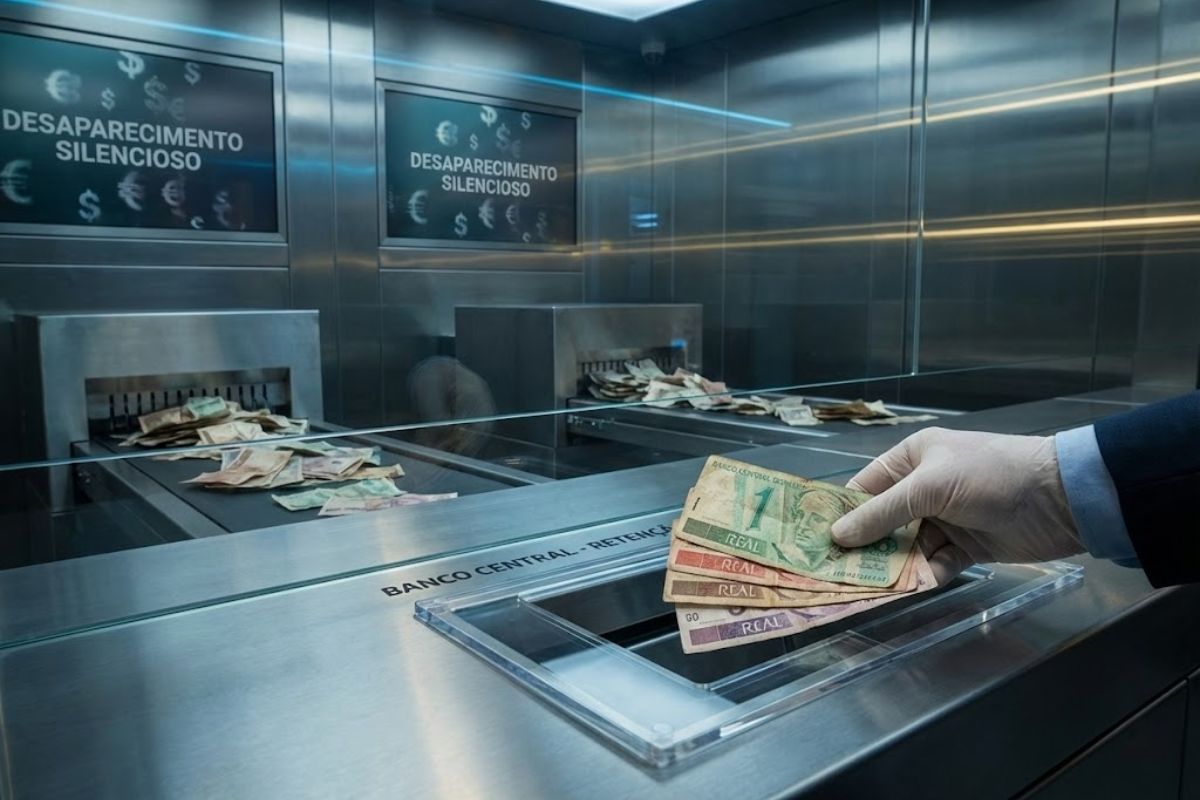
Without Broad Public Notice, The Central Bank Determined That Banks Retain Old Bills Of R$ 1 To R$ 100 Whenever They Enter The System, Silently Replacing Them With Notes From The Second Family Of The Real And Accelerating The Disappearance Of Classic Money From The Daily Wallets Of Brazilians Today
Thirty Years After The Launch Of The Real Plan In 1994, the First Bills That Marked The Stabilization Of The Currency Began To Quietly Disappear On December 4, 2025, When The Central Bank Confirmed That Banks Must Retain Old Bills Of R$ 1 To R$ 100 Whenever They Enter The Cash Register, In A Deposit, Or In Any Formal Transaction. In Practice, Classic Money Remains Valid, But It Is Now On A One-Way Path When Returned To The Banking System.
According To The Institution Itself, It Is Not A Demonetization Or Cancellation Of Face Value, But A Gradual Policy Of Replacement To Renew The Banknotes, Remove Highly Worn Notes From Circulation, And Reduce Operating Costs With Two Different Models Of Bills. Meanwhile, The Second Family Of The Real, Launched Starting In 2010 With Different Sizes By Value, Remains The Definitive Standard In The Streets, At ATMs And Automated Operations.
Why The First Real Bills Began To Disappear
The Central Point Of The Change Is That The Bills Of The First Family, Issued In 1994, Today Show Clear Signs Of Aging.
-
Peugeot and Citroën factory in Argentina cuts production by half and opens a layoff program for more than 2,000 employees after Brazil drastically reduced purchases of Argentine vehicles.

-
A Brazilian city gains a factory worth R$ 300 million with the capacity to process 200 thousand tons of wheat per year, a mill of 660 tons/day, silos for 42 thousand tons, and an industrial area of 276 thousand m².

-
Havan will leave the shopping mall in Blumenau to inaugurate something that the chain has never done before: a megastore in half-timbered style in the Historic Center of the city, which is expected to be completed in May and change the landscape of local retail.

-
Brazilian city gains industrial hub for 85 companies that is equivalent to 55 football fields.


Many Of These Old Bills Of R$ 1 To R$ 100 Have Lost Clarity, Are Torn Or Repaired, Have Stains, Deep Folds, And Wear That Make It Difficult To Check Watermarks, Security Stripes, And Other Anti-Fraud Protection Items.
The Central Bank States That Keeping Highly Damaged Banknotes In Circulation Harms Both The Security And Efficiency Of The Financial System, As It Increases The Chance Of Errors In Manual Verification And Raises The Risk Of Counterfeit Notes Circulating Alongside Originals.
The Solution Found Was To Allow The Public To Continue Using Old Money Normally, But To Require Banks To Retain Old Notes As Soon As They Enter Official Channels.
How The Retrieval Of Old Bills Of R$ 1 To R$ 100 Works
The Retrieval Of Old Bills Of R$ 1 To R$ 100 Was Designed To Happen Automatically, Without Extra Queues At The Register And Without Requirements For In-Person Exchanges By The Citizen.
Whenever A Customer Pays A Bill With First Family Notes, Makes A Deposit At The Register, Or Uses A Self-Service Terminal With That Type Of Bill, the Bank Separates These Notes And Does Not Return Them To Circulation.
In The Internal Flow, The Bank Gathers Batches Of Old Bills, Sends Everything To The Central Bank, And Receives New Or Better Condition Bills From The Second Family Of The Real In Exchange, To Replenish The Value And Restock Registers, Counters, And Terminals.
For The Ordinary User, The Process Is Invisible: The Person Pays With The Old Bill, The Purchase Is Accepted Normally, And From There On, That Bill Stops Returning To The Pocket Of Any Brazilian.
Which Bills Are Being Retrieved And Which Stay In The Streets
The Decision Applies To All The Bills From The Beginning Of The Real Plan, That Is, To The Entire First Family Released In 1994.
This Rule Includes The Bills Of R$ 1, R$ 5, R$ 10, R$ 50, R$ 100, And Also The Special Edition Of R$ 10 Made Of Polymer, That Brighter And Plastic Commemorative Note.
All These Versions Are Treated As Old Bills Of R$ 1 To R$ 100 Under The New Automatic Retrieval Guidelines.
Conversely, The Bills Of The Second Family, Introduced Starting In 2010, With Different Sizes For Each Value And Enhanced Security Elements, Remain The Definitive Standard.
This Means That The Money Entering And Exiting ATMs Will Mainly Consist Of These Modern Bills, While The Older Ones Gradually Disappear From Wallets, Commerce Drawers, And Bakery Cash Registers.
Coexistence Of Two Models Increases Costs And Complicates The System
In Addition To Physical Wear, The Central Bank Points Out An Important Operational Issue.
For Years, The Country Lived With Two Bill Standards At The Same Time, One Old, Of Uniform Size, And Another New, With Varying Dimensions By Value.
This Duplication Directly Impacts ATMs, Vending Machines, Self-Service Equipment, And Any System That Handles Cash.
Each Bill Standard Requires Specific Calibration, Reading Tests, Thickness And Height Tolerances, Which Increases Costs For Projects, Maintenance, And Software And Hardware Updates.
By Gradually Unifying The Physical Standard, Removing Old Bills Of R$ 1 To R$ 100 From Circulation And Replacing Them With Current Notes, The Central Bank Aims To Reduce Operating Costs, Simplify Adjustments In Machines, And Make The Processing Of Physical Money In The Day-To-Day Financial System More Efficient.
What Consumers Need To Do With Old Bills
From The Citizen’s Perspective, The Guidance Is Simple.
All Old Bills Of R$ 1 To R$ 100 Continue To Hold Full Value, Can Be Used Normally For Purchases, Payments, Deposits, Or Withdrawals, Without Any Immediate Restrictions.
There Is No Announced Expiration Date, Nor An Obligation To Rush To The Bank For In-Person Exchanges At Counters.
In Practice, Anyone Who Finds An Old Bill In Their Wallet Can Continue Their Usual Behavior: Use It In Commerce, Pay A Bill, Deposit It In Their Checking Account, Or Keep It As A Souvenir.
The Only Difference Is That At The Exact Moment This Old Bill Passes Through The Banking System, It Joins The Retrieval Queue And Will Be Replaced By A Note From The Second Family Of The Real, Stopping To Return To Circulation.
Silent Disappearance And Impact On The Memory Of Brazilians
Since There Will Be No Mass Retrieval Campaigns Or Public Calls For Exchanges, The Process Was Designed To Be Silent And Gradual.
This Means That Old Bills Of R$ 1 To R$ 100 Will Gradually Disappear, As Each Bill Enters An ATM, A Deposit, Or A Bank Clearing. In A Few Years, It Will Be Increasingly Rare To See One Of These Pieces In The Hands Of Consumers.
For Many Brazilians, Especially Those Who Witnessed The Birth Of The Real In 1994, This Progressive Disappearance Has Symbolic Impact.
The First Bills Carry The Memory Of The Currency Stabilization, Of Prices In Cruzeiro Converted Into Real, And Of A Period Of Significant Economic Transformation.
At The Same Time, The Replacement Points To A More Standardized Financial System, With A Focus On Security, Automation, And Coexistence With Electronic Payment Methods That Are Growing Every Year.
Given This Scenario, Do You Plan To Use Old Bills Of R$ 1 To R$ 100 Normally Until They Disappear From Change Or Will You Keep Some Classic Real Notes As A Keepsake Before They Fully Vanish?








-

-

-

-

11 pessoas reagiram a isso.