





 Portuguese
  English
  Spanish
  7 min of reading
  0 comments


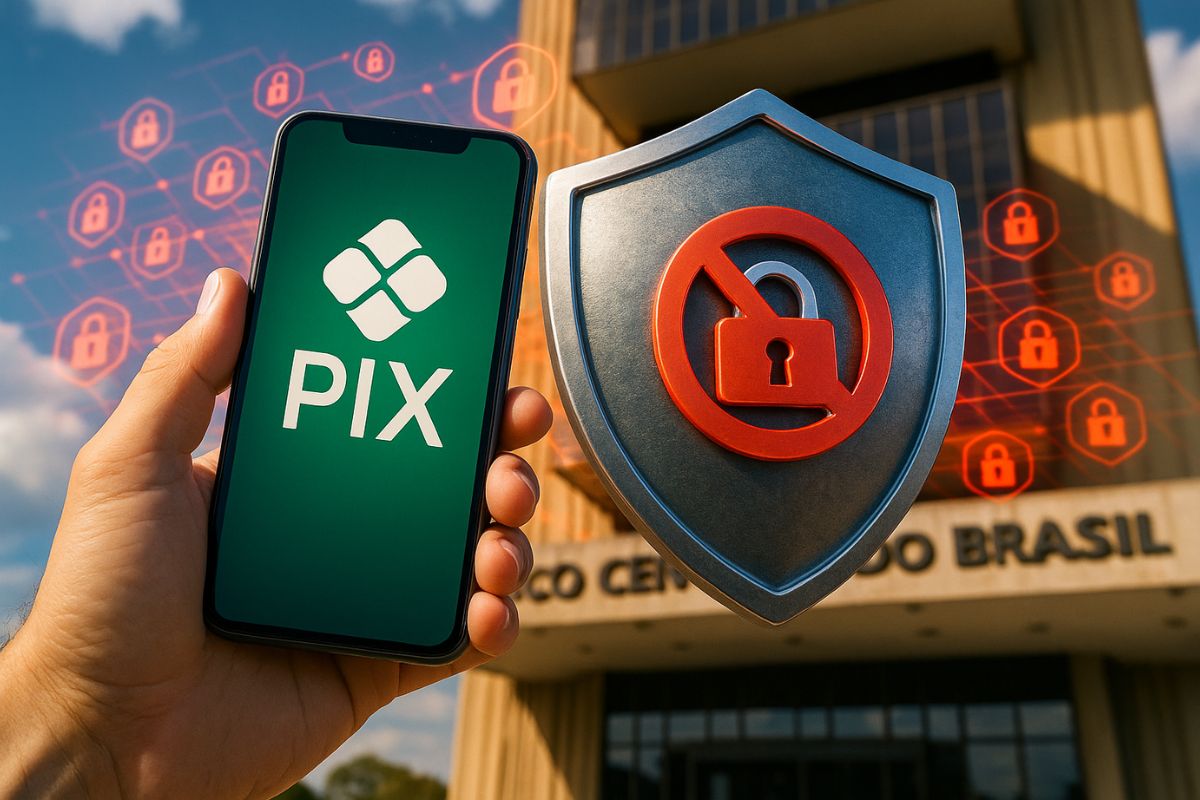
With the New Feature from the Central Bank, the Block of Pix Keys in Registrato Aims to Reduce Frauds in Pix and Scams in Pix by Increasing User Control Over Their Registrations.
The Central Bank launches a preventive block of Pix keys to allow the user themselves to prevent improper registrations in their name, creating an additional layer of security against digital scams that use personal data to open accounts and register false keys in banks and fintechs. With the novelty integrated into Registrato, the Central Bank expands its focus on prevention, reducing the operating space of criminals who exploit registration failures in the financial system.
By centralizing this control in the Registrato environment, the Central Bank aims to give more power to citizens over the use of their CPF in the instant payment system, while linking the measure to a broader package of actions already underway, such as the automatic blocking of suspected keys and the intensive use of the Special Refund Mechanism (MED). In a scenario where scams in Pix are becoming more sophisticated and costly for victims, the strategy targets both individual protection and the stability of the payment ecosystem itself.
How the Preventive Block of Pix Keys Created by the Central Bank Works
In practice, the new feature allows users to access Registrato, the Central Bank’s system that gathers financial information such as open accounts, loans, and registered Pix keys, and activate a specific option to prevent the creation of new keys linked to their CPF.
-
50 viaducts, 4 tunnels, 28 bridges, and 40 kilometers of bike paths: BR-262 in Espírito Santo will receive 8.6 billion reais for the largest engineering project in the state’s history, inspired by the Immigrant Highway in São Paulo.

-
Brazil produces too much clean energy and doesn’t know what to do with it: over 20% of solar and wind capacity was wasted in 2025 while investors flee and 509 renewable generation projects were abandoned in the last year.

-
Piauí will produce a new fuel that replaces diesel without needing to change anything in the truck’s engine and reduces pollutant gas emissions by half: truck drivers from all over the Northeast are already celebrating the news that will arrive later this decade.

-
A new Brazilian shopping center worth R$ 400 million will be built in an area equivalent to more than 4 football fields, featuring 90 stores, 5 cinemas, a supermarket, a college, and parking for 1,700 cars, potentially generating 3,000 jobs.


With the block activated, any attempt to register a new Pix key in their name must be automatically blocked, unless the holder themselves releases the registration.
This logic is similar to services that prevent the opening of new accounts without authorization, also under the supervision of the Central Bank.
The difference is that, in the case of Pix, the focus is on the registration of keys, which has become one of the sensitive points exploited in recent scams.
By integrating the block into Registrato, the Central Bank maintains control in an environment already known for concentrating citizens’ financial data, without requiring new applications or parallel registrations.
Protection Against False Registrations and Identity Scams
The main objective of the measure is to reduce fraud based on false registrations of Pix keys, where criminals use third-party data to link information such as CPF, email, or cell phone number to accounts under their control.
By preventing the creation of new keys without the explicit consent of the holder, the Central Bank tries to close an important door used by scammers to appropriate undue transfers.
This protection is particularly relevant in scenarios involving joint accounts, business accounts, or structures where multiple users have some level of access to the data.
With the preventive block, the holder has an additional mechanism to prevent their name from being used improperly in registrations linked to operations they are unaware of, reducing the risk of involuntary involvement in fraud schemes.
Relationship with Other Central Bank Measures Against Pix Frauds
The preventive blocking of Pix keys is not an isolated action, but part of a set of measures that the Central Bank has been implementing to strengthen the system’s security.
In October, the authority began to automatically block keys marked as suspicious of scams, in addition to making a contestation button available in banking apps, which facilitates refund requests in cases of fraudulent transactions.
Another move cited by the Central Bank itself is the service planned for December, aimed at blocking the opening of new accounts without the holder’s authorization, following a pattern similar to that which will be applied to Pix keys.
Together, these mechanisms indicate a shift in focus: the Central Bank moves away from a merely reactive stance and begins to prioritize structural prevention, decreasing the attack surface at critical points in the registration and transaction cycle.
Sizing the Problem: Average Losses and Sophistication of Scams
The latest data helps to understand why the Central Bank intensifies the fight against fraud in Pix.
According to a survey by the financial intelligence company Silverguard, the average loss from scams in the system increased by about 21% in 2025: in the first half of the year, each victim lost an average of R$ 2,54 thousand per case, compared to R$ 2,1 thousand in the same period of the previous year.
In other words, the problem is not just about the volume of occurrences, but also about the average value per attack.
The study also points out that the higher the income and age of the victim, the greater the amount lost. People over 60 years old had average losses exceeding R$ 4,8 thousand, while classes A and B recorded losses of up to R$ 10,5 thousand per occurrence.
This data reinforces the perception that groups with greater wealth and, often, less familiarity with digital scams become priority targets.
For the Central Bank, this scenario pressures for measures that make it difficult for specialized gangs to operate.
Destination of Transfers and Professionalization of Crime
Another relevant piece of data from Silverguard’s study is the change in the destination of fraudulent transfers.
More than 65% of irregular operations now target accounts of legal entities, suggesting the use of more organized structures, with real or shell companies inserted into money laundering chains.
This indicates that scams involving Pix have largely transitioned from being amateur initiatives to integrating a “highly structured criminal industry”, as described in the research itself.
In this context, the preventive block of Pix keys announced by the Central Bank becomes a piece on a more complex board.
By reducing the chance of creating false keys linked to third-party data, the authority tries to dismantle part of the financial infrastructure used by criminals to receive, redistribute, and conceal values, complementing other regulatory and supervisory actions.
Channels Used by Scammers and the Role of the User
The data also shows that WhatsApp leads as the channel of origin for scams, followed by Instagram and Facebook.
Criminals take advantage of trust in personal contacts, cloned profiles, and seemingly legitimate pages to induce the user to make a Pix to accounts controlled by gangs.
In these cases, the fraud often does not depend on a technical failure of the system, but on social engineering, which makes user awareness as important as the Central Bank’s actions.
Even with the preventive block of Pix keys, user behavior remains a critical component of security.
Being suspicious of urgent transfer requests, confirming through another channel before sending money, and avoiding clicking on suspicious links are practices that significantly reduce risk.
The tools created by the Central Bank enhance structural protection but do not eliminate the need for an active stance from consumers.
Exclusion of Keys and Use of the Special Refund Mechanism
Another recent front of action has been the management of the keys generated over the years of Pix operation.
In just the last few months, more than 245 million keys have been excluded, according to the Central Bank, many of them due to typographical errors, death of the holder, or cancellation at the customer’s request.
This volume illustrates the degree of turnover and the need for clear mechanisms to review and clean up old registrations.
In parallel, the Special Refund Mechanism (MED), created by the Central Bank to reverse fraudulent transactions, was activated 7.7 million times in the first half alone.
This shows a high demand for correction instruments after the occurrence of fraud, reinforcing the importance of preventive measures like the blocking of new keys to reduce the need for subsequent action.
In an ideal cycle, the MED remains as a last line of defense, not as a tool routinely activated.
Impacts of the Central Bank Measure for Banks, Fintechs, and Users
For financial institutions, the preventive blocking of Pix keys will require operational and interface adjustments.
Banks and fintechs will have to align their systems with Registrato to respect the blocking signal issued by the Central Bank, preventing incompatible registrations.
This tends to increase security but may also require adjustments in account opening flows, digital onboarding, and customer service to avoid errors in legitimate registration situations.
For users, the direct impact is an increase in control over their CPF in the financial system, albeit accompanied by a greater responsibility to manage the status of blocking or unblocking whenever they want to create new keys.
In practice, those who do not frequently register keys may keep the block active as a default, releasing it only when they really need to register a new Pix key.
Conclusion: Is the Central Bank’s Block of Pix Keys Sufficient to Contain Scams?
The decision of the Central Bank to create a preventive block of Pix keys is part of a broader strategy to strengthen the system’s security, reducing gaps for false registrations and making it more difficult to misuse personal data in digital fraud.
Together with the automatic blocking of suspected keys, the contestation button in apps, and the intensive use of the MED, the measure aims to shift the axis of the fight against scams from an exclusively reactive field to a more preventive and structured approach.
Still, the increasing sophistication of gangs, the use of legal entity accounts, and the central role of channels like WhatsApp, Instagram, and Facebook show that the problem is far from being resolved solely with regulatory changes.
The full effectiveness of these actions will depend on the combination of technology, supervision, cooperation between institutions, and financial education of the user, which remains the last barrier against hasty transfer decisions.
And you, in light of the new Pix key blocks announced by the Central Bank, do you believe these measures will effectively reduce scams, or do you think criminals will still find loopholes to operate in the system?









Seja o primeiro a reagir!