





 Portuguese
  English
  Spanish
  4 min of reading
  327 comments


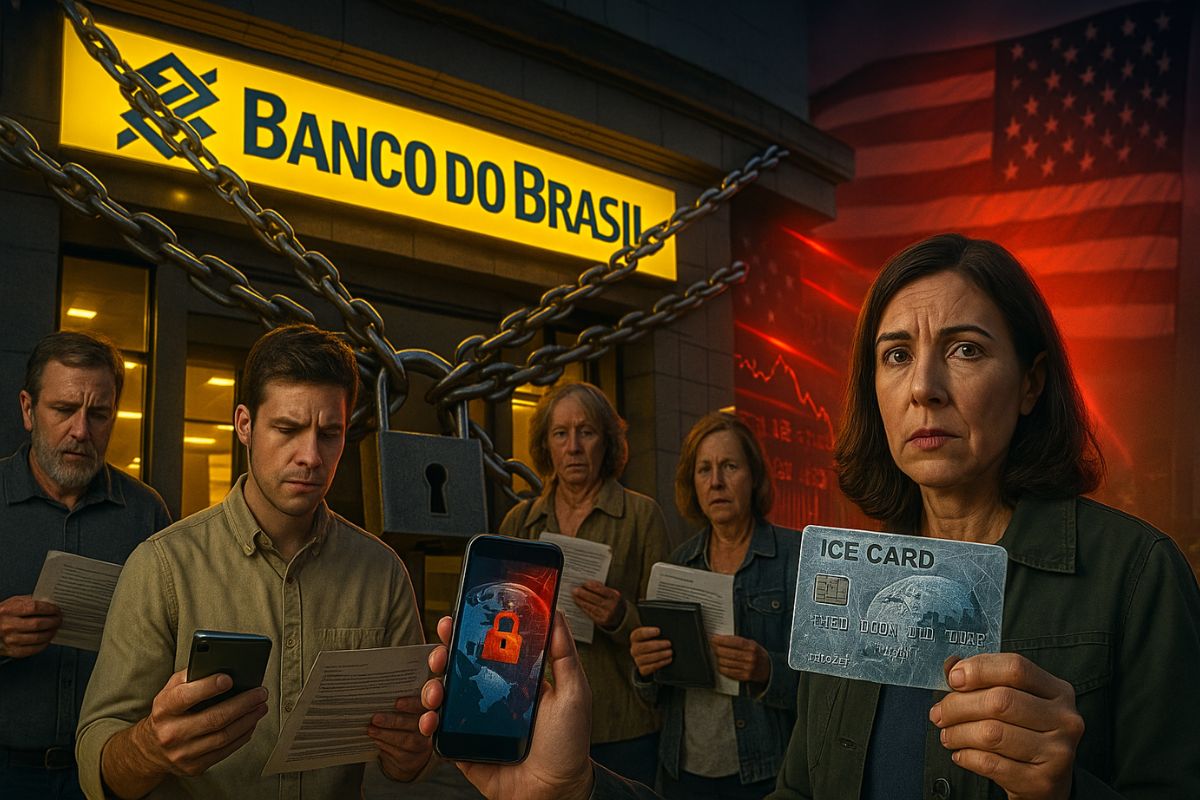


Banco do Brasil May “Sacrifice 50 Thousand Clients in the U.S.” Amid Sanctions Risk.
The Banco do Brasil faces one of the most delicate debates in its recent history: how to deal with international sanctions imposed by the Magnitsky Act from the United States. According to graduate student in economics Nanda Guardian, the bank could “sacrifice 50 thousand clients in the U.S.” to defend a sanctioned individual, risking exclusion from SWIFT, a drop in its dollar bonds, and a drastic reduction in international operations.
The alert exposes a strategic dilemma: either Banco do Brasil complies with U.S. requirements and preserves its global space, or it adopts a confrontational stance and risks operating like isolated institutions, similar to banks in Iran and Russia.
Who Is at the Center of the Controversy
The discussion revolves around the Magnitsky Act, legislation used by the U.S. to punish individuals accused of severe human rights violations.
-
Peugeot and Citroën factory in Argentina cuts production by half and opens a layoff program for more than 2,000 employees after Brazil drastically harmed purchases of Argentine vehicles.

-
A Brazilian city gains a factory worth R$ 300 million with the capacity to process 200 thousand tons of wheat per year, a mill of 660 tons per day, silos for 42 thousand tons, and an industrial area of 276 thousand m².
-
Havan will leave the shopping mall in Blumenau to inaugurate something the chain has never done before: a megastore in half-timbered style in the Historic Center of the city, which is expected to be ready in May and change the landscape of local retail.

-
Unemployment rises again to 5.8% at the beginning of 2026, raising alarms about the end of temporary positions and its impact on the Brazilian job market.


Nanda Guardian points out that complying with the law would be a “critical test” for Banco do Brasil, which would have to choose between maintaining international clients or facing economic reprisals.
The video analyzed by the economist states that the bank’s current management is prioritizing internal issues, such as diversity and inclusion (DEI), at the expense of protecting clients and shareholders.
This criticism, however, is presented as an opinion from analysts and does not represent the institution’s official position.
How Much Could the Decision Cost
Failing to comply with U.S. sanctions could incur extremely high costs.
Being excluded from the SWIFT system, the international financial messaging network, would make it practically impossible for Banco do Brasil to operate at the current scale.
Moreover, the measure would directly impact the dollar bonds already issued by the bank, which could lose value due to legal uncertainty and risk perception.
Nanda Guardian warns that the cascading effect would affect not only international clients but also investors’ confidence in the domestic market.
Where the Biggest Risks Are
The epicenter of the risk is the U.S. market, where Banco do Brasil has about 50 thousand clients.
If it opts to disregard U.S. legislation, these account holders could be the first affected.
The shrinking of international presence would reduce the bank to more domestic operations, weakening its global relevance.
On the macro level, trade agreements and financial transactions from Brazil would also be impacted, as Banco do Brasil plays a central role in operations related to foreign trade.
Why the Issue Divides Opinions
The debate also reignites old discussions about the role of state banks. Critics argue that Banco do Brasil reflects political interests and should be privatized to gain efficiency and reduce risks.
In contrast, advocates for the state presence argue that the institution is fundamental for agricultural credit and strategic public policies.
Nanda Guardian emphasizes that, given the banking concentration in Brazil where six institutions control up to 85% of credit, a potential weakening of Banco do Brasil could further compromise competition and increase credit costs for companies and consumers.
Is It Worth It for Banco do Brasil to Face This Risk?


The decision to align with or against international sanctions could define the institution’s future.
Complying with the Magnitsky Act preserves access to the global financial system, but may generate internal political tensions.
Ignoring the sanctions, on the other hand, threatens the bank’s international survival and risks isolation.
According to Nanda Guardian, the scenario reveals the vulnerability of state banks to political pressures, both domestic and external, showing how strategic decisions can directly affect millions of account holders and the Brazilian economy.
The impasse places Banco do Brasil at a crossroads: follow international rules and maintain its global space or adopt a confrontational stance and risk shrinking to the domestic market.
The outcome could impact not only clients and investors, but also Brazil’s position in international trade.
And you, do you think Banco do Brasil should prioritize the protection of its international clients or take the risk of facing sanctions to defend political interests?
Leave your opinion in the comments — we want to hear the views of those closely following this dilemma.









Eu só sei que vou cair fora dessa **** de BB, antes que seja tarde.
RIMMMMM! Roommmmmm! Contato!! Estou tentando aprender a sua língua para mandar toda La Petezada Del Car AJo para Los Quintos Del Infiernos!! RiimmmmmmmmRommmmmmmmmmmmm
Esse é o problema das estatais sob governos de esquerda. Tem que fazer o que chefe manda,não tomar a melhor decisão para o banco e seus clientes.