





 Portuguese
  English
  Spanish
  5 min of reading
  0 comments


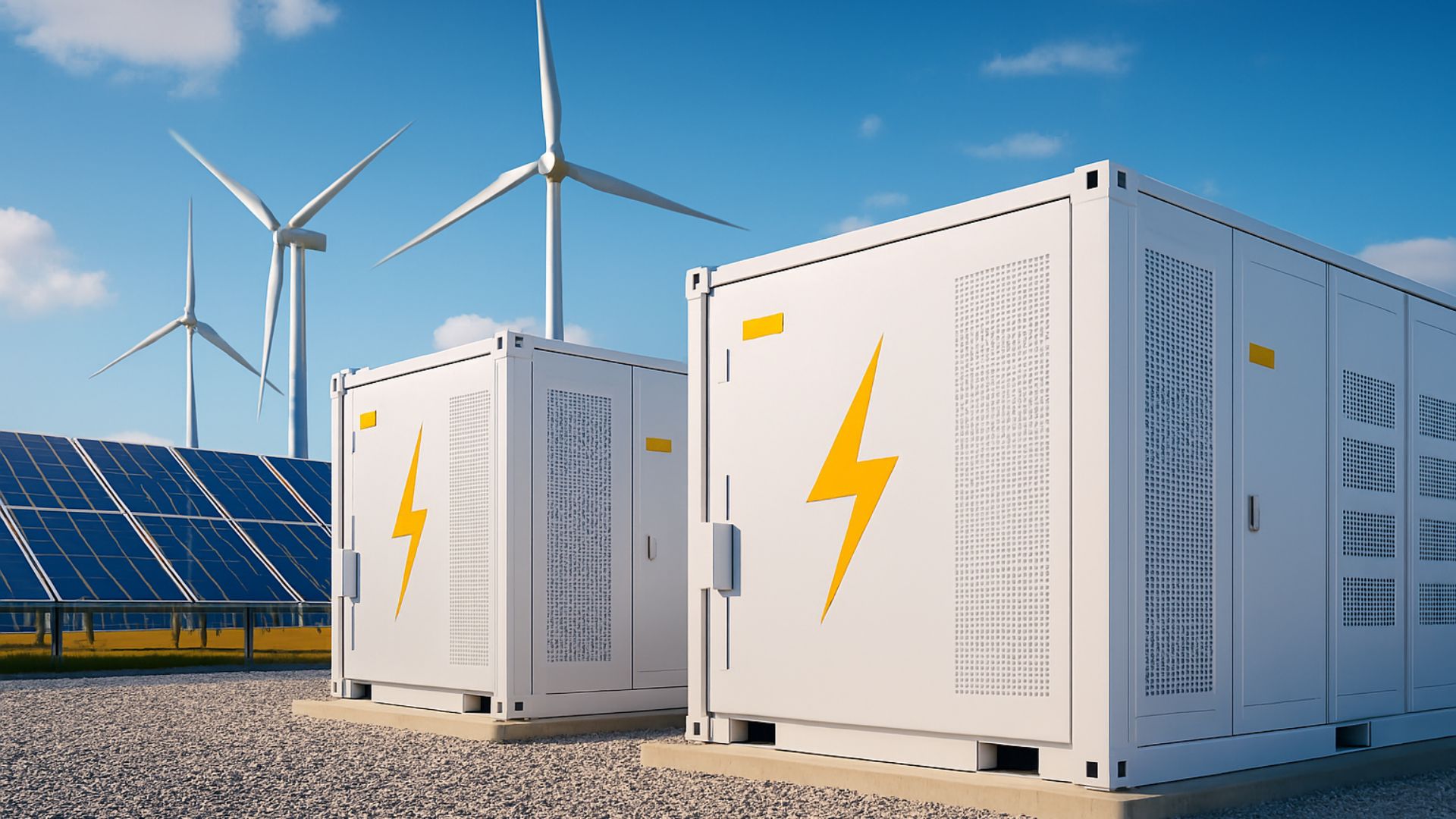
Lithium Batteries Gain Ground in the Energy Sector and Strengthen the Global Power Grid, Ensuring More Stability, Reducing Blackout Risks, and Accelerating Clean Energy Expansion in Several Countries
An article published on December 7, 2025, by the Automotive News website points out that lithium batteries have ceased to be used only in electric vehicles and electronics to assume an essential role in the stability of the global power grid. The technology, once expensive and viewed with some skepticism, has become a strategic component for storing surplus generation and reducing risks of instability and blackouts.
The New Role of Lithium Batteries in the Clean Energy Sector
These systems are now found in gigantic containers installed next to wind and solar parks, allowing them to accumulate renewable energy during periods of intense production and return it to the grid during peak demand times. Thus, they transform variability into stability and drive the advancement of sustainable energy on a global scale.
According to the report, the change in perception about the technology originated from an experiment conducted in the Atacama Desert in Chile. The project, developed about 15 years ago by American engineers, demonstrated that lithium batteries operated efficiently even under extreme temperatures, at altitude, and in adverse conditions.
-
Renewable energy advances over protected areas in Brazil, and a survey by the Energy Transition Observatory reveals silent impacts that challenge environmental conservation and pressure sensitive traditional territories.

-
Rio Grande do Sul accelerates energy transition: State invests in renewable technologies and consolidates decarbonization strategies and pathways to attract billions in new industrial investments.

-
With 160,000 m² of collectors, an area larger than 20 football fields, Silkeborg, in Denmark, hosts a solar thermal plant that heats 19,500 homes and could become the largest solar heating plant in the world.

-
A study reveals the expansion of renewable energy procurement in Brazil and shows how companies are taking advantage of opportunities to reduce expenses, ensure energy efficiency, and strengthen strategic environmental commitments.


From that point on, countries on different continents began testing similar solutions, observing that immediate energy storage was much more efficient than relying on peak thermal plants, which can require considerable time to be brought online and incur high costs.
The rapid response of batteries was crucial for their widespread adoption. Over time, the drop in price—approximately 90% over a decade—consolidated the technology as a viable alternative for use in large-scale systems. Combined with the expansion of renewable energies, this evolution favored the adoption of storage solutions, enabling more stable, less polluting grids aligned with the ongoing energy transition.
How Storage Helps Prevent Blackouts
The integration of batteries into the electrical system allows energy to be stored when there is an excess of solar or wind production. This process reduces fluctuations in generation and prevents sudden changes from causing instabilities that could result in blackouts.
Unlike thermal plants, which require more time to be activated, batteries can release energy in seconds. This characteristic makes the electrical system more dynamic, flexible, and secure. Large U.S. states, such as California and Texas, have already recorded significant reductions in emergency alerts regarding energy use during heat waves.
Storage ensures that the grid can handle peaks in consumption without compromising supply. Furthermore, the technology reduces the need to rely on polluting plants, aiding countries in meeting climate goals and strengthening decarbonization policies.
Clean Energy and Expansion of Sustainable Infrastructure
The global transition to renewable sources faces two main challenges: intermittency and responsiveness. It is precisely at this point that lithium batteries shine.
They enhance the presence of clean energy in the system without compromising supply security. According to the report Batteries and Secure Energy Transitions (2024) from the International Energy Agency (IEA), global demand for energy storage is growing as wind and solar systems expand.
Regions with weaker infrastructure have also started investing in storage, using batteries to compensate for drops in production or momentary failures, especially in remote areas. This movement accelerates safe and reliable electrification in places that previously suffered from constant energy fluctuations.
Safety Challenges and Technological Evolution
Although batteries have advanced in efficiency and cost, some challenges remain. The report cites incidents recorded at older facilities, particularly in systems developed between 2015 and 2018. Those projects used less safe technologies and insufficient cooling protocols.
However, current systems feature much more robust safety standards, with more sensitive thermal sensors, advanced management software, and structures designed to minimize overheating risks. The high reliability makes recent incidents rare and isolated.
Manufacturers are also investing in new chemistries, such as lithium iron phosphate (LFP), which offers greater thermal stability and a lower risk of ignition. This reinforces the adoption of technology even in urban environments, where safety is a priority.
Sustainability and Recycling Challenges
As the number of installed batteries grows, so does the concern about the fate of components at the end of their life cycle. Recycling is one of the main environmental challenges in the sector.
Recent studies highlight the need to recover elements such as lithium, nickel, cobalt, aluminum, and graphite to ensure a sustainable production chain. Countries are developing more efficient industrial processes to separate materials, reduce waste, and minimize environmental impact.
This step is essential to meet the circular economy and ensure that the expansion of energy storage does not result in future environmental issues.
Economic and Geopolitical Impacts of Massive Adoption
The concentration of global battery production in a few countries—primarily China, South Korea, and the United States—generates international dependence and tensions in supply chains. Minerals such as lithium and nickel are strategic and tied to specific regions of the planet.
This concentration leads governments and companies to seek local mining, refining, and manufacturing projects to reduce external dependence. At the same time, it encourages the development of technological alternatives that use fewer critical materials, reducing vulnerabilities.
On the other hand, the growth of the sector generates jobs, expands the industrial chain, and accelerates investments in technology, moving billions of dollars a year.
Trends and Future of Clean Energy Storage
Various studies indicate that the role of lithium batteries will be even greater by 2050. Projections suggest that storage systems will be essential for enabling electrical matrices based almost entirely on renewable sources.
Moreover, smart charging of electric vehicles is expected to act as an extension of the storage infrastructure. Cars could return energy to the grid during peak times, enhancing stability and reducing the need for new plants.
The digitization of the grid, with sensors, artificial intelligence, and advanced control systems, will make storage even more efficient. The future of electricity will be more flexible, decentralized, and sustainable.
The Global Impact of the New Era of Storage
The growing adoption of batteries marks a historic turning point: they move from a secondary role to an essential function in the global electrical grid. Technological advancements, cost reductions, and the expansion of clean energy create ideal conditions for consolidating storage as a cornerstone of modern energy infrastructure.
For consumers, this means greater stability, more predictable energy bills, and a lower risk of blackouts. For the planet, it represents a decisive acceleration in the reduction of pollutants and the strengthening of the renewable matrix.









Seja o primeiro a reagir!