





 Portuguese
  English
  Spanish
  6 min of reading
  0 comments


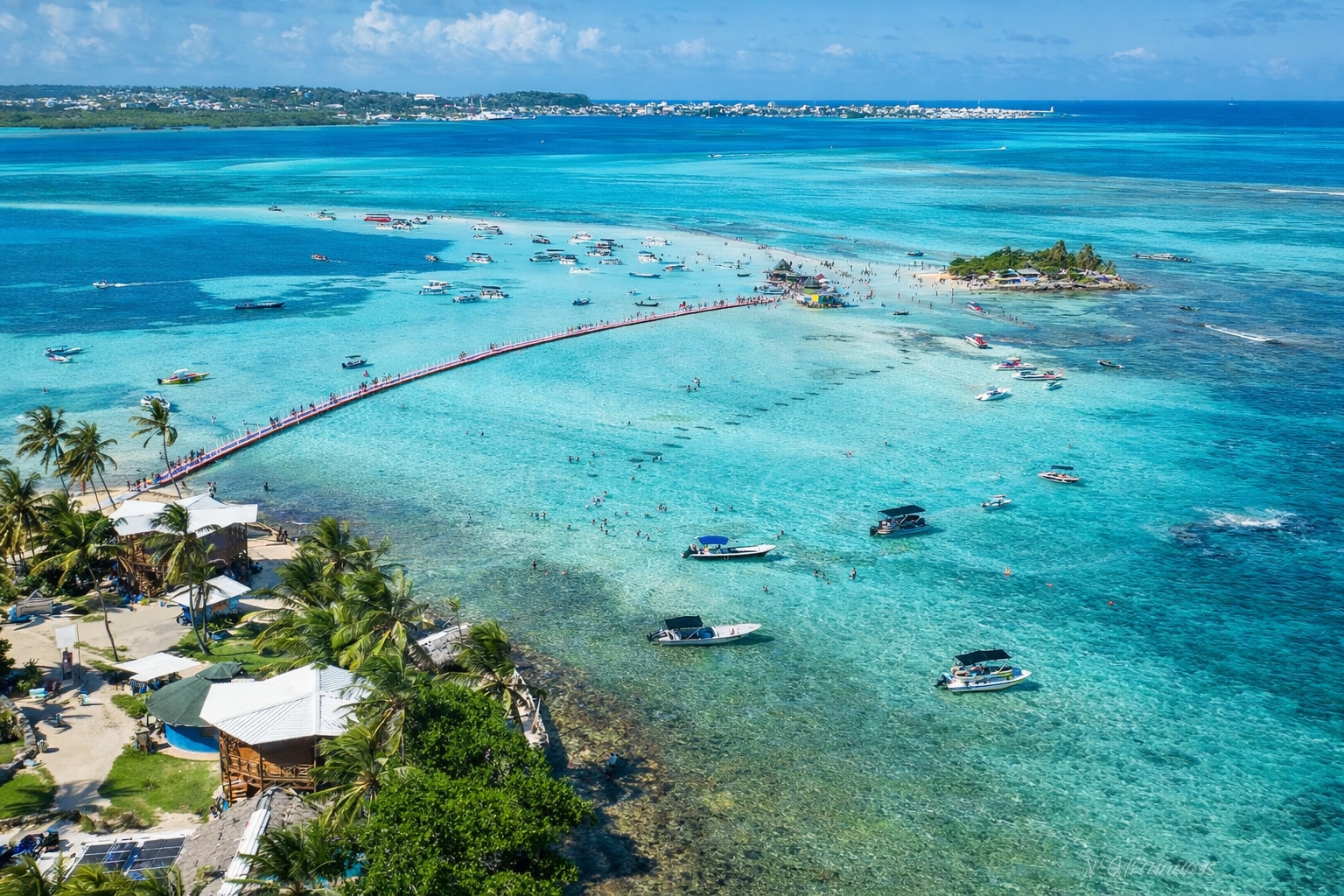
Discover the most impressive beach in South America for tourists seeking crystal-clear sea, white sand, and the famous seven-color sea in San Andrés, in the Colombian Caribbean.
Few places in South America can create that immediate impact that makes visitors stop, look again, and wonder if it’s really real. In San Andrés, the combination of light-sand beach, transparent sea, and ever-changing blue hues transforms the landscape into an unforgettable spectacle. It’s no coincidence that the island has become one of the most desired destinations for tourists wanting to see the famous seven-color sea up close, a natural phenomenon that blends beauty, biodiversity, and a Caribbean setting that seems to have been hand-touched.


Where is the beach of San Andrés, in South America, that attracts tourists from all over the world
San Andrés is an island in Colombia located in the Caribbean Sea, part of the department of the San Andrés, Providencia, and Santa Catalina archipelago.
Although it belongs to Colombian territory, it is geographically closer to Nicaragua than to the Colombian mainland.
-
A couple buys an old chalet, breaks the kitchen floor for renovation, and finds over a thousand coins of gold and silver hidden since the English Civil War over 4 centuries ago.

-
Rigid bags with their days numbered: new trend prioritizes comfort in 2026.

-
YouTuber creates an excavator equipped with a giant 4.5-meter sword to challenge his brother to a rematch, and the invention quickly goes viral on social media.

-
The U.S. Army surprises the world by presenting the UH-60MX Black Hawk helicopter capable of flying without pilots, controlled by a tablet, featuring the MATRIX system, smart sensors, and full autonomy in real combat and rescue missions.


This detail helps explain why the place has such a particular identity, with a strong mix of English, Spanish, African, and Creole influences, something that appears in the local culture, music, gastronomy, and the way they welcome newcomers.
Why does this beach in South America have a seven-color sea
The nickname did not arise from tourist exaggeration. The sea of San Andrés truly exhibits visible color variations, and this happens due to the combination of depth, light incidence, type of seabed, presence of corals, algae, and white sand with limestone sediments.
In shallow areas, the tone tends toward turquoise blue. Where there are more algae, the water can lean towards greenish-blue.
Rocky regions tend to darken the view, while deeper sections gain a more intense blue.
Near the coast, the translucent effect or aquamarine water appears more strongly. The official channels of Colombia Travel explain that the wide variation of shades is linked to the coral reefs surrounding the island.
This play of colors changes throughout the day. The position of the sun directly affects how the water is perceived, so the sea may appear more vivid at certain times and softer at others.
At sunrise or sunset, the landscape gains pink, orange, and even purple reflections, creating a visual effect that makes the experience even more remarkable for tourists.
The beach, Johnny Cay, and the spot where tourists find the most impressive sea in South America
One of the areas most associated with the seven-color sea is near Johnny Cay, also known as Ilhéu de Sucre.
The site is located in a zone protected by coral reefs that act as a kind of natural barrier.
This reduces the direct impact of the open sea in certain sections and favors the formation of that layered blue visual that made the island famous.
Johnny Cay is about 1.5 kilometers from San Andrés and is recognized as a regional natural park. Today, it remains one of the most sought-after spots by visitors to the region.
Besides the obvious beauty of the beach, the surroundings draw attention for marine life. The area is highly sought after for snorkeling, boat tours, and experiences observing local wildlife.
Among the most valued attractions are tropical fish, starfish, algae, and other organisms that live in this reef environment.
For those who prefer something more thrilling, activities like jet skiing are also part of the island’s tourist routine.
According to the official San Andrés page on Colombia Travel, diving, snorkeling, and water sports are among the most popular experiences at the destination.
What makes this beach in South America even more special for tourists and researchers
San Andrés impresses not only with its visuals. The archipelago is part of the Seaflower Biosphere Reserve, recognized by UNESCO in 2000 under the Man and Biosphere program. This recognition placed the region on the world map of environmental conservation due to its enormous ecological relevance. The reserve houses essential coastal and marine ecosystems, such as coral reefs, mangroves, seagrass beds, beaches, and deep ocean areas.
The environmental importance of the place is enormous. Public documentation from Coralina states that the Seaflower Reserve is part of the World Network of Biosphere Reserves and that its goal is to reconcile conservation, sustainable use, and participation of local communities.
Institutional materials from the region itself record more than 2,564 species in the reserve, as well as the presence of one of the most significant reef areas in the Colombian Caribbean.
This reinforces that the landscape that enchants tourists also serves as a refuge for valuable biodiversity that is still being studied.
UNESCO itself defines biosphere reserves as spaces aimed at demonstrating practices that reconcile environmental conservation and sustainable development. In the case of Seaflower, this idea makes a lot of sense: the island depends on tourism but also needs to protect the ecosystem that sustains its fame.
Best time to visit the beach and see the seven-color sea more clearly
San Andrés has warm weather year-round, with temperatures generally between 26 °C and 29 °C, which keeps the island inviting in almost any month.
Still, the best time to enjoy the beach and outdoor activities is usually the dry season, which runs from December to May, when the days tend to be sunnier and the sea appears even more crystal clear.
This is the preferred time for many tourists to take boat trips, dive, snorkel, and visit the most famous spots on the island without much interference from rain.
Even outside the dry season, San Andrés continues to receive visitors, as the weather remains warm and the visual appeal of the Caribbean stays strong.
Tourism on the rise, but with attention to preserving the beach and ecosystem
Visitors to San Andrés find a destination prepared for tourism, but they also notice that environmental conservation has become a central theme on the island.
The local environmental management conducts periodic actions in Johnny Cay and other sensitive areas, including maintenance, cleaning, monitoring, and measures to reduce impacts on coastal ecosystems.
In recent publications, Coralina has highlighted maintenance and conservation work in Johnny Cay, as well as environmental awareness actions.
This highlights an important point: the success of this beach in South America depends on the balance between visitation and protection.
The seven-color sea remains one of the most impressive sights in the Colombian Caribbean, but its preservation requires control, management, and constant care for waste, corals, and marine fauna.
Why does this beach in South America affect tourists so much
There are beautiful destinations, and there are places that deliver a complete experience. San Andrés easily falls into the latter group.
The landscape catches the eye right away, but what makes the place memorable is the sum of factors: multicolored sea, white sand, diverse cultural heritage, warm climate, coral reefs, and a very unique Caribbean atmosphere. For many tourists, it’s not just a trip for relaxation.
It’s one of those experiences that yield strong memories, beautiful photos, and the feeling of having discovered one of the most impressive gems of South America.
If you enjoy destinations with lush nature, crystal-clear sea, and a beach that truly offers something out of the ordinary, San Andrés deserves to be on your radar.
And if this content helped you, leave a comment telling if you would dare to face this Caribbean paradise or share the post with someone who loves discovering surprising places.







Seja o primeiro a reagir!