





 Portuguese
  English
  Spanish
  6 min of reading
  0 comments


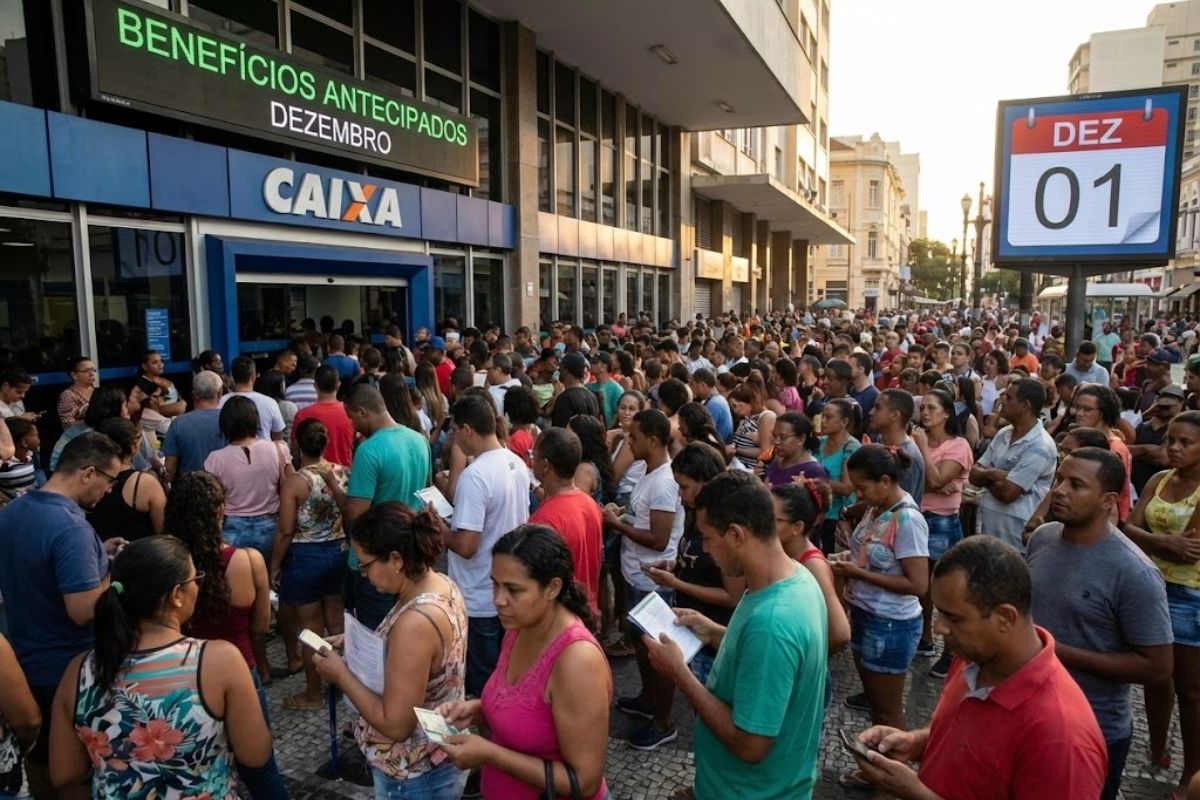
Amid Floods, Tornadoes, Storms, and Prolonged Drought, Federal Benefits Such As Bolsa Família and Gas Aid Will Have a Unified Payment in 179 Municipalities, Amounting to R$ 284 Million in December and Reaching All at Once for About 500 Thousand Vulnerable Families on the First Day of the Official Monthly Payment Calendar
On December 11, 2025, the Ministry of Development and Social Assistance, Family, and Fight Against Hunger confirmed the unification of the payment of federal benefits in 179 municipalities across seven Brazilian states. The measure, valid for December, advances Bolsa Família and Gas Aid for households affected by natural disasters, severe droughts, and situations of extreme vulnerability, ensuring that the amount is credited to accounts on the very first day of the calendar, regardless of the end of the NIS.
According to official data, the decision releases R$ 284 million in federal benefits for about 405 thousand families registered in Bolsa Família and more than 93 thousand beneficiaries of Gas Aid. In practice, more than 500 thousand households in cities in the South, Northeast, North, and Southeast will receive all the social income of the month on a single date, which explains the immediate rush to ATMs, banking correspondents, and apps already in the first hours of payment.
What Changes with the Advancement of Federal Benefits
The unified payment alters the traditional routine of social programs, which normally follow a staggered calendar throughout the month.
-
50 viaducts, 4 tunnels, 28 bridges, and 40 kilometers of bike paths: BR-262 in Espírito Santo will receive 8.6 billion reais for the largest engineering project in the state’s history, inspired by the Immigrant Highway in São Paulo.

-
Brazil produces too much clean energy and doesn’t know what to do with it: over 20% of solar and wind capacity was wasted in 2025 while investors flee and 509 renewable generation projects were abandoned in the last year.

-
Piauí will produce a new fuel that replaces diesel without needing to change anything in the truck’s engine and reduces pollutant gas emissions by half: truck drivers from all over the Northeast are already celebrating the news that will arrive later this decade.

-
A new Brazilian shopping center worth R$ 400 million will be built in an area equivalent to more than 4 football fields, featuring 90 stores, 5 cinemas, a supermarket, a college, and parking for 1,700 cars, potentially generating 3,000 jobs.


In the 179 selected municipalities, the federal benefits of Bolsa Família and Gas Aid are deposited on the first day of the payroll, without division by the NIS end.
The measure is applied in locations officially recognized as being in a state of emergency or public calamity.
In these cities, the federal government’s aim is to reduce the time between the announcement of aid and the money actually being available for families, in a context where many have lost homes, food supplies, furniture, or had their income compromised due to floods, storms, tornadoes or prolonged drought.
For families, the main practical consequence is the advancement of the cash flow for the month.
Instead of waiting for the traditional calendar date, all federal benefits come at once, allowing for restocking supplies, paying overdue bills, buying cooking gas, and reorganizing the household budget right in the first days of December.
179 Municipalities, Seven States, and R$ 284 Million in Transfers
The package of federal benefits advanced concentrates R$ 284 million across seven states, with a strong emphasis on regions affected by extreme weather events.
According to the MDS, the measure reaches 179 municipalities in different geographical realities.
In Paraná, 32 municipalities affected by a tornado last month will have unified payment, with an investment exceeding R$ 14 million.
More than 21 thousand families from Bolsa Família and about 3,700 from Gas Aid will receive the advanced amounts. In cities like Rio Bonito do Iguaçu, one of the hardest hit, the total transfer exceeds R$ 1 million.
In Rio Grande do Norte, prolonged drought and severe dryness have led 120 municipalities to the priority list.
There, over 250 thousand families receive Bolsa Família, totaling R$ 166 million, in addition to R$ 6.8 million in Gas Aid.
In Sergipe, nine cities that recorded losses due to the drought will have a unified calendar, with transfers exceeding R$ 31 million for more than 45 thousand families from Bolsa Família and another 9 thousand from Gas Aid.
In Piauí, two cities, Rio Grande do Piauí and São Miguel do Fidalgo, total about R$ 1.5 million in advanced transfers. In the Legal Amazon, the focus is on extreme vulnerability.
In Amazonas, Barcelos, Santa Isabel do Rio Negro, and São Gabriel da Cachoeira account for more than 14 thousand families from Bolsa Família and 4,500 from Gas Aid, totaling over R$ 12 million.
In Roraima, six municipalities account for more than 50 thousand families from Bolsa Família and 7,300 from Gas Aid, with an investment exceeding R$ 37 million.
In São Paulo, seven municipalities affected by storms and strong winds, including Botucatu, Cajamar, and Porto Feliz, are also on the anticipation list.
In this region, more than 19 thousand families will be reached by Bolsa Família and 6 thousand by Gas Aid, with an investment of approximately R$ 13 million.
In all these cases, the federal benefits arrive on a single date, immediately straining agencies, lottery offices, and digital service channels.
Who Is Entitled to the Advanced Federal Benefits
The advancement applies to all families who were already eligible to receive federal benefits from Bolsa Família and Gas Aid in the municipalities included in the MDS ordinance.
This is not a new program, but rather a change in the payment date for those already on the regular payroll, conditioned to the situation of emergency or calamity recognized.
This means that the amount of the benefit remains the same, but access to the money is concentrated on the first day of the calendar, regardless of the NIS end.
Families living in neighboring cities, outside the list of 179 municipalities, continue to follow the traditional staggered calendar, with deposits distributed throughout December.
During the period of the advancement, processes of review and registration verification are suspended, precisely to avoid blockages or cancellations at a time of greater social fragility.
The suspension can last up to two months and be extended if the municipality remains in a state of emergency, ensuring minimal predictability for those dependent on federal benefits to close their monthly accounts.
Emergencies, Social Vulnerability, and the Rush for Money on the First Day
The decision to advance federal benefits is based on a picture of vulnerability that mixes extreme weather events and structural poverty.
Municipalities in Paraná deal with the destruction left by a tornado, while municipalities in Rio Grande do Norte, Sergipe, and Piauí face prolonged drought and dry spells, regions of the Legal Amazon cope with isolation, logistical difficulties, and high costs of living, while municipalities in São Paulo suffered storms and strong winds with significant material damage.
In these contexts, receiving Bolsa Família and Gas Aid on the first day of payment becomes a matter of immediate survival.
Many families arrive at ATMs with overdue water, electricity, and rent bills, in addition to the need to restock food and buy cooking gas.
By concentrating deposits for nearly half a million families on a single date, the advance tends to create lines and peaks of access to apps and digital channels, but also reduces the anxiety of those who, in a state of calamity, cannot wait for the end of the staggered calendar.
For the federal government, the strategy is presented as an emergency response, but also as a test of the operational capacity of social payment systems in recurring climate crisis scenarios.
If the frequency of disasters increases, the pressure for the advance of federal benefits tends to grow, requiring ongoing coordination between municipalities, states, and the Union.
Until When Does the Measure Last and What Are the Next Steps
The unification of payments in December lasts as long as the state of emergency or calamity recognized persists in each of the 179 municipalities.
In general, the suspension of registration reviews and the advancement of federal benefits can be extended for up to two months, with the possibility of extension if adverse conditions persist.
After this period, the trend is for the calendar to return to the traditional staggered format, with payments distributed throughout the month by NIS end.
The continuation or expansion of the advancement will depend on new regulations and monitoring of climatic disasters, droughts, and other events capable of compromising the income and minimum living conditions of the families served.
At the heart of the debate remains the fundamental question: how to use emergency federal benefits to alleviate the crisis without losing sight of the need for structural policies against poverty and climate vulnerability, especially in small municipalities with low fiscal capacity.
In your opinion, in situations like this, should the government prioritize even more the advancement of federal benefits or focus on structural works and local programs that reduce dependence on emergency aid with each new disaster?










Seja o primeiro a reagir!