





 Portuguese
  English
  Spanish
 3 min of reading
  0 comments


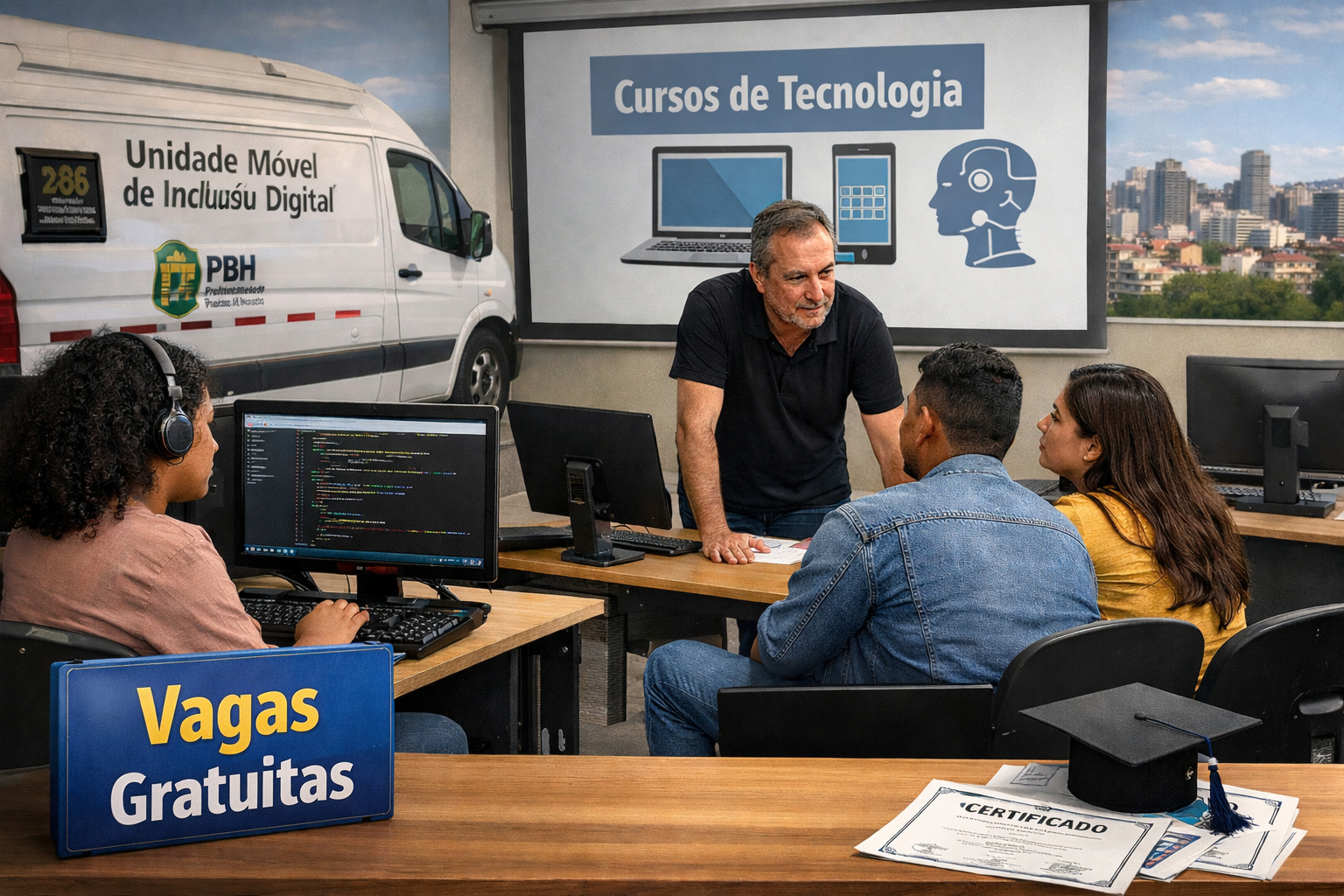
BH Will Open 12,000 Slots in Free Technology Courses in 2026, Focused on Opportunities and Integration into the Job Market in Brazil.
Belo Horizonte will offer over 12,000 slots in free technology courses throughout 2026, through the City Hall’s Digital Inclusion Program.
The initiative, aimed at young people and adults, takes place in the capital of Minas Gerais and combines in-person and online classes to expand opportunities, strengthen professional qualification, and facilitate entry into the job market in Brazil, especially in areas related to digital transformation.
The program serves city residents interested in developing digital skills, from basic computer knowledge to more advanced training in programming and artificial intelligence.
-
Federal Institute opens over 700 vacancies in free technical courses in Civil Engineering, Mechanics, Electrotechnics, Computer Science, and Nursing; see how to enroll and study at IFPB.
-
Become a professional in logistics, mechanics, computer science, chemistry, or gastronomy at the Federal Institute: Ifes opens more than 1,000 spots in free technical courses with selection without an exam.

-
Take a 100% online and free course at Itaú: Foundation releases 156 options with certificates, registrations open for all of Brazil, unlimited access, areas such as technology, education, and management, and a flexible schedule without tutoring.

-
Senai will pay up to R$ 700 per month for those who take free technical courses: there are 12,000 open positions across Brazil and training with access to the technology market.
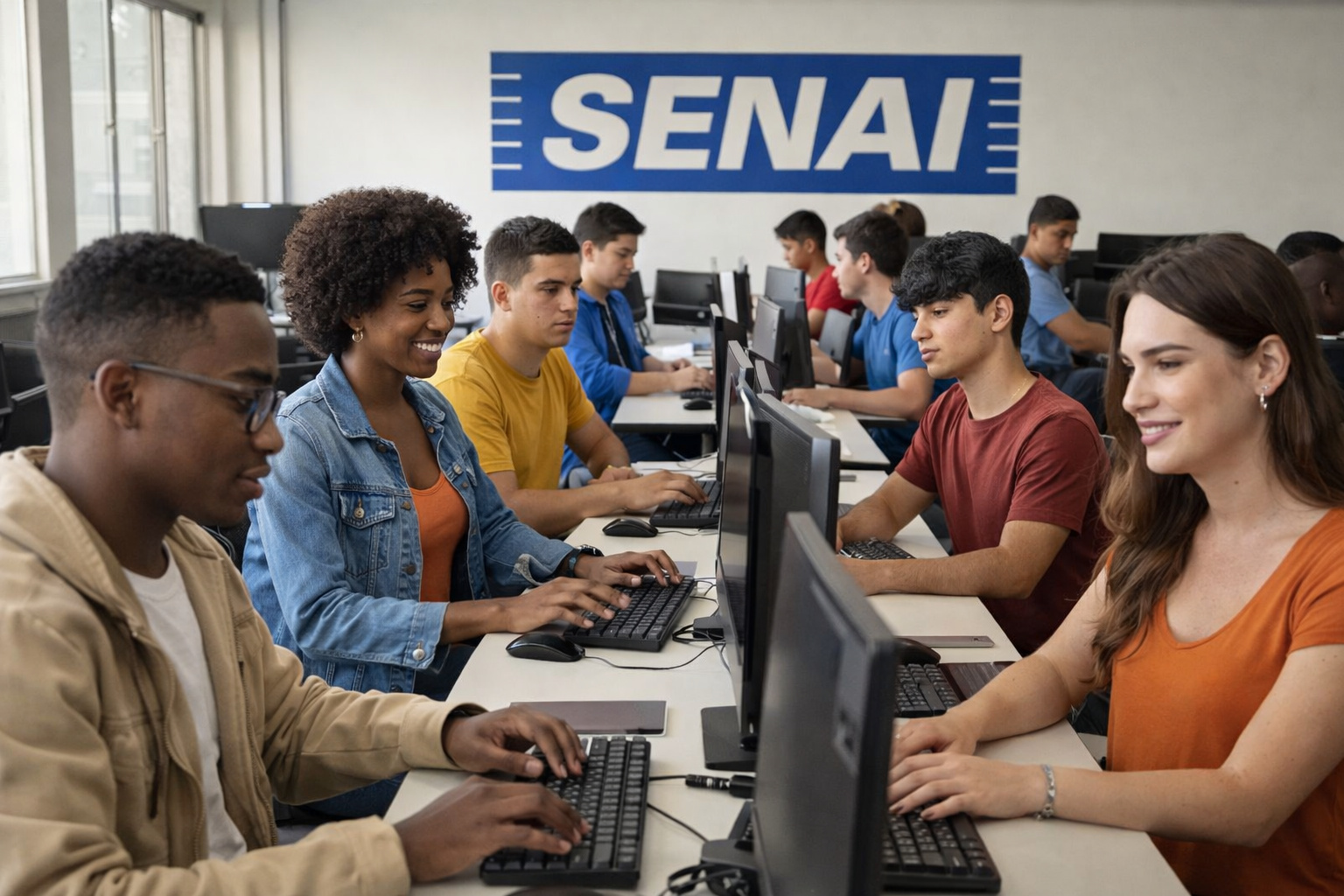

Registrations can be made in person, by phone, or online, which expands access and reduces barriers for those seeking professional training.
The main goal is to prepare the population for an increasingly connected economic scenario to technology.
Free Technology Courses Focused on Inclusion and Employability
The City Hall’s Digital Inclusion Program brings together more than 20 different courses, organized from basic to advanced levels. This way, people with no prior experience can start their digital journey, while those already working in the field can enhance strategic knowledge.
Among the topics covered are computer science, programming, digital entrepreneurship, artificial intelligence, and environmental management of electronic waste. These subjects directly address the real demands of the job market, which seeks professionals capable of combining technical knowledge and practical insight.
Furthermore, the program also offers itinerant workshops conducted in the Mobile Digital Inclusion Unit. This strategy brings free technology courses to different regions of the city, increasing opportunities for training for audiences who often have difficulty accessing traditional educational centers.
In-Person Training Meets Different Student Profiles
In-person classes take place at the Digital Inclusion Unit of Prodabel, located at Rua José Clemente Pereira, 440, in the Ipiranga neighborhood, as well as telecenters distributed across all regional areas of Belo Horizonte. This decentralization facilitates students’ travel and strengthens the digital inclusion policy.
Among the courses offered are Basic Computer Science, with a workload of 60 hours, Computer Assembly and Maintenance, with 120 hours, and Web Programming, also with 120 hours. There are also courses such as “Learning to Use Cell Phones and Applications – Module I,” with 40 hours, and specific courses in Artificial Intelligence.
These options allow the student to choose the training that best aligns with their professional moment. Thus, free technology courses serve as an entry point or a path for advancement within the job market in Brazil.
Distance Learning Expands Opportunities in Technology
Meanwhile, those who prefer flexibility can opt for the EaD courses available on the City Hall’s Distance Learning Platform. The online courses range from basic computer skills to more specialized content, such as programming, social media, design, and environmental issues.
Recently, the platform also started offering courses directly focused on business and professional integration.
This approach brings students even closer to the demands of the job market, which values professionals capable of strategically applying technology.
Additionally, the digital format allows students to organize their schedules, which particularly benefits those juggling study, work, and other responsibilities.
Results Prove Impact on the Job Market
In the last four years, the Digital Inclusion Program has issued over 23,000 certificates. This number reinforces the relevance of the initiative for professional qualification and for generating opportunities in an increasingly competitive economic scenario.
By investing in free technology courses, Belo Horizonte strengthens social inclusion and contributes to preparing workers for high-demand professions in Brazil. Thus, the initiative not only increases access to knowledge but also creates real pathways for professional transformation and economic growth.









Seja o primeiro a reagir!