





 Portuguese
  English
  Spanish
  4 min of reading
  0 comments


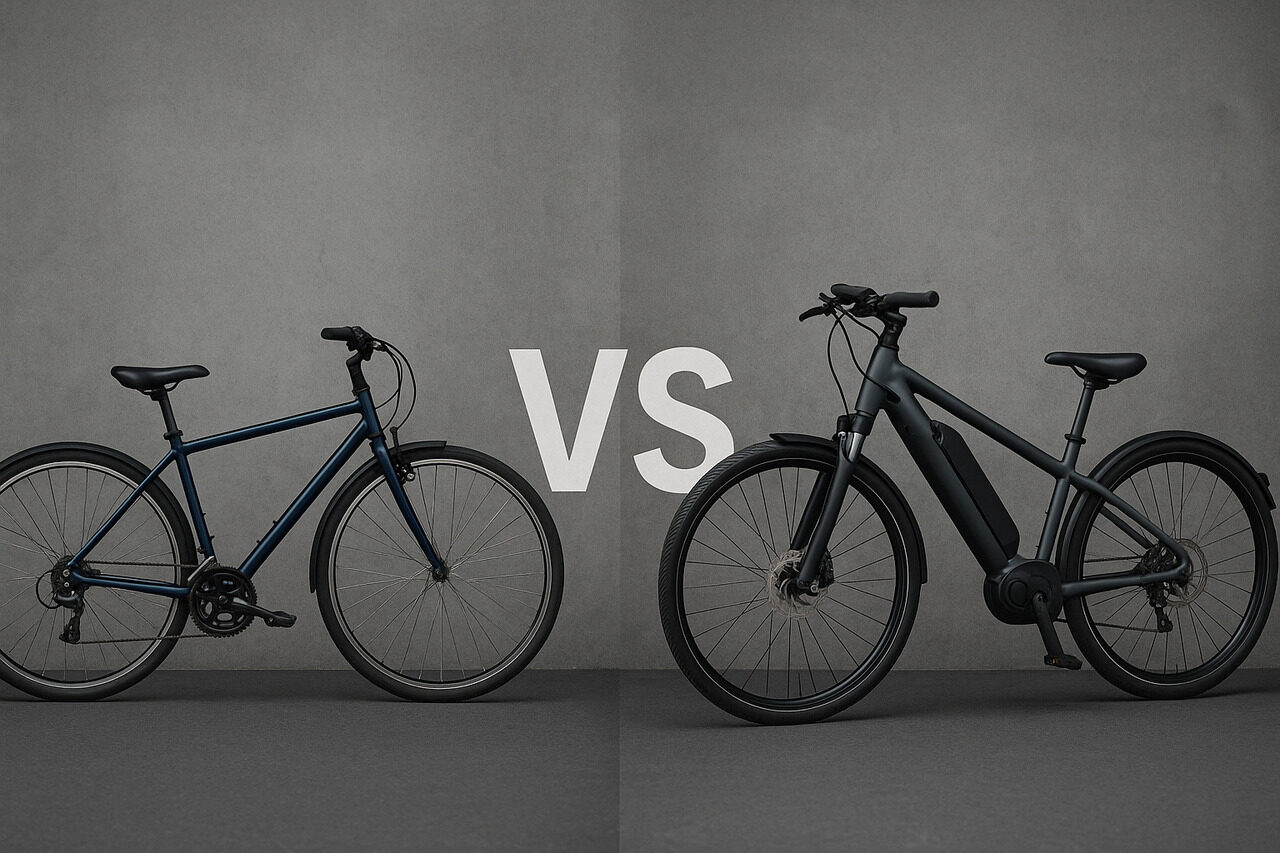
Electric Or Traditional Bicycle? Choosing Between Comfort And Effort Depends On Your Lifestyle, Urban Routine, And Available Budget
In recent years, bicycles have shifted from being just a leisure option. With more bike lanes and encouragement for sustainable transport, cycling has become synonymous with urban mobility. But with so many options, a question arises: is it worth investing in an electric bike or sticking to the traditional one?
The answer may seem simple, but it involves factors like physical effort, cost, maintenance, and even legal requirements. Therefore, understanding the differences can prevent regrets.
Traditional Or Electric Bicycle? Two Different Proposals For The Same Goal
The traditional bicycle is powered by the rider’s strength. It requires constant effort but offers advantages like a more accessible price and less maintenance. It’s a good choice for those looking to save money and enjoy the benefits of physical exercise.
-
Friends have been building a small “town” for 30 years to grow old together, with compact houses, a common area, nature surrounding it, and a collective life project designed for friendship, coexistence, and simplicity.

-
This small town in Germany created its own currency 24 years ago, today it circulates millions per year, is accepted in over 300 stores, and the German government allowed all of this to happen under one condition.

-
Curitiba is shrinking and is expected to lose 97,000 residents by 2050, while inland cities in Paraná such as Sarandi, Araucária, and Toledo are experiencing accelerated growth that is changing the entire state’s map.

-
Tourists were poisoned on Everest in a million-dollar fraud scheme involving helicopters that diverted over $19 million and shocked international authorities.


On the other hand, the electric bike, known as an e-bike, features a motor and battery that assist the rider during the ride.
This means that climbs, long distances, or urban obstacles become less exhausting. The aim is to provide comfort and agility, especially for those who use the bike as a daily means of transportation.
Price And Operation
In practice, the traditional bicycle functions with a simple system. By pedaling, the rider moves the chain that propels the rear wheel.
Prices range from R$ 600 to R$ 5,000, depending on the model, brand, and components such as suspension and gears.
The electric bike is more complex. It includes a motor, battery, and often a screen on the handlebars with information about the trip.
The starting price is around R$ 3,000, which can exceed R$ 20,000. The battery, usually lithium-ion, has a lifespan of 500 to 1,000 charge cycles — equivalent to about 2 to 5 years of regular use.
Health And Physical Effort
For those looking to improve their health, the traditional bicycle is a strong ally. It aids in weight loss, strengthens muscles, and improves breathing.
The effort is greater on climbs and long routes, which can be a challenge for beginners or individuals with reduced mobility.
The electric bike demands less from the body. However, that doesn’t mean a lack of benefits. Users tend to ride for longer periods and more frequently.
It can be a good entry point for those starting or wanting to move without as much effort.
Maintenance And Charging
The maintenance of a regular bicycle is simple and inexpensive. Adjusting brakes, replacing the chain, or inflating tires can be done at home with basic tools.
Cleaning is also easier since there are no electronic components.
With the e-bike, the care increases. In addition to traditional maintenance, attention must be paid to the battery, motor, and electrical system.
Specialized technical assistance may be needed, especially when it comes to replacing the battery. The range per charge varies from 30 to 100 km, with charging time between 3 and 6 hours. The cost to charge is low, ranging from R$ 0.20 to R$ 0.60 per charge.
Speed And Ease In Daily Life
Electric bicycles can reach speeds of up to 25 km/h with motor assistance. Some have sensors that adjust power according to the rider’s effort.
Traditional bikes depend on the rider’s leg strength. Models with gears help adapt pedaling to different terrains.
In urban traffic, the e-bike saves time. However, its weight can be a hindrance in places lacking infrastructure, like stairs or narrow sidewalks. Traditional bikes are lighter and easier to store, especially in apartments.
Laws And Requirements
The rules for using both types of bikes also differ. Traditional bikes do not require any special documentation.
On the other hand, electric bikes must meet criteria to be classified as electric cycles: a motor of up to 350 watts and a maximum speed of 25 km/h.
If they exceed these limits, they are treated as mopeds and require licensing, registration, and the use of a full-face helmet.
Another important point: the electric motor cannot operate alone. If the bicycle moves only with the throttle, without pedaling, it falls into the category of a motorized vehicle and must follow stricter regulations.
Traditional Or Electric? Final Reflection
The choice between a traditional or electric bicycle depends on lifestyle. Those who want to spend little, exercise, and keep things simple may prefer the conventional option.
On the other hand, those seeking practicality, less sweat, and more speed over long distances can benefit from the electric option.
Neither option is superior in all aspects. The ideal approach is to consider how it will be used daily, the available budget, and what truly matters for your routine.
Thus, the bicycle ceases to be just a means of transportation and becomes a practical and functional ally.
With information from Olhar Digital.









-

Uma pessoa reagiu a isso.