





 Portuguese
  English
  Spanish
  6 min of reading
  0 comments


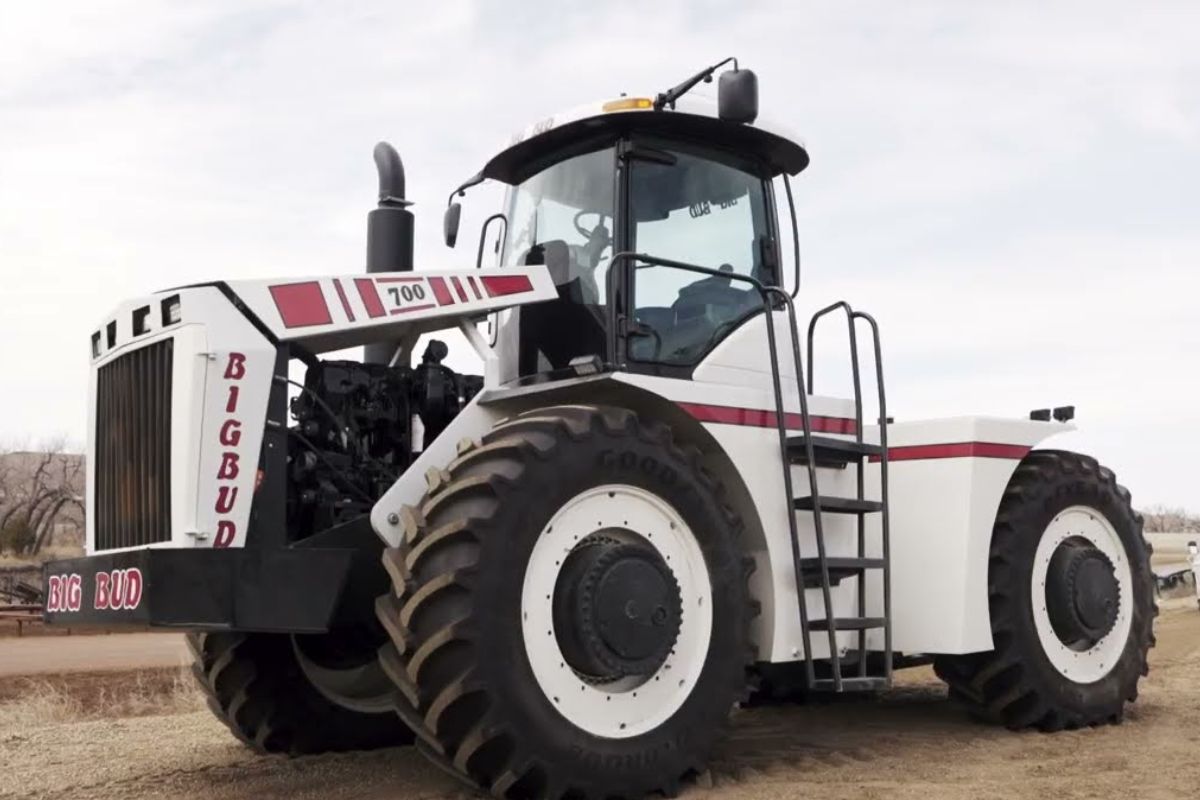
Forty Years Later, the Big Bud 747, Largest Tractor in the World, Returns in the Hands of Big Equipment, Gets the Support of the Giant Big Bud 700 Tractor and Aims at Large-Scale Farming and Heavy Construction.
Forty years after the original launch, the Big Bud 747 is back in the spotlight. The largest tractor in the world is reborn in the hands of Big Equipment, targeting large-scale farming and the construction sector and promising something rare in today’s equipment: simple maintenance, common parts, and repairs without any restrictions for the owner.
More than a metal exaggeration and horsepower, the Big Bud 747 is a character in the agricultural history of the United States. Now, the return of the largest tractor in the world in a new generation, the Big Bud 700, rescues the legend of 1,100 hp that has plowed 24-meter strips at once and became a museum attraction in the American Midwest.
Big Bud 747: How the Largest Tractor in the World Was Born
The Big Bud 747 became known not only as the largest agricultural tractor on the planet but also as a symbol of an era when the answer to giant farms was to build increasingly colossal machines.
-
A rural producer from Urubici cries as he shows 50 tons of plums thrown on the ground because no one wanted to buy them, and in desperation, he records a video asking anyone to come to the property to pick the fruits before they rot.

-
Unable to pass through Hormuz, Brazil activated a plan B that uses Turkey as a gateway to the Middle East: the route through Gibraltar and the Mediterranean is longer and more expensive but ensures that chicken, beef, and corn continue to reach Arab markets.

-
You grew up hearing that the good coffee from Brazil goes all abroad and the bad coffee stays for Brazilians, but this story has completely changed, and the numbers show that in the 1980s, thirty percent of the coffee sold here was adulterated with corn and barley.
-
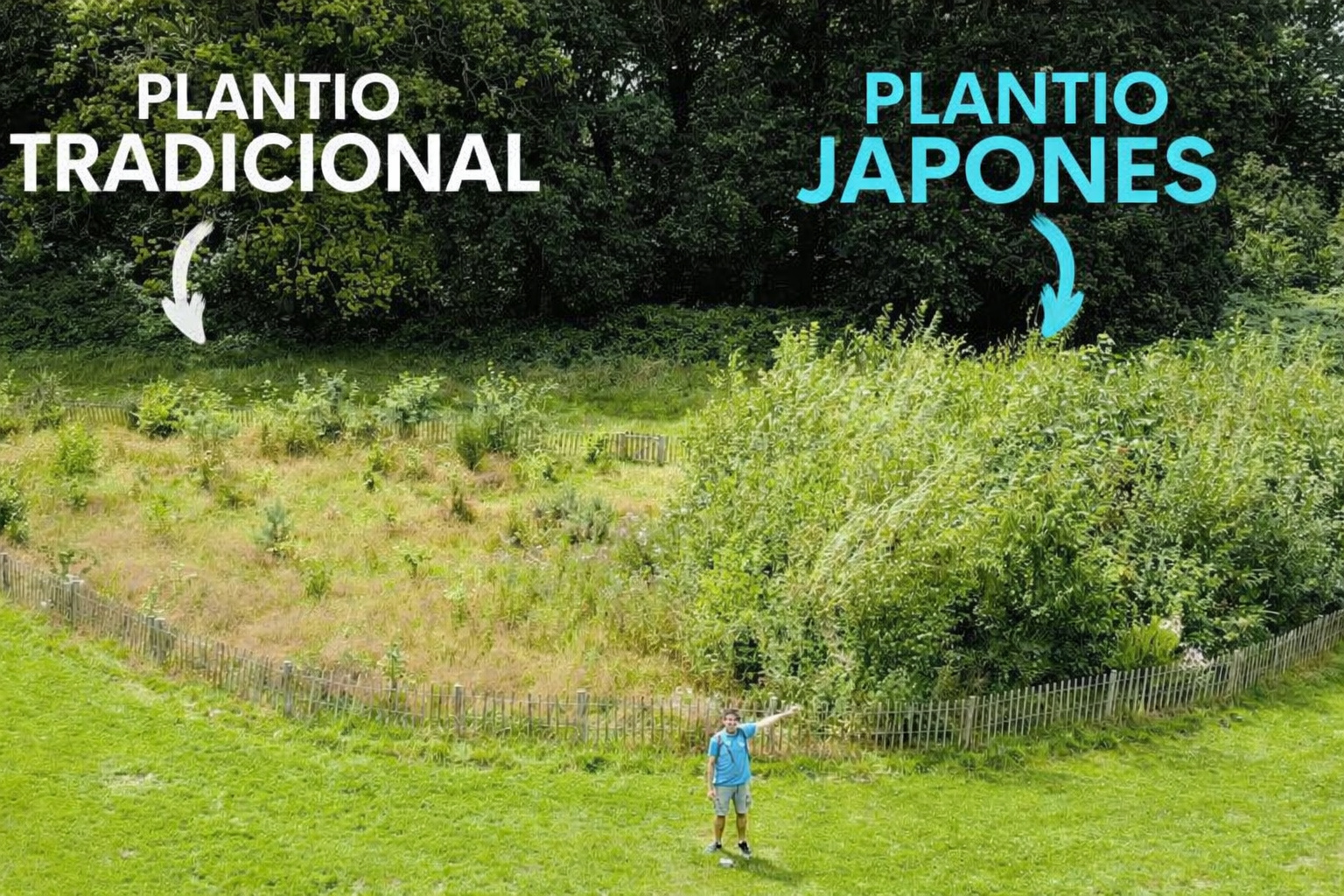
Engineer creates reforestation method that transforms small plots into dense forests in a few years using local biomass and can reduce environmental recovery costs.

It was produced in Havre, Montana, in the United States, by a company that started as Northern Manufacturing Company and later became known as Big Bud Tractors.
Originally commissioned by a cotton farm in California, the Big Bud 747 was custom-built, meaning it was designed for a specific operation, with the mission of hauling enormous implements in open areas.
For over a decade, the largest tractor in the world worked hard in fields, accumulating hours of use before being relocated to other regions and, eventually, retired as a museum piece.
Dimensions and Power of a Colossus of 1,100 Hp

The numbers help to understand why the Big Bud 747 earned the title of the largest tractor in the world. The tractor is about 8.5 meters long, 6.1 meters wide, and around 4.3 meters high. Its tires alone have an impressive diameter of 2.44 meters and are nearly 1 meter wide each.
In terms of weight, the Big Bud 747 can reach approximately 61 tons with full ballast. At the heart of the machine is a 16-cylinder Detroit Diesel engine capable of delivering around 1,100 horsepower, a number that still sets it apart even when compared to modern large tractors.
Designed for extremely demanding tasks, the largest tractor in the world was primarily used to plow large areas with a single set of implements.
An example is the soil preparation equipment capable of cultivating a strip of about 24.4 meters in one pass, illustrating the scale of mechanization in some North American farms.
The Trajectory of the Giant Until It Became a Museum Piece
After fulfilling its role on the cotton farm where it was delivered, the Big Bud 747 continued its useful life on other properties.
It worked for years in California, then was sent to Florida, and later returned to the northern United States to continue operating until the end of the 1990s.
From 2009 onwards, the largest tractor in the world became part of a museum collection in North Dakota, where it became a tourist attraction and a meeting point for agricultural machinery enthusiasts.
Even while stationary, the Big Bud 747 continued to draw crowds at fairs, meetings, and events, demonstrating that the scale of large-scale agriculture impresses as much as any sports car or airplane.
The existence of the Big Bud 747 helped define a symbolic limit for conventional tractors. While it showcased how much mechanization could grow, it also reinforced discussions about costs, sustainability, soil compaction, and the balance between machine size and actual efficiency in the field.
Why the Largest Tractor in the World Is Being Produced Again
Decades after its debut, Big Equipment Company decided to revive the idea of the largest tractor in the world, but with a modern perspective on current agricultural demands and sectors like construction.
The return was officially announced at an event in Las Vegas, where the company presented the project for new Big Buds focused on extreme robustness and ease of repair.
In partnership with Rome Agriculture Company, Big Equipment aims to serve not only producers dealing with large areas and heavy equipment but also contractors and operations that require brute strength in harsh environments.
The bet is to combine the retro visual and fame of the largest tractor in the world with a modern proposal for uncomplicated maintenance, something increasingly rare in machines filled with closed electronics.
According to the project’s leaders, the idea is to maintain the spirit of the original Big Bud as a custom tractor, produced on demand, adapted to the reality of each client.
Big Bud 700: Focus on Unrestricted Maintenance
The first step of this new phase is the Big Bud 700, which is born with two clear principles. The first is to allow the owner to make repairs freely, without being tied to exclusive systems or electronic blockages.
The second is to deliver a structure stronger than anything currently available on the market.
To achieve this, the new models are built with a steel structure about 1.5 inches thick, designed to withstand years of extreme work in fields and heavy construction.
The proposal is simple and straightforward: have a gigantic tractor, inspired by the largest tractor in the world, that can take a beating and be repaired in the farm workshop with common parts, without hidden secrets in software.
Additionally, Big Equipment continues to work on updating the old Big Buds still in use, adapting these machines to the new demands of producers and changes in implements and operations.
Classic Giant in a World of Regulations and Electronics
The rebirth of the largest tractor in the world happens in a very different scenario than that in which the Big Bud 747 was created.
Today, any tractor in this category needs to consider increasingly strict emission regulations and an environment where electronics, sensors, and connectivity are part of daily life in the field.
The new Big Buds need to reconcile the image of a raw, mechanical, and owner-accessible tractor with systems capable of meeting environmental laws and interacting with current technologies.
This includes engines that comply with pollution limits, integration with monitors, and, in many cases, adherence to more sustainable management practices.
Still, the project makes it clear that there is room in the market for large, extremely robust machines with an open repair philosophy, as opposed to tractors where any intervention depends on factory equipment and codes.
The Legend of the Largest Tractor in the World Lives On

The return of the Big Bud and the production of the Big Bud 700 show that the story of the largest tractor in the world is far from over.
For some, it is a mechanical exaggeration that symbolizes agriculture at maximum scale. For others, it is an icon of simple, strong, and straightforward engineering, made to work hard.
In any case, the fact is that the name Big Bud continues to spark curiosity and respect among farmers, mechanics, and fans of heavy machinery.
Seeing the largest tractor in the world gain a new generation, after becoming a museum piece, reinforces how agriculture also has its myths, legends, and technological revivals.
And you, would you be brave enough to put the largest tractor in the world to work on your farm, or do you think machines of this size no longer make sense in the reality of Brazilian agriculture today?








-

-

-

-

-

10 pessoas reagiram a isso.