





 Portuguese
  English
  Spanish
  5 min of reading
  0 comments


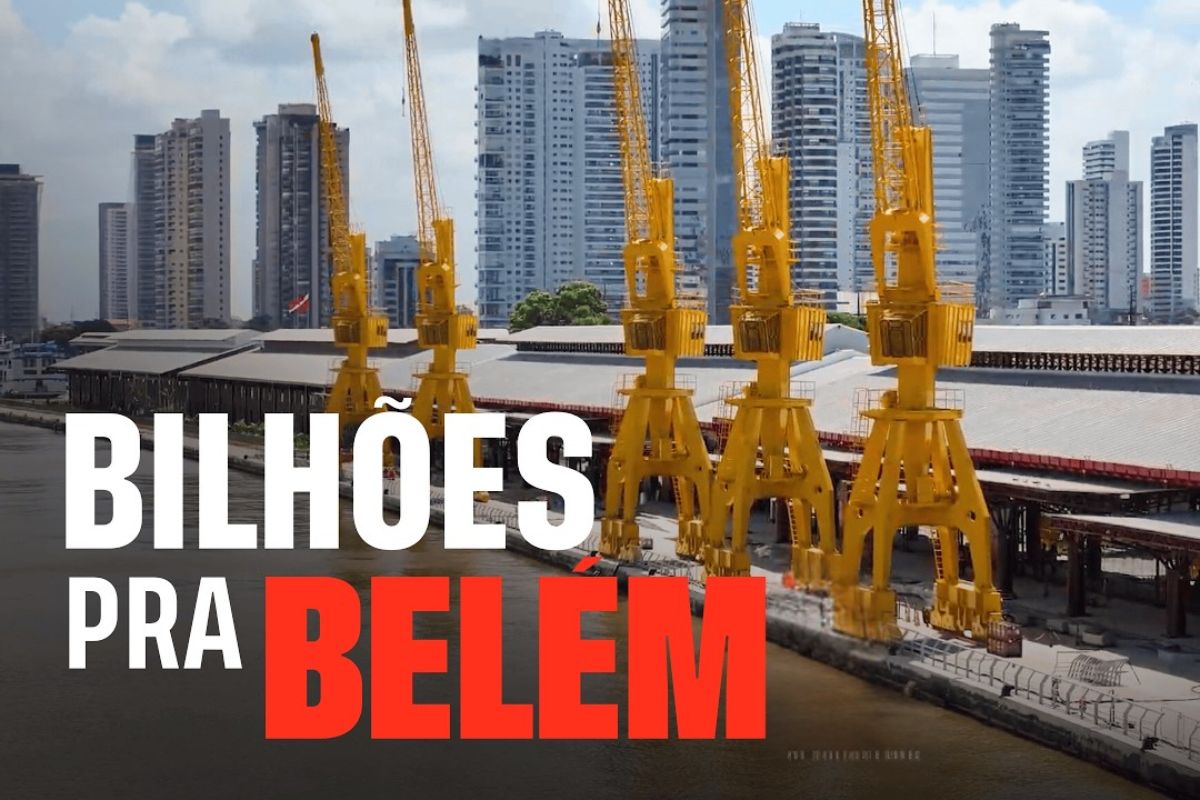
The COP Injects Billions and Accelerates Interventions in Belém, but the Urban Balance Exposes Project Failures, Inequalities in the Landscape, and Basic Needs that the City Must Address to Transform Investment into Real Legacy
Belém has entered the global map with the COP, attracting about 6 billion reais in projects made possible by BNDES, private investments, and contributions from all three levels of government. The amount is impressive, but the uncomfortable question remains: who will actually benefit and how? Amid announcements of “legacy” and barriers, daily life reveals old holes in the capital of Pará, from nonexistent sidewalks to streets without a single tree.
The debate is not against the COP, but in favor of clear priorities, qualified urban project, and maintenance. Without oversight and attention to detail, costs explode and benefits evaporate. Belém has real opportunities to become a showcase of Amazonian solutions from certified wood to tropical architecture, but it needs to align design, work, and operation with what the city truly demands.
What’s at Stake with the COP and the 6 Billion
The COP has catalyzed portfolios of works and partnerships, totaling approximately 6 billion reais from federal, state, municipal, and private resources. The scale is unprecedented for the capital and could reorganize local mobility, improve public spaces, and reduce historical deficits in sanitation and drainage.
-
50 viaducts, 4 tunnels, 28 bridges, and 40 kilometers of bike paths: BR-262 in Espírito Santo will receive 8.6 billion reais for the largest engineering project in the state’s history, inspired by the Immigrant Highway in São Paulo.

-
Brazil produces too much clean energy and doesn’t know what to do with it: over 20% of solar and wind capacity was wasted in 2025 while investors flee and 509 renewable generation projects were abandoned in the last year.

-
Piauí will produce a new fuel that replaces diesel without needing to change anything in the truck’s engine and reduces pollutant gas emissions by half: truck drivers from all over the Northeast are already celebrating the news that will arrive later this decade.

-
A new Brazilian shopping center worth R$ 400 million will be built in an area equivalent to more than 4 football fields, featuring 90 stores, 5 cinemas, a supermarket, a college, and parking for 1,700 cars, potentially generating 3,000 jobs.


But a large budget is not synonymous with a good project.
Without transparent criteria and technically feasible timelines, the risk is to rush deliveries and redo later, spending double. A true legacy requires prioritizing the basics: network, drainage, shade, sidewalks, pedestrian safety, and thermal comfort.
City Park: Expensive Legacy, Scarce Greenery
The new City Park occupies the old airport (about 500,000 m²). There was a design competition, an important milestone, but the winning project was simplified and cheapened, although the final cost remains high.
Result: inauguration with flooding, skate park that became a pool, and the feeling that the drainage underestimated Pará’s rainfall regime.
Moreover, the vegetation is still thin. Belém does not need imported scenography: the idea of artificial trees “a la Singapore” was fortunately abandoned.
There is a lack of robust reforestation, with nurseries capable of delivering already strengthened seedlings, to accelerate shade and microclimate. Parks cost, but maintenance costs more, and it’s at this stage that many legacies fail.
Sanitation and Channeling: Who Gains Shade and Who Does Not
The city is rushing to channel streams and brooks that have caused flooding in low-lying areas for decades. It is an essential advancement, but the execution reveals inequality. In underprivileged areas, channeling involves removal of stilt houses and almost no trees. In richer regions, linear parks, greenspaces, and playgrounds. The same canal, opposite landscapes.
This contrast weighs heavily in a territory where 45% of households are in streets without trees and 36% without sidewalks, gutters, or pavement.
There is no climate legacy without shade and there is no walkable city without continuous sidewalks. The urban minimum must be the rule across the entire grid, not an exception where income allows.
Rushed Works, Costly Mistakes, and the Cost of “Post-Works”
Haste has its price. The Ver-o-Peso Meat Market had a section delivered without outlets. The São Brás Market, beautiful, received undersized kitchens.
A detail that seems small becomes a broken operation and contract addendums. Without technical scrutiny and independent oversight, the city pays today and pays again tomorrow.
Architecture does not operate alone. It is a chain: designers, construction companies, subcontractors, secretariats, oversight, and politics. When one stage fails, the whole falls apart. Belém needs to institutionalize “urban commissioning”: test, check, correct before inaugurating, and plan maintenance from the very first minute.
Notable Advances: Sewage in Ver-o-Peso, São Brás, and Wooden Housing
There is good news. The Ver-o-Peso, the largest open market in the Americas, will finally receive sewage system, a structural and civilizing change. The retrofit of the São Brás Market repositions an icon, with up to 50 food operations and potential to boost the local economy. Requalifying heritage also means reactivating jobs and culture.
Another promising front: Minha Casa, Minha Vida begins housing with wood produced on an island in Belém. Light industrialization, low footprint, and fast construction respond better to the Amazonian climate than the “copy and paste” of masonry. If it works, Belém can set a precedent for Brazil in socially adequate housing for the biome.
From Cocoa to Rattan: When Identity Becomes a Project
The cocoa from Pará has gained added value with award-winning names like Fábio Cecília, proving that local chains can compete globally. Architecture can learn from this turnaround: map inputs, processes, and Amazonian crafts and transform them into contemporary solutions.
The Theater of Peace was already teaching comfort before air conditioning: rattan chairs, ornaments with local culture — indigenous caryatids, frogs, water lilies, and climate awareness that avoids “sticking to velvet”. Thermal comfort is a design language, not just equipment plugged into the outlet.
Two Strategic Axes for a True Legacy
Certified wood: the world is researching mass timber; Belém needs to lead, not just observe. Buildings, schools, pavilions, and housing with wood engineering can reduce CO₂, speed up construction, and open up local production chains, from managed forests to industry and design.
Tropical architecture: from Seville to Vietnam, advances in bioclimatic design that shades, ventilates, cools, drains, and uses less air conditioning.
Research, Riparian Knowledge, and Local Production
Initiatives from civil society are already taking place. The Guá office established an institute that connects designers from the Rio–São Paulo axis with riverside carpenters.
This bridge is strategic: it improves product quality, secure local income, and elevates Amazonian material culture from prototype to scale.
But intelligent public procurement is necessary. If public authorities do not contract, the chain does not scale. Calls for tenders that request certified wood, demand thermal performance, and emphasize low carbon solutions change the showcase, and the market will follow. Legacy is also built in the bidding process.
What the COP Should Leave in Belém

The COP brought visibility and money. It remains to transform both into a city: continuous sidewalks, functioning drainage, a tree on every street, a project that respects the Amazonian rain, and operational public facilities. Without this, the legacy becomes marketing.
Belém has a rare chance to lead the modernity that arises from the forest, with certified wood, tropical architecture, living heritage, and local production. If the urban plan places the basics in front and identity at the center, the city does not just host the COP — it teaches the world.
Do you agree that the legacy of the COP will only be real with sidewalks, shade, and drainage for all neighborhoods, not just for the postcards? What priority cannot be missing now in Belém: tree, sidewalk, or drainage — and why?









Seja o primeiro a reagir!