





 Portuguese
  English
  Spanish
  4 min of reading
  0 comments


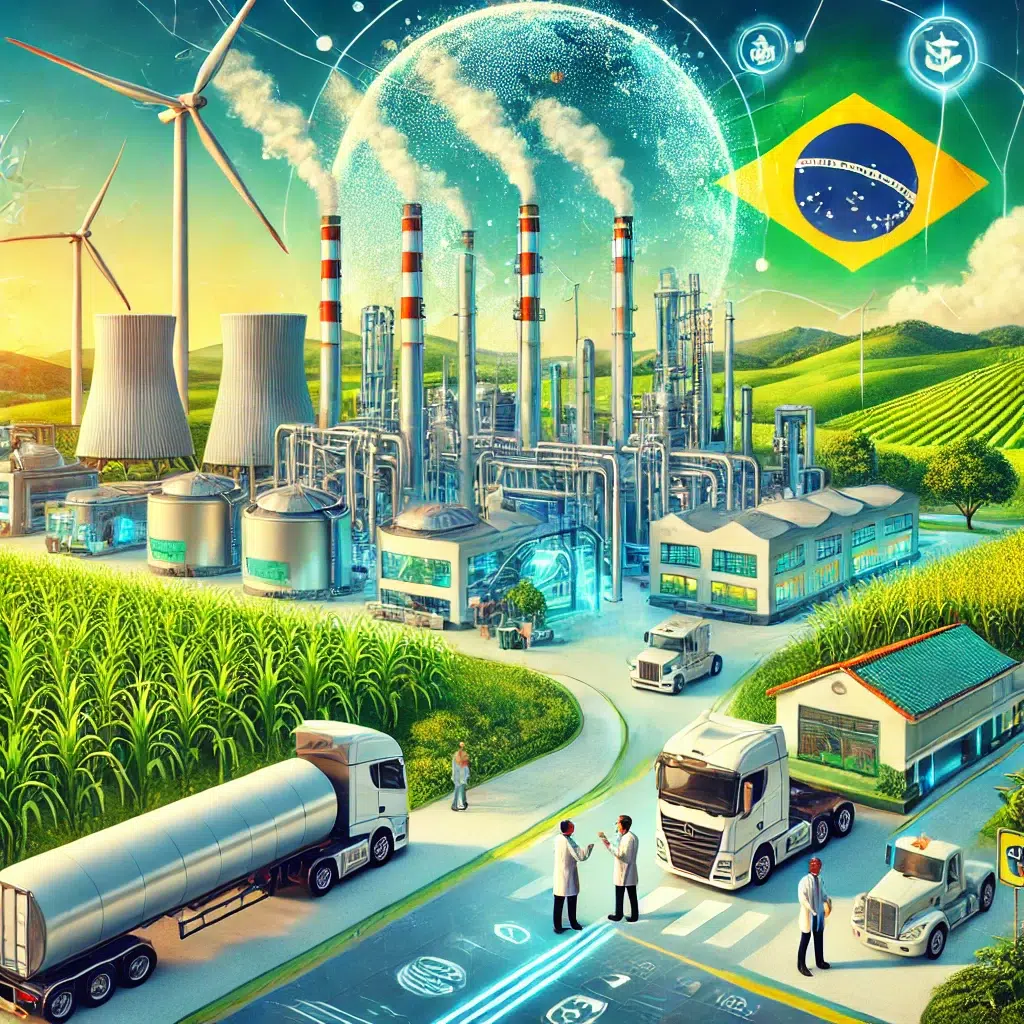
The Future of Renewable Energy in Brazil: How Biofuels Can Transform the Economy and the Environment!
The National Energy Policy Council (CNPE) has decided to create a working group to boost the biofuels sector. In this way, the country strengthens its renewable energy and reduces dependency on fossil fuels.
Furthermore, this initiative can transform the Brazilian energy matrix, attract investments, and significantly contribute to sustainability and the reduction of greenhouse gas emissions.
Since 2003, Brazil has actively invested in replacing fossil fuels with biofuels, when the government implemented the National Biodiesel Production and Use Program (PNPB).
-
Renewable energy advances over protected areas in Brazil, and a survey by the Energy Transition Observatory reveals silent impacts that challenge environmental conservation and pressure sensitive traditional territories.

-
The Economist states that Brazil has a “secret weapon” against expensive oil and highlights how the country can reduce economic impacts even in international scenarios of high volatility.
-
Rio Grande do Sul accelerates energy transition: State invests in renewable technologies and consolidates decarbonization strategies and pathways to attract billions in new industrial investments.

-
With 160,000 m² of collectors, an area larger than 20 football fields, Silkeborg, in Denmark, hosts a solar thermal plant that heats 19,500 homes and could become the largest solar heating plant in the world.


In 2005, the country made it mandatory to add biodiesel to fossil diesel, starting with an initial blend of 2% (B2). Over the years, this percentage gradually increased, reaching 12% (B12) in 2023, according to the National Agency of Petroleum, Natural Gas, and Biofuels (ANP).
CNPE Forms Group to Strengthen the Biofuels Sector and Boost Renewable Energy in Brazil
Currently, Brazil needs to accelerate its transition to a more sustainable matrix. For this reason, in February 2024, the CNPE established a strategic plan to expand the biofuels sector and encourage new technologies.
In this way, the green economy can become even more robust and competitive.
At the same time, the demand for clean energy is growing rapidly. Therefore, the country must leverage its privileged position to consolidate its leadership in ethanol and biodiesel production.
Moreover, this new plan allows for the creation of tax incentives and technological innovation stimuli, ensuring greater production and consumption of biofuels.
According to a study by the Energy Research Company (EPE), published in 2022, biofuels accounted for 21% of the Brazilian energy matrix. By 2030, the forecast is that this share will grow to 30%, driven by advances in public policies and the growing global concern about reducing greenhouse gas emissions.
Why Are Biofuels Essential for Brazil?
Undoubtedly, Brazil has one of the largest global potentials to expand its market share in biofuels.
For example, sugarcane ethanol began to gain relevance back in the 1970s, during the oil crisis, with the launch of the National Alcohol Program (Proálcool) in 1975.
Since then, the country has led the global production of this biofuel.
Additionally, biofuels offer environmental advantages, as they reduce pollution and help achieve the reduction of greenhouse gas emissions.
Consequently, this positive impact also reflects on the economy. After all, the sector drives agricultural industries, generates jobs, and strengthens the country’s energy infrastructure.
Thus, the CNPE working group will develop public policies to stimulate the sustainable growth of the sector.
How Do Biofuels Boost the Economy and Innovation?
Indeed, the expansion of biofuels can attract investments in the energy sector, boost scientific research, and stimulate technological innovation.
Additionally, companies that invest in renewable energy reduce operational costs and increase their competitiveness in the global market.
The National Confederation of Industry (CNI) published a report in 2023 indicating that the biofuels sector could generate 500,000 new direct and indirect jobs by 2035.
This growth is primarily due to the expansion of biodiesel and bio-jet fuel production, which are essential for sustainable aviation.
Environmental Impact: How Do Biofuels Help in the Fight Against Climate Change?
Currently, replacing fossil fuels with biofuels represents one of the most effective solutions to curb global warming.
For this reason, the transport sector can drastically reduce its emissions by adopting solutions such as ethanol and biodiesel.
The Intergovernmental Panel on Climate Change (IPCC) highlighted in its 2021 report that the use of biofuels could reduce global emissions from the transport sector by up to 50% by 2050.
This data reinforces the importance of increasing the sustainable production of this type of fuel.
Additionally, the plants used in biofuel production absorb CO₂ from the atmosphere during their growth.
Thus, the burning of these fuels results in a more balanced carbon footprint.
Conclusion: Is Brazil Ready to Lead the Biofuels Revolution?
Undoubtedly, the creation of the CNPE working group represents a major advancement in the pursuit of a cleaner and more efficient energy matrix.
Moreover, Brazil has abundant natural resources, advanced technology, and an expanding market.
Therefore, by strengthening the biofuels sector, the country moves towards a more sustainable economy.
At the same time, it creates jobs, reduces costs, and preserves the environment.
Finally, it is evident that the future of renewable energy has already begun, and Brazil is well-positioned to become one of the major leaders in this market!










Seja o primeiro a reagir!