





 Portuguese
  English
  Spanish
  4 min of reading
  0 comments


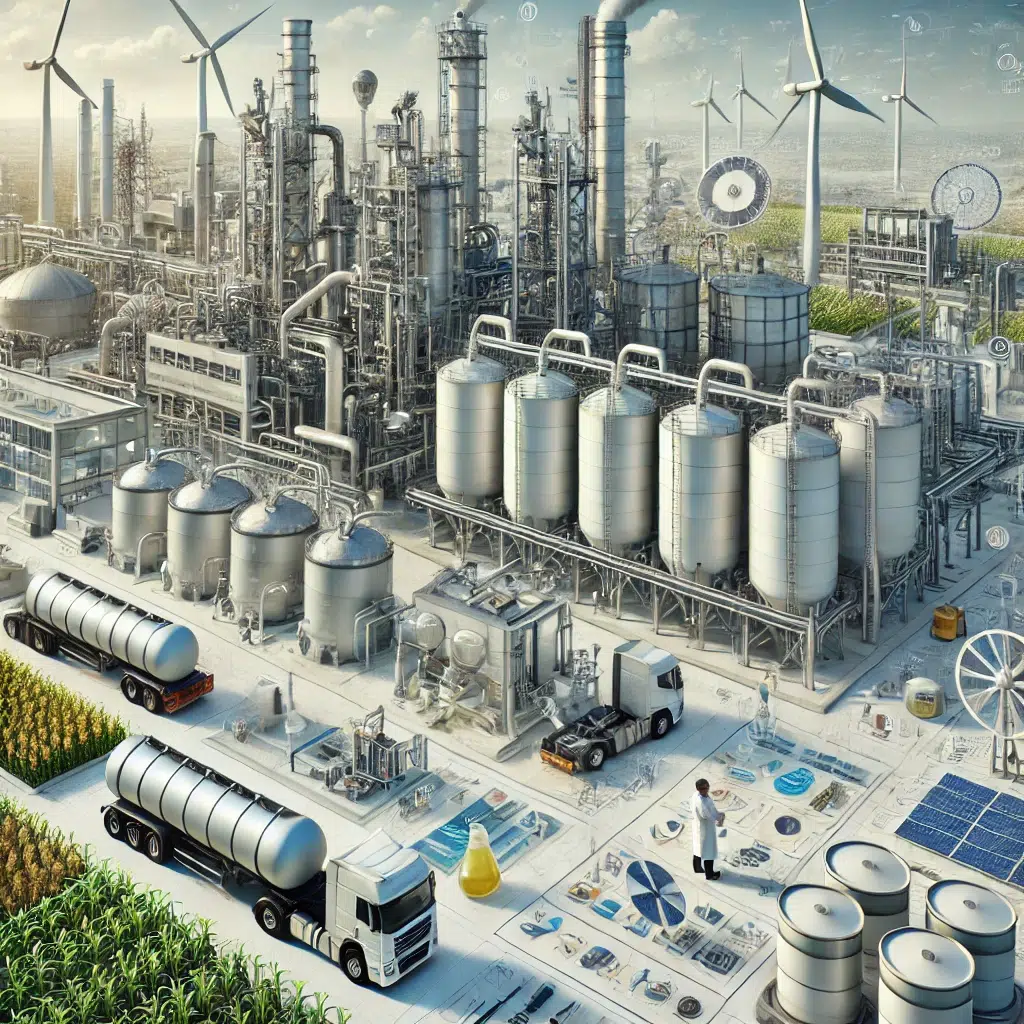
Biofuels Revolutionize the Transportation Sector! Renewable Energy, Biodiesel, Ethanol, and Sustainable Diesel Shape the Green Future
In recent years, biofuels have undergone a significant expansion. Since the 1970s, when the oil crisis spurred research into alternative fuels, the sector has evolved considerably.
Furthermore, in 2003, Brazil launched the National Biodiesel Production and Use Program (PNPB), which encouraged the adoption of this fuel in the country. Subsequently, in 2010, the mandatory blending of biodiesel with fossil diesel was set at 5%, progressively increasing to 12% by 2023.
Simultaneously, the global growth in the demand for biodiesel, ethanol, renewable diesel, and biogas accelerated this energy revolution. As the International Energy Agency (IEA) pointed out in 2021, it is forecasted that, by 2028, global demand for biofuels will grow by at least 30%.
-
Renewable energy advances over protected areas in Brazil, and a survey by the Energy Transition Observatory reveals silent impacts that challenge environmental conservation and pressure sensitive traditional territories.

-
The Economist states that Brazil has a “secret weapon” against expensive oil and highlights how the country can reduce economic impacts even in international scenarios of high volatility.
-
Rio Grande do Sul accelerates energy transition: State invests in renewable technologies and consolidates decarbonization strategies and pathways to attract billions in new industrial investments.

-
With 160,000 m² of collectors, an area larger than 20 football fields, Silkeborg, in Denmark, hosts a solar thermal plant that heats 19,500 homes and could become the largest solar heating plant in the world.


In light of this scenario, Brazil has consolidated its position as one of the world’s largest producers.
The Demand for Biofuels Grows in the Transportation Sector
Undoubtedly, the transportation sector has undergone a major transformation since the 2000s. In 2007, Brazil became the second-largest producer of ethanol in the world, trailing only the United States.
That same year, the government implemented the RenovaBio program, which officially came into effect in 2020 and further encouraged the production of renewable energy.
At the same time, the production of biogas and biomethane also gained momentum. In 2014, the Brazilian Association of Biogas and Biomethane (Abiogás) was created to regulate and promote the expansion of this fuel in the country.
According to the National Agency of Petroleum (ANP), by 2023, the daily production of biomethane in Brazil exceeded 656 thousand cubic meters.
Additionally, corn ethanol began to gain relevance in Brazil in 2017, when the first specialized plants started operating in Mato Grosso. As a result of this advancement, by 2023, this fuel already accounted for 20% of national production, an impressive growth. After all, in 2013, its share was less than 0.1%.
Sustainable Aviation Fuel (SAF): The Revolution in Green Flights
In the aviation sector, the need to reduce emissions has intensified over the decades.
For this reason, in 2009, the International Civil Aviation Organization (ICAO) set goals to halve net aviation emissions by 2050. As a result, investments in sustainable aviation fuel (SAF) have grown rapidly.
Moreover, in 2021, Boeing announced that all its commercial aircraft would be capable of operating with 100% SAF by 2030. In the same year, Airbus conducted the first flight tests using pure SAF.
At the same time, Petrobras and Raízen began investing in the production of this fuel in Brazil, aiming to meet the growing international demand.
Currently, decarbonization of aviation remains a global priority. According to the International Renewable Energy Agency (IRENA), SAF is expected to account for 65% of the reduction in emissions from the aviation sector by 2050.
Biogas and Biomethane: The Impact on Heavy-Duty Vehicles and Industry
Similarly, the evolution of biogas and biomethane has also occurred rapidly.
For example, in 2015, Brazil inaugurated its first commercial biomethane plant in Rio de Janeiro. Since then, production has grown significantly.
Additionally, in 2019, the federal government launched the Zero Methane Program, encouraging private investments in this sector.
Currently, companies like Gás Verde, Urca Energia, and Cocal Energia Renovável lead the national production of biogas. According to data from the Brazilian Association of Biogas, in 2022, production saw a 25% increase compared to the previous year.
In the freight transportation sector, large fleets are already adopting biomethane. In 2023, IVECO launched the first truck powered exclusively by biogas in Brazil, consolidating the advancement of this technology for heavy-duty vehicles.
Brazil: A Protagonist in the Expansion of the Biofuel Market
Without a doubt, Brazil has always been at the forefront of biofuels.
Since the launch of Proálcool in 1975, the country has consistently invested in this sector. Furthermore, in 2019, the International Energy Agency recognized Brazil as a world leader in biofuels, due to its sustainable energy matrix.
In recent years, the sector has received significant investments.
For instance, in 2022, Raízen announced an investment of R$ 10 billion in second-generation ethanol production. In the same year, Petrobras Biocombustíveis partnered with BP Bunge Bioenergia to expand biodiesel production.
Additionally, the European Union and the United States established new environmental guidelines, making Brazilian biofuel even more competitive in the international market.
As a consequence of these advances, in 2023, Brazil exported over 1 billion liters of ethanol to the USA, reinforcing its prominent position.
With increasingly stringent decarbonization targets, the trend is that Brazil will continue expanding its global presence.
Finally, the growth of the industry represents a great economic and environmental opportunity.
As new technologies emerge and investments increase, sustainable fuels are consolidating their place as an indispensable alternative for a cleaner energy future.









Seja o primeiro a reagir!