





 English
  Francês
  Alemão
  Italiano
  Japonês
  Norueguês
  Portuguese
  Spanish
  6 min of reading


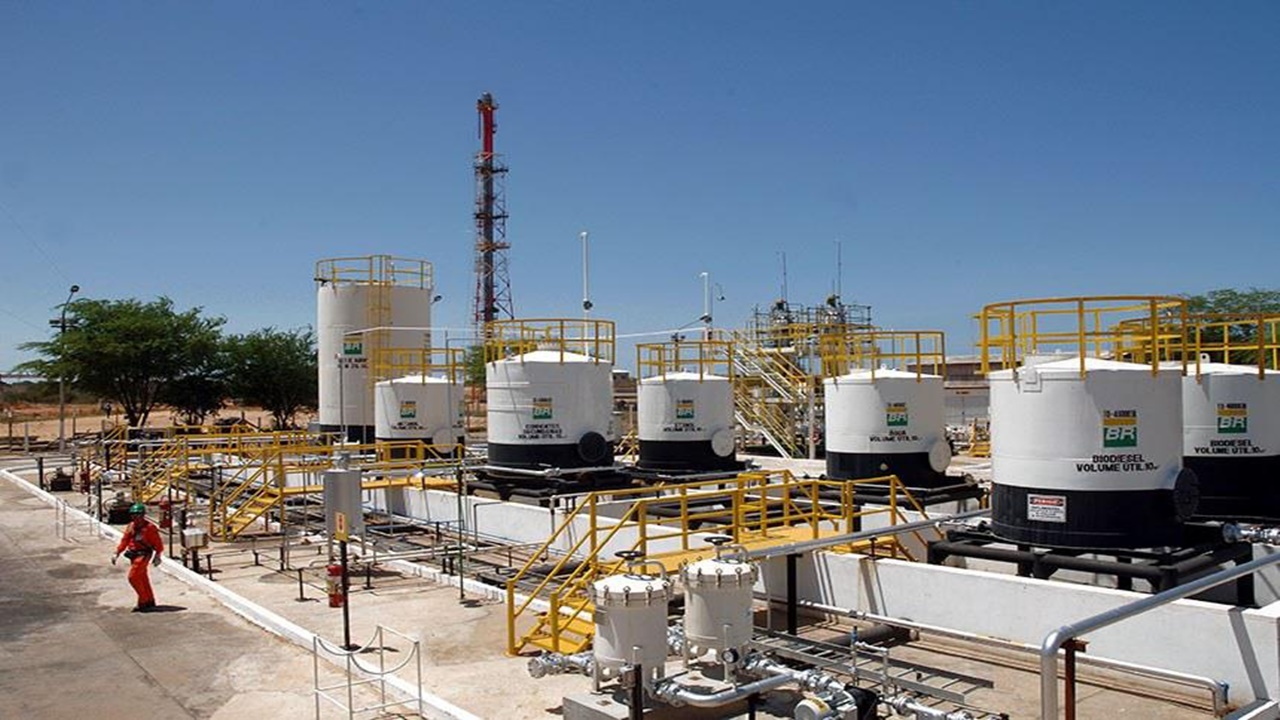
Diesel Price Has Become A Point Of Stress For The Federal Government Since Truckers’ Groups Started Threatening A Nationwide Strike
The biodiesel plants celebrate the fourth bimonthly period of 2021, which was very good for the biodiesel sector in terms of delivery performance, as the plants delivered 97.4% of the volume of biofuel they had committed to in Auction 80. However, not everything is rosy, with the truckers’ strike threat, the government will reduce the addition of biodiesel to diesel oil from 13% to 10%. The decision was formalized during an extraordinary council meeting held this Monday (06) and will apply to the 82nd Biodiesel Auction (L82) – which will supply the market in the sixth bimonthly period of this year.
Read Also
- Truckers’ strike continues this Thursday (09/09) in at least 15 states, causing shortages and queues at gas stations of nearly 1km
- MEC Offers 119 Free Online Courses (EAD) With Certificate; No Limit On Vacancies Or Selection Process, Candidates From All Over Brazil Can Enroll!
- After Ford Ka And Hyundai HB20, Duster Gets A Zero Rating In Impact Test And Multinational Renault Could Face A Million-Dollar Fine
- Latin America Faces A Recession In Gasoline Demand
Government Will Reduce The Addition Of Biodiesel To Diesel Oil From 13% To 10%
Biodiesel plants received bad news right in the middle of the long holiday of September 7: the National Energy Policy Council (CNPE) confirmed that the government will reduce the addition of biodiesel to diesel oil from 13% to 10%. The decision was formalized during an extraordinary meeting of the council held on Monday (06) and will apply to the 82nd Biodiesel Auction (L82) – which will supply the market in the sixth bimonthly period of this year.
As if this confirmation alone was not bad enough, the council also deemed it appropriate to reinforce that the new biodiesel marketing model will begin operating on January 1, 2022.
-
Expansion of Federal Institutes: 38 new campuses and R$ 200 million for public education; see the cities included.

-
Lula’s government changes rule in important benefit and thousands of Brazilians will no longer receive it; see what has changed.

-
New Gripen fighter makes Argentines surrender to Brazil, and the heavy reaction exposes envy, frustration, and shock at Brazil’s technological leap.

-
This discovered deposit near the Andes could change the future of Argentina, attract billions, and even shake up the global metals market.

The justification, once again, was the potential impact of biodiesel prices on diesel oil costs. “It is noted that during the year 2021, the world market continues to have strong demand for soybeans, raising the price of the commodity in the international scenario. In the domestic market, soybean prices are also driven by the depreciation of the Brazilian currency against the dollar,” the MME reported in a statement published early this Monday evening.
The price of diesel oil has become a point of stress for the federal government since truckers’ groups began to show dissatisfaction with the constant increases in fuel costs and threatened a nationwide strike.
To ease tensions with the category, the federal government temporarily exempted PIS and Cofins taxes on diesel. In addition, it has been unsuccessfully trying to change the way states charge ICMS on the product.
This will be the fourth consecutive bimonthly period with a biodiesel blend under the legal limit of 13% that had been implemented in March. Between May and August, the market operated using B10. Between September and October, the blend was raised to B12. This movement had been interpreted by part of the sector as a sign that the government was preparing to normalize the situation by the end of the year.
Decisions Have Stated Goals To Lower Diesel Prices. It Is Uncertain If It Will Succeed
When the CNPE confirmed the reduction of the blend, the dollar was quoted at R$ 5.17. However, this was the day before the September 7 protests and the coup speeches from President Bolsonaro. Today (09), the U.S. dollar has already risen over 3%, exceeding R$ 5.32. If the government were really concerned about the country and not about re-election, it could more easily contain fuel prices. It would only need to give direction to the nation and thereby reduce the volatility of the dollar.
The 3% increase in the dollar price impacts 100% of the diesel sold at gas stations and not just the 10% fraction of biodiesel. Assuming that this 3% increase will be passed equally to both diesel and biodiesel prices – since both have their raw materials referenced in dollars – let’s do the math.
Considering that in L81, the average price of biodiesel at the plant was R$ 5,683.22/m³ and the price of diesel at refineries is R$ 2,900.00/m³. With 13% biodiesel and 87% diesel A, diesel B would cost R$ 3,261.82/m³. With the reduction to 10% biodiesel, the price of diesel B would be R$ 3,178.32/m³.
However, that was on the 06. If the dollar’s increase is simply passed on, biodiesel would then cost R$ 5,853.72/m³ and diesel R$ 2,987/m³. Diesel with a 10% biodiesel blend would then cost R$ 3,273.67/m³, which is R$ 11.85 per m³ more expensive than B13 would have cost just two days before. In addition, we would have lower carbon emissions and cleaner air in our large cities.
The entire sector that invests in the country and could serve as a showcase to show how the government, despite the embarrassing recent deforestation numbers, still cares about the environment and various other noble values has been undermined by a short-sighted decision for the long term that is unlikely to even achieve its short-term objective.
The only practical use of the CNPE meeting that took place this past Monday was to show that the government may be open to hearing what the sector has to say, but is little willing to, in fact, listen.
Producers’ Reaction: “The Greatest Setback Ever Applied” To The National Biofuels Policy (RenovaBio). About 800 Thousand Tons Of Soybean Oil Will No Longer Be Consumed By Biodiesel Plants
The reaction of producers reflected the size of this frustration. The Brazilian Association of Biofuels Producers (Aprobio) went so far as to qualify the return to B10 as “the greatest setback ever applied” to the National Biofuels Policy (RenovaBio). “To be adopted in November and December of this year, the measure severely penalizes the sector, which considers it unjustified from any standpoint,” the entity evaluated in a statement, adding that the change will “reflect in more unemployment” and compromise new “investments made and planned.” “The measure distances the country from decarbonization commitments and generates significant market insecurity regarding management commitments with a state policy,” continues the text.
The Brazilian Association of Vegetable Oil Industries (Abiove) estimates that, due to the reductions, around 800,000 tons of soybean oil will no longer be consumed by biodiesel plants. Consequently, this leads to a reduction in the activity of the soybean crushing industry “interrupting an industrial growth sequence that has been observed since 2013.” “These decisions and government interventions completely disrupt the National Biodiesel Program, a state program thought out since the 1980s that aims to increase Brazil’s energy security,” protests André Nassar, executive president of the association.
According to the Brazilian Union of Biodiesel and Biokerosene (Ubrabio), the CNPE’s decision comes precisely at a time when soybean prices have a downward trend. According to the entity’s calculations, throughout this year, biodiesel prices have increased by 26%; substantially below the 36% cumulative increases seen in fossil diesel.
Furthermore, according to the entity that brings together 40% of national biodiesel production, the measure undermines Brazil’s position at COP 26, which is scheduled to take place in November. “[The reduction] turns its back on Brazil’s international commitments to mitigate climate effects caused by humanity, and places itself in a shameful position in forming the information that should be carried by its representatives at COP 26,” it concludes.
by – biodieselbr









Seja o primeiro a reagir!