





 Portuguese
  English
  Spanish
  3 min of reading


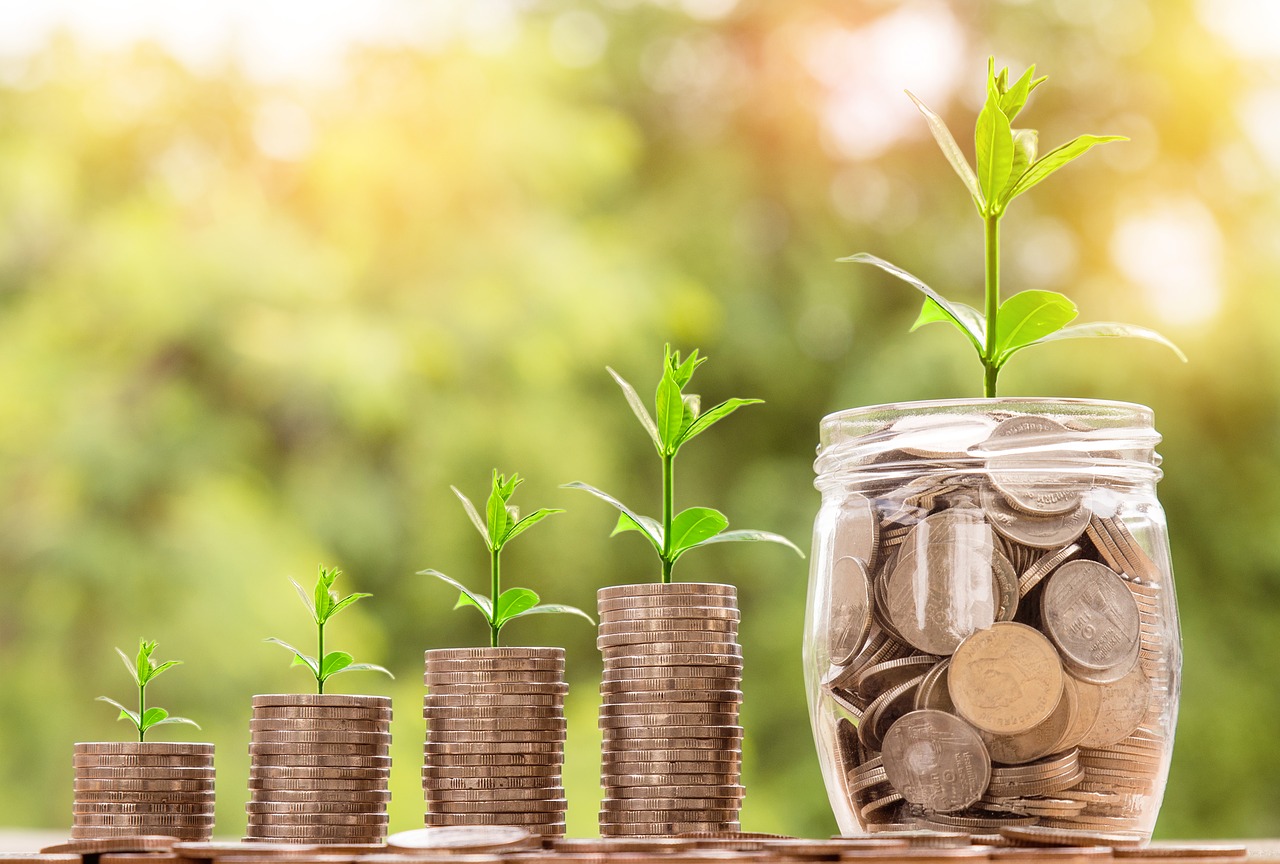
The Surveys Of The Study Led By ABBI Point To Revenue Of US$ 284B Annually By 2050 With The Required Investments In Bioeconomy. The Boosting Of Biomass Use In The Energy Market Is The Main Focus.
Led by the Brazilian Association of Bioinnovation (ABBI), the study “Potential Impact Of Bioeconomy For The Decarbonization Of Brazil” is on this Thursday (01/26), with great projections for the future of the national economy. The country could reach an annual revenue of US$ 284B with the right investments in adopting biomass in the energy market. The document also evaluated three trajectories over the coming decades to achieve these projections.
ABBI Study Shows High Potential For Biomass Use In The Energy Market To Boost Bioeconomy In Brazil
A new survey conducted by the association confirms that the country can reach an annual revenue of US$ 284B, if it invests in bioeconomy by 2050.
Bioeconomy encompasses three sectors in the national market: current policies for mitigating greenhouse gas (GHG) emissions in the country, the consolidation of biomass as the main energy matrix in important sectors of the economy, and the intensification of biorenewable technologies.
-
Larger than entire cities in Brazil: BYD is building a 4.6 km² complex in Bahia with a capacity for 600,000 vehicles per year, but the discovery of 163 workers in conditions analogous to slavery has shaken the entire project.

-
With an investment of R$ 612 million, a capacity to process 1.2 million liters of milk per day, Piracanjuba inaugurates a mega cheese factory that increases national production, reduces dependence on imports, and repositions Brazil on the global dairy map.

-
Brazilian city gains industrial hub for 85 companies that is equivalent to 55 football fields.

-
Peugeot and Citroën factory in Argentina cuts production by half and opens a layoff program for more than 2,000 employees after Brazil drastically reduced purchases of Argentine vehicles.


Of these three, the adoption of new incentive projects for biomass use in the energy sector is the most important to ensure the high projected revenue.
The study “Potential Impact Of Bioeconomy For The Decarbonization Of Brazil” was conducted by ABBI, in partnership with Embrapa Agroenergia, National Laboratory of Biorenewables from the Center for Research in Energy and Materials (LNBR/CNPEM).
In addition, the project involved participation from the Technology Center of the Chemical and Textile Industry (Senai/CETIQT) and the Cenergia Laboratory of the Federal University of Rio de Janeiro (Cenergia/UFRJ).
Alexandre Alonso, general head of Embrapa Agroenergia, highlighted the high potential in the energy sector with investments in the so-called bioeconomy over the coming years.
“The study quantifies bioeconomy in energy transition scenarios and evaluates how technologies generated by the so-called circular and low-carbon economy can complement energy transition within production chains,” he stated.
Biomass is one of the major focuses of the national renewable energy market for the coming decades. The ABBI study contributes to enhancing investments in the sector.
ABBI Proposes Three Future Scenarios For Bioeconomy In Brazil In The Context Of Energy Transition In The Market Until 2050
The study led by ABBI proposed three distinct scenarios for the coming years in the Brazilian market, under the context of energy transition.
The first scenario, titled “Current Policies,” analyzes the current national policies, as well as adherence to the Nationally Determined Contribution (NDC), an initiative of the Paris Agreement on Climate.
The second scenario proposed by ABBI, “Below 2 °C,” considers a national market in which biomass will be the main product used in low-carbon projects and initiatives.
The main objective of this path would be to limit the increase in global temperature “well below 2 °C” by the end of the century.
Finally, there is the scenario called “Potential of Bioeconomy,” in which bioeconomy fits within the context of energy transition as a way to boost the objectives of the second proposed path.
With the study, ABBI seeks to contribute to new perspectives and investments in bioeconomy and the use of biomass as a strong bet for the future energy market.










Seja o primeiro a reagir!