





 Portuguese
  English
  Spanish
  3 min of reading
  0 comments


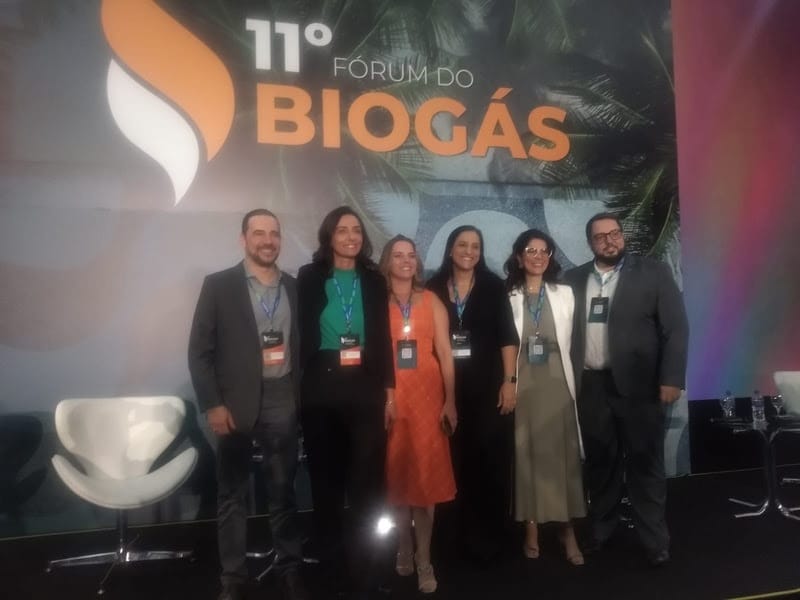
Naturgy Discusses Biogas at the Biogas Forum, Addressing Expansion to New Municipalities and Decarbonization in Transport and Industry.
Naturgy, an important natural gas distributor, was present at the 11th Biogas Forum, the largest event in the sector in Latin America, to discuss the future of biomethane. During the event, opportunities for expanding the use of biomethane in new areas and the benefits of this expansion in reducing carbon emissions in the transport and industry sectors were addressed. The debate focused on how biomethane can play a vital role in the transition to more sustainable energy forms.
Additionally, the potential of biomethane as a versatile and viable fuel to replace diesel in cargo vehicles was discussed. Considered an important pillar in the energy transition, biomethane synergizes with other forms of clean energy, promoting a greener economy. In light of this, Naturgy emphasizes the importance of investing in technologies that enable biogas production, reinforcing its commitment to a more sustainable and innovative energy matrix.
“`
-
Renewable energy advances over protected areas in Brazil, and a survey by the Energy Transition Observatory reveals silent impacts that challenge environmental conservation and pressure sensitive traditional territories.

-
Rio Grande do Sul accelerates energy transition: State invests in renewable technologies and consolidates decarbonization strategies and pathways to attract billions in new industrial investments.

-
With 160,000 m² of collectors, an area larger than 20 football fields, Silkeborg, in Denmark, hosts a solar thermal plant that heats 19,500 homes and could become the largest solar heating plant in the world.

-
A study reveals the expansion of renewable energy procurement in Brazil and shows how companies are taking advantage of opportunities to reduce expenses, ensure energy efficiency, and strengthen strategic environmental commitments.


Crucial Role of Biomethane in the Energy Transition
Biomethane in Brazil is becoming increasingly central to the energy transition and decarbonization programs across the country and regions. In the panel ‘Innovation and Sustainability in the Biogas Sector: Challenges and Opportunities for the Future’, Christiane Delart, director of the company’s Gas Distribution System, highlighted Rio de Janeiro’s vocation for natural gas and the crucial role of the distribution infrastructure in facilitating the adoption of biomethane.
‘With 170 years dedicated to the energy transition through natural gas, we daily distribute 7 million cubic meters of gas in Rio and in the south of São Paulo. All processes we implement for natural gas are applicable to biomethane.’ Today, the expansion always considers the possibility of using biomethane, whether blended with natural gas or, eventually, replacing it.
Strategies for the Expansion of Biomethane
The concessionaire plays a fundamental role in supporting the State in its development and decarbonization demands, providing infrastructure, energy solutions, and meeting the needs of customers’, explains Delart. To enable both natural gas and biomethane to reach more remote regions, Naturgy develops structuring projects. This includes transporting compressed natural gas via trucks to supply local networks.
‘We see biomethane as an ally to introduce its use in municipalities where the fixed network is not initially cost-effective. If we can connect local biomethane producers to potential gas consumers, we will create an efficient logistics model, transforming these locations into green municipalities.’ Currently, there are seven structuring projects operating, with over 1.3 million cubic meters of natural gas distributed.
Identification of Opportunities and Potentials with Waste Mapping
Naturgy is also developing a joint project with the Getulio Vargas Foundation, aimed at mapping municipalities with the greatest potential for biomethane generation, considering their waste management capacity. Christiane Delart emphasizes that ‘the idea is to identify which areas have the greatest potential and offer them support in terms of waste management and clean energy production, while also promoting local development through infrastructure.’
The executive also commented on the positive impact that natural gas is already generating in the decarbonization of industry and transport. ‘At Naturgy, we see where these two fuels can be complementary, exploring new possibilities such as replacing diesel with biomethane.’
Sustainable Corridor and Innovation in Transport
One of the innovative projects highlighted is the Sustainable Corridor, carried out in partnership with the State Government and the Secretariat of Energy and Maritime Economy. This project aims to increase the fueling of heavy vehicles with CNG and biomethane. Rio de Janeiro serves as an example, especially as it was a pioneer with a corridor on the Dutra highway.
At the event, the advantages of biogas in the sustainability agenda were presented, also addressing challenges and market perspectives for the sector, including technological progress, regulatory regulation, expansion of distribution networks, and optimization of processes. Held annually, the Biogas Forum promotes relevant discussions on policies and market trends.
The meeting took place on October 2 and 3 this year, at Expo Mag, Rio de Janeiro. The panel was moderated by Renata Isfer, president of ABiogás, and included participants such as Daniel Valle, Fabiana Molina, Gustavo Bonini, and Roberta Godoi.
Source: Press








Seja o primeiro a reagir!