





 Portuguese
  English
  Spanish
  3 min of reading
  0 comments


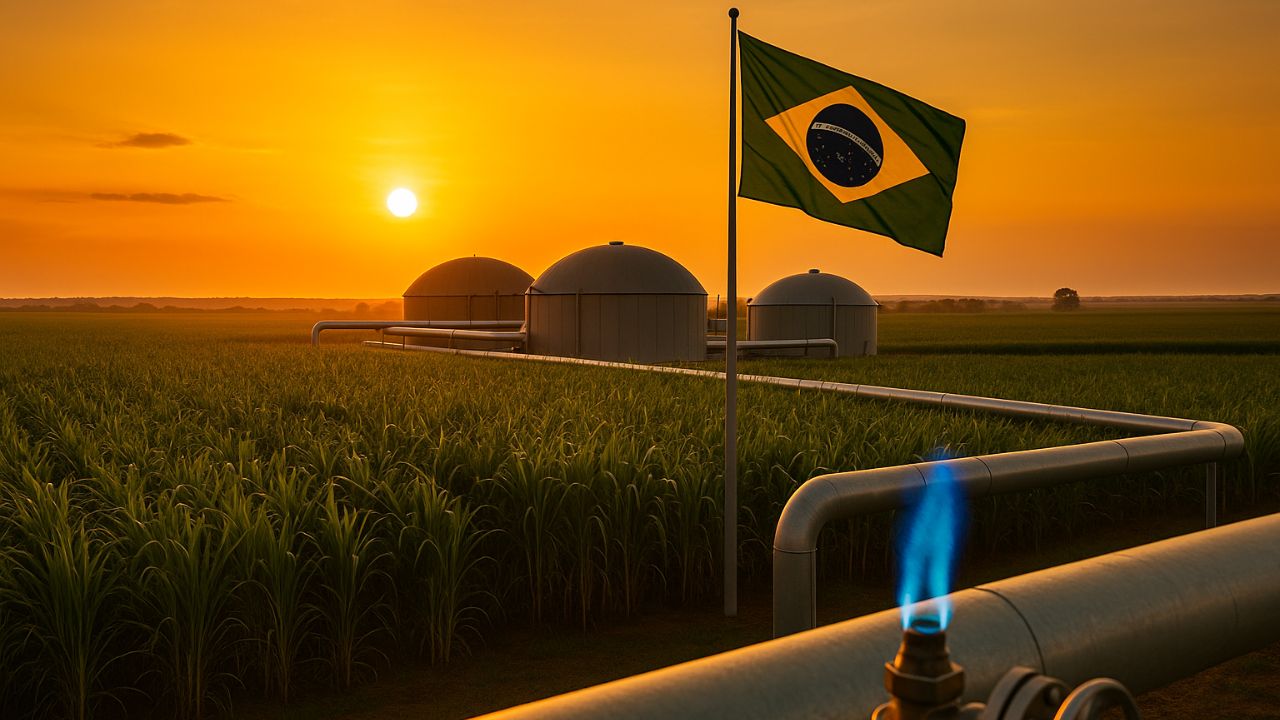
For Fluxys Executive, Country Should Invest in Biogas as a Viable and Strategic Alternative to the Challenges of Green Hydrogen
In a recent interview, the CEO of Fluxys Brasil, Sébastien Lahouste, advocated for biogas as the true “Brazilian hydrogen.” According to him, this renewable energy source presents itself as a more viable and immediate solution for Brazil given the existing infrastructure and the urgency of the energy transition.
Biogas Emerges as a Strategic Solution in the Short Term
According to the portal Eixos, the executive from Fluxys Brasil stated that biogas, produced from the decomposition of organic waste, already has a consolidated market, mastered technology, and plants operating in the national territory. In contrast, green hydrogen still requires significant investments in infrastructure and regulation, which hinders its immediate large-scale application.
Lahouste explained that Brazil has a natural gas network that can be used to transport biogas, drastically reducing implementation costs. The company’s proposal includes the development of regional hubs connected to the national transport network, optimizing logistics and ensuring greater product reach within the country.
-
Renewable energy advances over protected areas in Brazil, and a survey by the Energy Transition Observatory reveals silent impacts that challenge environmental conservation and pressure sensitive traditional territories.

-
Rio Grande do Sul accelerates energy transition: State invests in renewable technologies and consolidates decarbonization strategies and pathways to attract billions in new industrial investments.

-
With 160,000 m² of collectors, an area larger than 20 football fields, Silkeborg, in Denmark, hosts a solar thermal plant that heats 19,500 homes and could become the largest solar heating plant in the world.

-
A study reveals the expansion of renewable energy procurement in Brazil and shows how companies are taking advantage of opportunities to reduce expenses, ensure energy efficiency, and strengthen strategic environmental commitments.


Structural Challenges Limit the Advancement of Hydrogen
Although green hydrogen continues to be a strategic bet, especially for export, particularly in hubs such as the ports of Pecém (CE) and Açu (RJ), its domestic application faces barriers. Brazil’s gas grid, still underdeveloped compared to countries in Europe and North America, makes large-volume transportation unfeasible, according to the executive’s analysis.
Additionally, Lahouste mentioned obstacles such as the lack of domestic demand, absence of long-term contracts with international buyers, and high initial costs for making plants viable. He also points out that even the alternative of injecting hydrogen in small proportions into the current network faces technical and regulatory limitations.
Biogas and Energy Security: Possible Convergence
For Fluxys, large-scale adoption of biogas could significantly contribute to Brazil’s energy security. The company emphasizes the importance of regulations that reflect the real conditions of the country, including integration with thermal plants and the use of local resources. According to Eixos, the technical and economic viability of biogas positions it as a central ally of the energy matrix in the coming years.
Complementarily, a report from the International Energy Agency (IEA) recognizes the potential of biogas as a decarbonization vector in emerging economies, especially in countries with strong agricultural production and availability of waste, a scenario that fits Brazil.
Perspective for the Future of Brazil’s Energy
In summary, Fluxys Brasil’s vision prioritizes an energy transition based on the country’s reality. Biogas emerges as a renewable fuel with immediate application, leveraging existing infrastructure and meeting a growing demand for sustainable solutions. Hydrogen, although promising, depends on more robust arrangements and coordinated investments to become competitive in the domestic scenario.









Seja o primeiro a reagir!