





 English
  Francês
  Alemão
  Italiano
  Japonês
  Norueguês
  Portuguese
  Spanish
  5 min of reading
  0 comments


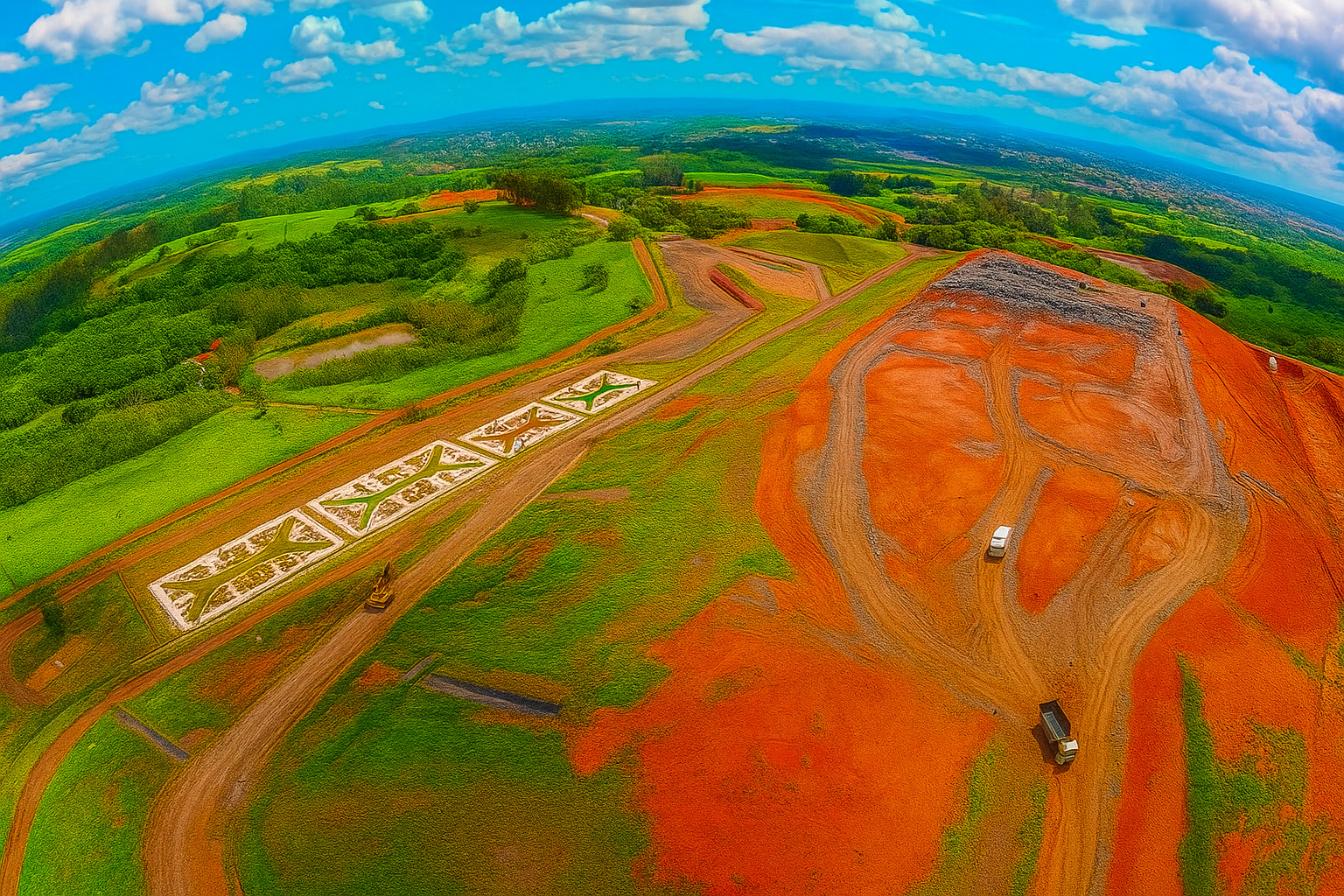
Discover the Biometano Plant Project in São Leopoldo, Uniting Clean Energy, Circular Economy, and CO₂ Reduction with Support from BNDES and the Climate Fund
As the demand for clean energy sources grows worldwide, Brazil is also advancing with investments in sustainable technologies. This movement aims not only to reduce pollutant gas emissions but also to promote the responsible use of natural resources.
In this way, the approval of R$ 76.4 million by the BNDES for the construction of a biometano plant in São Leopoldo, in Rio Grande do Sul, represents a decisive step towards energy transition. This is because the project combines technological innovation and environmental commitment.
It consolidates a development model based on circular economy and valorization of urban waste.
-
Renewable energy advances over protected areas in Brazil, and a survey by the Energy Transition Observatory reveals silent impacts that challenge environmental conservation and pressure sensitive traditional territories.

-
Rio Grande do Sul accelerates energy transition: State invests in renewable technologies and consolidates decarbonization strategies and pathways to attract billions in new industrial investments.

-
With 160,000 m² of collectors, an area larger than 20 football fields, Silkeborg, in Denmark, hosts a solar thermal plant that heats 19,500 homes and could become the largest solar heating plant in the world.

-
A study reveals the expansion of renewable energy procurement in Brazil and shows how companies are taking advantage of opportunities to reduce expenses, ensure energy efficiency, and strengthen strategic environmental commitments.


The funding, by the way, combines resources from the Climate Fund and the Finem line. Through the Climate Fund, BNDES allocated R$ 61.1 million to the project, reinforcing support for initiatives that directly act on mitigating climate change.
Thus, the public sector emerges as a driving agent of green technologies, encouraging the formation of a more diverse and secure energy matrix.
What Is a Biometano Plant and How Does It Work
First of all, it is important to understand what characterizes a biometano plant. In the case of São Leopoldo, it will purify the biogas generated by the decomposition of organic waste at the landfill of the Companhia Riograndense de Valorização de Resíduos (CRVR), a company of the Solví Group.
For this reason, the project uses a process that transforms biogas – composed mainly of methane and carbon dioxide – into biometano, a renewable fuel capable of replacing diesel and natural gas.
Additionally, the technology used will be 100% domestic. This reduces dependence on imported solutions and, at the same time, strengthens local innovation.
With this, the plant will have the capacity to produce 32,400 cubic meters of biometano per day, significantly contributing to a cleaner energy matrix.
In this way, urban solid waste gains a new purpose, while more than 80,000 tons of CO₂ equivalent per year will no longer be released into the atmosphere.
Biometano in the Historical Context of Renewable Energy in Brazil
Historically, Brazil began to seek energy alternatives during the oil crises of the 1970s. In response, the government created programs like Proálcool, which encouraged the use of ethanol.
Over time, the country also invested in wind and solar energy. However, biometano emerges as a recent and highly promising alternative.
Unlike sources that depend on weather, such as sun or wind, biometano is produced from the decomposition of organic waste, which ensures continuity and decentralization of energy generation.
For this reason, this strategy stands out for efficiently using already available resources, turning urban waste into useful energy.
Additionally, biometano helps Brazil meet the goals of the Paris Agreement and other climate conferences.
Consequently, utilizing landfills as energy sources facilitates the reduction of carbon emissions in a practical and economical way. This avoids major works or structural changes.
National Technology Applied to Biometano Production
To ensure efficiency, biometano requires specific technological processes. Firstly, organic matter decomposes, generating biogas.
Then, this gas undergoes a purification process that transforms it into renewable fuel.
In the São Leopoldo project, the plant will utilize PSA (Pressure Swing Adsorption) technology, developed by the Brazilian company Gruen. This system separates biogas components under pressure, removing carbon dioxide and other impurities.
Thus, the result will be a high-efficiency fuel, fully compatible with the existing energy infrastructure.
The application of this national technology strengthens the Brazilian production chain, promotes specialized jobs, and increases the country’s technological autonomy.
Social and Environmental Impacts for Rio Grande do Sul
In addition to energy benefits, the project brings significant impacts to society. During the construction of the plant, the involved companies will generate about 80 temporary jobs.
After completion, the operation will have 16 permanent direct positions, promoting regional development.
Furthermore, the project implements the concept of circular economy, turning urban waste into clean fuel.
This reduces waste and increases efficiency gains throughout the waste management chain.
As the plant will be installed at the landfill itself, the logistics costs decrease, and the energy supply becomes more efficient and sustainable.
This solution also enables direct supply to the local network, benefiting homes, businesses, and vehicles with a lower environmental impact fuel.
The Strategic Role of BNDES and the Climate Fund
On the other hand, the project’s success depends on the support of financial institutions with a forward-looking vision. The National Bank for Economic and Social Development (BNDES) has been demonstrating commitment to a fair energy transition, supporting sustainable and innovative projects.
At the same time, the Climate Fund, linked to the Ministry of Environment and Climate Change, directs public resources to projects that contribute to reducing global warming.
This type of financing helps the private sector transition to more sustainable economic models, focusing on efficiency and environmental responsibility.
Furthermore, the fund boosts technological modernization and reinforces Brazil’s alignment with the guidelines of the National Policy on Climate Change.
This ensures that local actions have global relevance and that public policies are integrated with the country’s international commitments.
Rio Grande Biometano Plant: A Model of Sustainable and Replicable Development
In summary, the biometano plant in São Leopoldo shows that Brazil can grow responsibly. The project unites technology, sustainability, and social inclusion.
By promoting collaboration between private companies and the public sector, it offers a clean energy model with concrete benefits.
The Solví Group, responsible for the initiative, reinforces its role in valorizing urban waste. By turning waste into energy, the group contributes to a more modern and effective waste management.
Finally, it is worth noting that this model can be easily replicated in other regions.
After all, the challenges faced by São Leopoldo with urban solid waste are similar to those of various Brazilian cities.
The biometano plant, therefore, presents itself as a scalable, efficient, and adaptable solution to local needs.
With initiatives like this, Brazil consolidates its position as a regional leader in renewable energy.
More than that, it proves that sustainable development is possible when there is synergy between innovation, financing, and environmental commitment.









Seja o primeiro a reagir!