





 Portuguese
  English
  Spanish
  5 min of reading
  0 comments


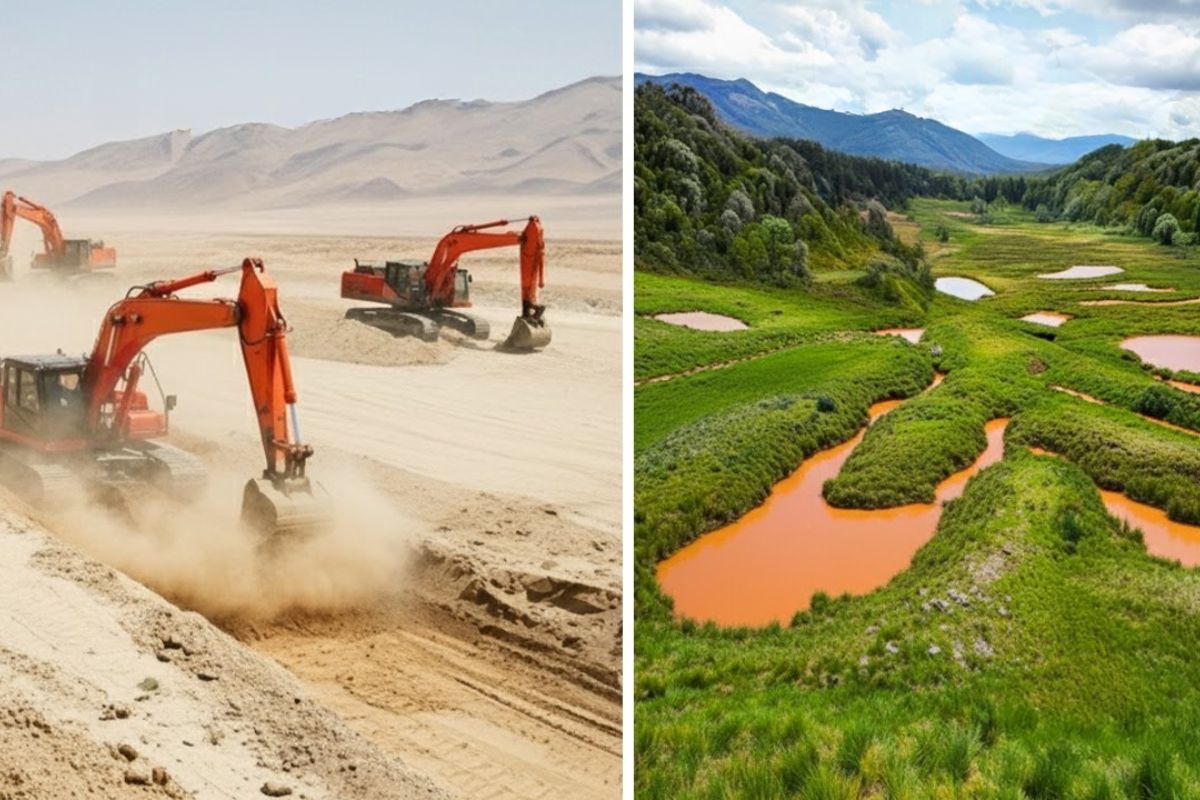
In The High Slopes Of The Andes Mountains, Areas That A Few Years Ago Were Described As Dead, Broken, And Dangerous Soil Have Undergone A Deep Transformation With The Systematic Application Of Ancient Inca Engineering. Wetlands Disappeared Over Decades Of Environmental Degradation, Extreme Droughts, And Inadequate Interventions, But Now They Are Once Again Storing Water, Feeding Rivers Year-Round, And Sustaining Entire Communities.
The process occurs in poor and isolated regions of Bolivia, where the lack of modern infrastructure has exacerbated the water crisis. Ancient Inca engineering emerges as a concrete response: simple, inexpensive, based on local knowledge, and capable of reversing erosion, food insecurity, and constant landslide risks that isolate communities for days or weeks.
The ancient Inca engineering has been applied in an integrated manner, from the top of the mountain to the bottom of the valleys, recreating systems that control water flow, increase soil infiltration, restore wetlands, and bring life back to entire watersheds. The results are already directly impacting the routine of hundreds of people who depend on water to survive.
Historical Droughts, Degraded Soil, And Water Collapse In The Bolivian Andes

Bolivia has been facing a critical water scarcity scenario for years. The country heavily relies on the melting of the Andean glaciers to supply cities and rural areas, but these glaciers have been shrinking rapidly. The combination of climate change, pollution, and inadequate infrastructure has led to a persistent water crisis throughout the territory.
-
Buried under China, a colossal machine weighing 20,000 tons began operating as the largest neutrino detector on the planet and, in just 59 days, surpassed results that science took half a century to achieve.

-
Iran enters the center of a climate alert after the war emitted 5.6 million tons of CO2 in two weeks, surpassing the annual pollution of entire countries.

-
Lunar exploration may change after a Chinese probe finds a “cavity” of radiation that reduces the impact on astronauts by up to 20% at certain times on the Moon.

-
Artemis 2 sends four astronauts on a historic mission to the Moon after 50 years, with a launch on April 1 and a record flight to the far side of the Earth’s natural satellite.

The droughts recorded in 2016 and 2023 are among the most severe ever faced. Long periods without rain eliminated grasses and shrubs that protected the soil. Without vegetation cover, the land lost biological life, hardened, and became hydrophobic, unable to absorb water. When the rains return, the water quickly runs off the surface, causing intense erosion, flash floods, and landslides.
This destructive cycle directly affects mountain roads, considered among the most dangerous in the country. Frequent landslides drop rocks, block roads, and isolate communities. In some cases, residents were left without access to the nearest city for up to ten days, without commerce, basic services, or assistance.
São Francisco And The Rebirth Of A Wetland Considered Lost

At the top of the mountain, in an area known as São Francisco, the application of ancient Inca engineering has completely changed the landscape. Where there was once dry soil and practically no vegetation, today there is a functional wetland capable of storing water from the rainy season and gradually releasing it throughout the year.
The restored wetland acts as a natural sponge. Water slowly seeps into the soil, recharging aquifers, and reappears further down in the form of springs, rivers, and streams. This continuous process ensures a permanent flow of water even during the dry season, something that did not exist before the intervention.
The recovery of this wetland directly feeds a river that supplies at least 15 families. Further down the slope, more than 70 families use this water to irrigate agricultural crops. The difference is felt in the regularity of irrigation, food security, and reduced risk of collapse during dry periods.
Low-Cost Circular Reservoirs Secure Water Year-Round

One of the pillars of ancient Inca engineering applied in these projects is the construction of simple, quick, and inexpensive reservoirs. One widely used model is the circular reservoir with a capacity to store 46,000 liters of water. It is built with local materials, mainly adobe inside and stones outside, which are abundant in the Andean region.
The construction takes an average of three and a half days to complete. The water collected from the springs goes through a filtration tank to remove sediments before being stored. There are also reserve tanks with similar capacity, in addition to channels that direct excess water to artificial ponds.
These reservoirs allow communities to get through the dry season with a stable water supply. One beneficiary, a local farmer, uses the system to irrigate corn, potatoes, and onions, essential crops for family subsistence.
Terraces, Channels, And Ponds Reduce Erosion And Increase River Flow
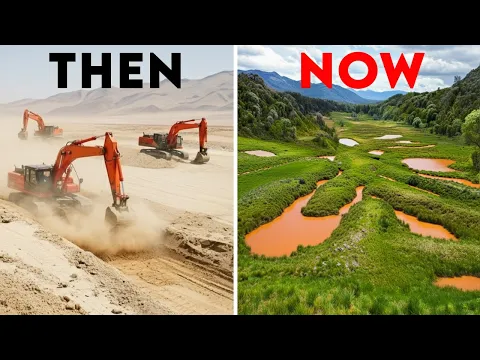

Ancient Inca engineering is not limited to water storage. It involves a complete system of vertical land management. Terraces are built along the slopes with stones taken from the site. These structures slow down water flow, prevent soil erosion, and increase moisture retention.
On the terrace walls, fruit trees and native forest species are planted. This arrangement increases soil fertility, improves water retention, and creates microclimates favorable to agriculture. The vegetation also helps stabilize slopes, reducing the risk of landslides.
In addition, artificial ponds capture rainwater during the rainy season. They slowly infiltrate water into the soil, recharging aquifers. More than 30 dug channels connect these ponds, distributing water in a controlled manner. The practical result has been an increase of over 25% in water volume in the streams located further down the mountain.
Native Reforestation And Community Agreements Sustain The System
The restoration was only possible thanks to agreements between local communities. Strategic areas were protected from grazing and cultivation to allow wetland regeneration and native tree growth. Thousands of seedlings have been planted as part of the process.
A larger reservoir, with a capacity of 500,000 liters, was built in a nearby area. It supplies about 80 agroforestry plots, benefiting approximately 100 families. This reservoir is part of a restoration project of 70 hectares throughout the valley, managed collectively by the community.
The system does not rely on expensive technologies or complex maintenance. It utilizes traditional knowledge, local materials, and community labor, ensuring autonomy and continuity over time.
Why Ancient Inca Engineering Outperforms Modern Solutions
The effectiveness of ancient Inca engineering lies in its adaptation to the Andean territory. Unlike isolated modern solutions, it works with the complete water cycle, from the top of the mountain to the bottom of the valley. Infiltration, storage, filtration, irrigation, and reforestation function as parts of a single system.
In addition to the technique, the social component is decisive. Without community agreements to protect restored areas, the system cannot be sustained. The combination of ancestral knowledge and local organization explains why these solutions work where modern, expensive, and fragmented projects have failed for decades.
The Bolivian experience shows that ancient Inca engineering is not just a cultural rescue, but a practical strategy to tackle water crises, food insecurity, and environmental risks in poor and isolated regions. With restored wetlands, rivers flowing year-round, reservoirs up to 500,000 liters, a flow increase exceeding 25%, and hundreds of families benefiting, the model reveals that simple solutions, when well integrated into the territory, can overcome decades of technical failures.
In your opinion, why did governments and institutions take so long to recognize the real potential of ancient Inca engineering in the face of such urgent problems in the Andes?







-

Uma pessoa reagiu a isso.