





 Portuguese
  English
  Spanish
  5 min of reading
  0 comments


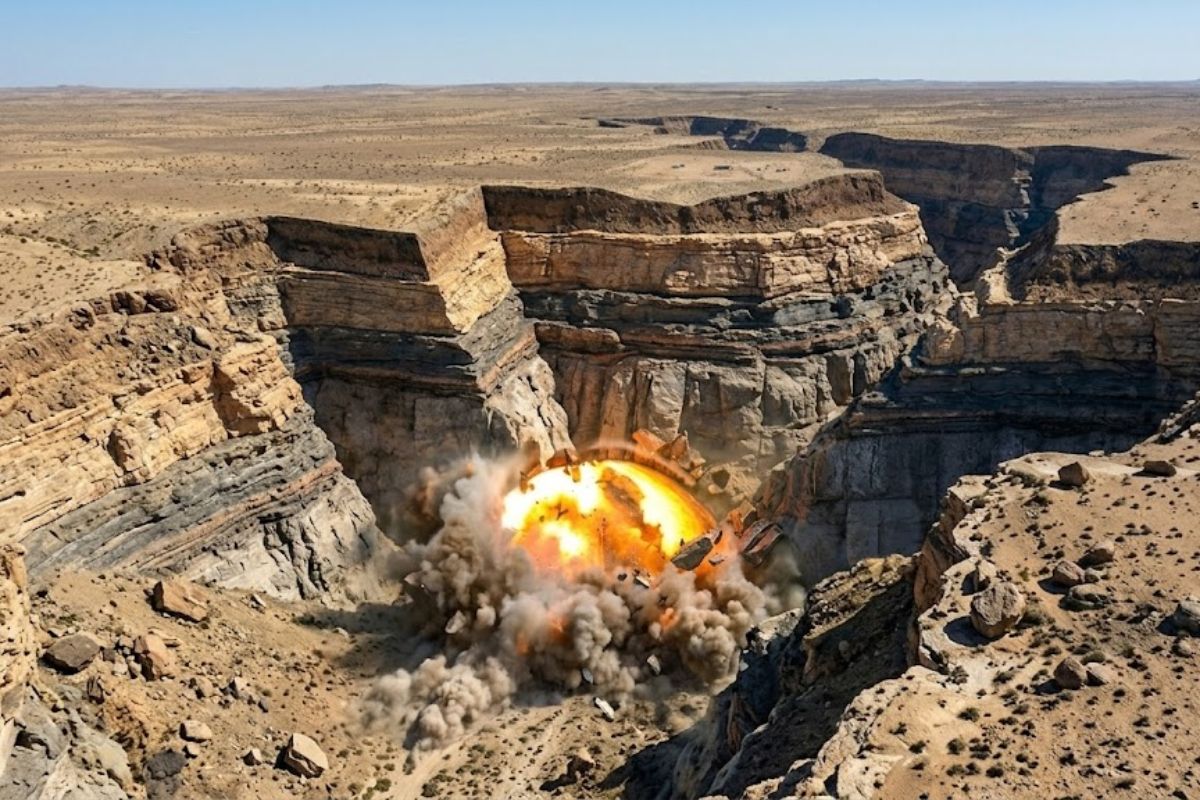
United States Bombers Allegedly Conducted Strikes Against Underground Bunkers Linked to Iran’s Missile Network Using Heavy Penetrator Bombs Capable of Targeting Fortified Structures and Causing a Significant Decline in Iran’s Ballistic Missile Launch Capacity
The United States bombers allegedly targeted a series of underground bunkers associated with Iran’s missile network, utilizing penetrator bombs designed to destroy deeply buried fortified structures. The strikes were aimed at facilities that supported the Iranian strategy based on missile cities and underground bases.
According to information released by military officials and analyses published in the international press, the United States bombers purportedly drastically reduced Iran’s missile launch capability by hitting storage facilities, tunnels, and access points used to transport and fire ballistic weapons in different regions of the country.
United States Bombers and the Attack on Underground Facilities
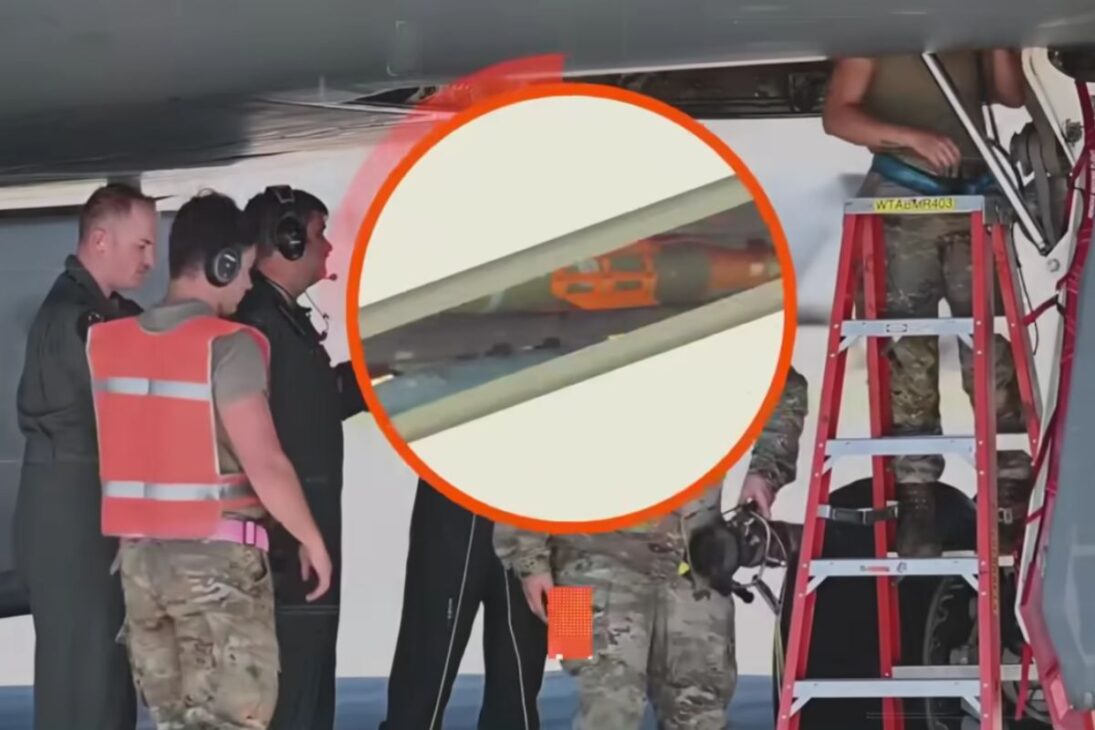
The operation allegedly involved United States bombers equipped with specialized munitions capable of penetrating reinforced underground structures used by Iran to store and protect its missile arsenal.
-
What can really trigger large volcanic eruptions? Research suggests that gas returning to the magma may be more dangerous than gas escaping from it.
-
Found in one of the most radioactive places on Earth, this Chernobyl fungus may be doing something with radiation that no one has been able to explain to this day.

-
A bright yellow mushroom imported from Asia escaped from a cultivation farm in the United States in 2010 and is now aggressively spreading across 25 states, destroying entire communities of native fungi in American forests.

-
Buried under China, a colossal machine weighing 20,000 tons began operating as the largest neutrino detector on the planet and, in just 59 days, surpassed results that science took half a century to achieve.

These strikes focused on locations that are part of the so-called network of “missile cities”, underground complexes built over decades and designed to protect missile launchers and stocks from air attacks.
According to statements attributed to Admiral Brad Cooper, commander of the United States Central Command, American bombers dropped dozens of penetrator bombs weighing approximately 2,000 pounds on positions linked to buried missile launchers.
The strategic intent was clear: to hit the infrastructure that enables Iran to launch missiles on a large scale.
Penetrator Bombs Used in the Strikes on the Bunkers

The munitions used by the United States bombers are designed specifically to destroy underground fortified structures.
Technical analyses suggest that the bombs employed may belong to the BLU-109 family, a type of penetrator bomb built with reinforced steel casing and capable of penetrating layers of concrete and soil before detonating.
These bombs are often fitted to the GBU-31 JDAM system, which uses GPS guidance to turn conventional bombs into high-precision guided munitions.
The approximate weight of these bombs can reach around 900 kilograms, and their design allows them to penetrate deeply before explosion.
Once inside the underground structure, the warhead releases explosive fragments that can collapse tunnels, silos, and internal rooms used for storage or launching missiles.
The Iranian Strategy of “Missile Cities”
For years, Iran has invested in building an extensive network of tunnels and underground bunkers known as missile cities.
These facilities are designed to store and protect large stocks of ballistic and cruise missiles, as well as house mobile launchers used in military operations.
Reports from the Foundation for Defense of Democracies indicate that these structures include underground corridors, maintenance areas, fuel depots, and internal routes for transporting armaments.
Iran has even released images of some of these facilities, showing tunnels where medium-range missiles such as the Ghadr-H and other ballistic systems are allegedly stored.
The Iranian military strategy relied on the capability to launch large volumes of missiles in saturation attacks against regional adversaries.
The Vulnerability Revealed by Military Operations
Despite the robustness of underground structures, military analysts point out that the so-called missile cities may have presented a strategic vulnerability.
Researchers linked to the James Martin Center for Nonproliferation Studies, cited in analyses published by the Wall Street Journal, state that the centralization of launchers in fixed facilities would have reduced the mobility of Iran’s strategy.
Before the construction of these underground bases, some Iranian missiles were operated by mobile launchers, capable of moving quickly to different locations.
With the establishment of fixed facilities, many of these systems became reliant on specific geographic points, which potentially facilitates identification by satellites and intelligence systems.
This shift would have turned structures designed for protection into predictable targets for air strikes.
Satellite Images Indicate Damage to Facilities
Satellite photographs published by international outlets show visible changes in areas where underground complexes linked to Iran’s missile network are reportedly located.
Comparative images released by the New York Times indicate that some tunnel entrances and above-ground structures may have been destroyed following the bombings.
In certain locations, craters appear near tunnel entrances, suggesting the use of penetrator munitions capable of reaching buried structures.
There are also records of collapses at entrances to underground facilities and damage to buildings associated with the bases.
Even when the main tunnels are not completely destroyed, blocking access points can render the bunkers unusable for military operations.
Decline in Missile Launch Capability
Reports cited by the press indicate that the strikes conducted by United States bombers may have caused a significant decline in Iran’s ability to carry out missile launches.
According to data released by international outlets, some missile launchers may have been neutralized in the initial phases of the operation.
Estimates suggest that up to half of the launchers could have been disabled in the first 24 hours following coordinated strikes, with further impacts recorded in the following days.
Other reports indicate that approximately 70% of launchers may have been rendered inoperable by early March, drastically reducing the potential volume of attacks.
Significant reductions in the daily number of missile and drone launches have also been reported.
These numbers suggest a relevant shift in the military balance of the region, should they be fully confirmed.
The attacks attributed to United States bombers against underground bunkers linked to Iran’s missile network illustrate how modern military technologies can rapidly alter strategic structures built over decades.
The use of penetrator bombs, combined with satellite intelligence and constant aerial surveillance, appears to have exposed vulnerabilities in a system designed precisely to withstand external attacks.
There remain many uncertainties about the real long-term impact of these strikes and how Iran might adapt its military strategy in light of this scenario.
Now an inevitable question arises.
If underground structures considered practically indestructible can be neutralized in this manner, how will countries that rely on military bunker networks adapt their strategies in the future?
Leave your analysis in the comments.
Do these attacks represent merely an episode of war or a sign that the way to protect strategic arsenals is changing completely?








-

Uma pessoa reagiu a isso.