





 Portuguese
  English
  Spanish
  8 min of reading
  16 comments


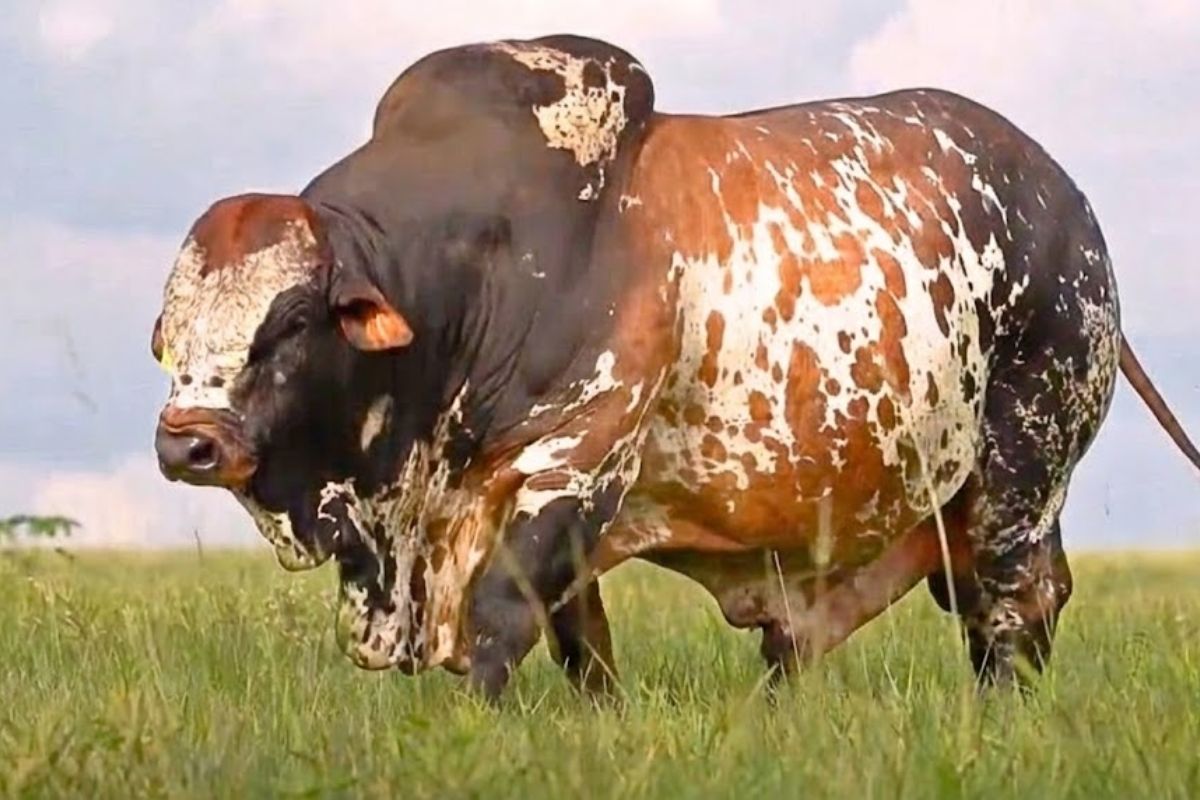


African Zebu Boran Is Described as Cattle Molded in Scarcity, Capable of Fattening on Dry Pasture, Withstanding Extreme Heat, and Delivering Natural Marbling, but Arrives in Brazil Under Suspicion and Competition. Among Nelore, Guzerá, Tabapuã, Brahman, and Sindi, It Only Becomes a Bet If It Proves Results in the Backlands
Today, the discussion around Boran starts with a direct question: why bring another zebu to Brazil if the country already has Nelore, Guzerá, Tabapuã, Brahman, and Sindi? The answer, in practice, depends on what this African zebu can sustain on dry pasture and in heat, without shortcuts of expensive management and without relying on ideal conditions.
In 10 years, Boran could be just another name mentioned with curiosity and suspicion, or it could become a reference for efficiency in environments where even grass gives up on growing. At the center of the debate is the demand for proof in the backlands: weight, fertility, hardiness, and quality meat need to appear outside of the discourse and within the production system.
Why Boran Becomes Debate Before Reaching Pasture

The starting point is skepticism.
-
While corn requires rain and is expensive, sorghum produces almost the same volume per hectare at a cost up to 80% lower and uses less water, and it is revolutionizing dairy farming in the Triângulo Mineiro, where producers save hundreds of reais per hectare.
-
A rural producer from Urubici cries as he shows 50 tons of plums thrown on the ground because no one wanted to buy them, and in desperation, he records a video asking anyone to come to the property to pick the fruits before they rot.
-
Unable to pass through Hormuz, Brazil activated a plan B that uses Turkey as a gateway to the Middle East: the route through Gibraltar and the Mediterranean is longer and more expensive but ensures that chicken, beef, and corn continue to reach Arab markets.

-
You grew up hearing that the good coffee from Brazil goes all abroad and the bad coffee stays for Brazilians, but this story has completely changed, and the numbers show that in the 1980s, thirty percent of the coffee sold here was adulterated with corn and barley.

Brazil has a tradition in zebu, and producers tend to trust what they have already seen work, especially when the margin depends on predictability.
The arrival of Boran is therefore not seen as automatic substitution but as a proposal that needs to justify its space in a competitive environment.
This suspicion appears, first, in the comparison to what already exists.
Nelore, Guzerá, Tabapuã, Brahman, and Sindi already occupy a reference position, each associated with a story of adaptation and a type of trust built over time.
Boran enters as a foreigner and, therefore, the first test is cultural: overcoming resistance to change before even conquering heat and drought.
What the African Zebu Boran Promises on Dry Pasture and in Heat

The central argument of Boran is being an African zebu capable of fattening on dry pasture, withstanding extreme heat, and maintaining reproductive regularity with minimum input, in regions where scarcity is the rule and rain is the exception.
The promise is to produce where the system tends to fail.
The text describes an animal that remains calm under heat that would stress other breeds, with the ability to exist naturally in hostile conditions.
This description is relevant because it shifts the debate from appearance to functional performance: efficiency on pasture, self-sufficiency, and extreme adaptation.
Origin in East Africa and Natural Selection Without Laboratory


The origin narrative reinforces the thesis of hardiness.
Boran is situated in the heart of East Africa, between the savannas of Kenya and Ethiopia, as cattle forged by the desert itself.
It does not appear as a product of the laboratory, nor from irrigated farms with balanced feed, but as a result of living on the edge.
What supports this image is the process described as natural selection over thousands of years, in a hostile environment where survival is the first measure of efficiency.
Bringing this origin into the Brazilian debate, the question is straightforward: if this African zebu survives among predators and brutal droughts, would it be the kind of cattle that the Brazilian semi-arid needs, especially on dry pasture and under constant heat?
Efficiency with the Minimum and the Biological Enigma Cited by Specialists
The text does not present a closed formula for Boran’s resistance but lists hypotheses and questions that emerge as triggers for research.
Among them, the possibility of a slower metabolism, conserving energy, and the ability to extract nutrients even from dry fibers, turning the impossible into meat.
It is an efficiency described as biological, not dependent on supplements.
In practice, the measurable point cited is performance in dry pasture systems: Boran tends to gain weight with what is left, not with the best scraps, and still maintain good fertility rates.
In the same context, other breeds, including Brahman, appear as dependent on supplementation to achieve equivalent results.
Natural Marbling Without Confinement and the Shock with the Logic of Luxury
Another element that increases curiosity is the naturally marbled meat, even without confinement.
The description associates this natural marbling with tenderness and flavor, characteristics valued and usually linked to intensive feeding.
The contrast is direct: how does an animal raised in harsh conditions manage to deliver a product seen as premium without resorting to the luxury model?
This point connects to the debate on efficiency.
The text suggests that biological efficiency may surpass the luxury of supplements, refocusing on genetics adapted to heat and dry pasture, instead of relying on expensive systems to produce results.
Brahman as Comparison and the Risk of Becoming Respected but Restricted
Brahman appears as an inevitable reference because it is described as the first zebu to conquer the world, with prominence, muscular build, and majestic stature.
At the same time, its origin is positioned as a controlled environment, associated with confinements and well-kept pastures. This comparison creates a line of contrast: Brahman as a symbol of modern beef, Boran as a product of scarcity.
The tension appears in the proposed closing: Boran may repeat Brahman’s fate, respected but restricted, or it may become a symbol of a new era where cattle do not need luxury to produce, just genetics that understands heat.
The message is that, in Brazil, reputation without scale does not guarantee transformation; results in the field are the final filter.
Competition with Nelore, Guzerá, Tabapuã, Brahman, and Sindi in the Brazilian Field
The resistance to Boran is also explained by the abundance of options.
The question of why another zebu echoes because the country already has Nelore, Guzerá, Tabapuã, Brahman, and Sindi, all noted as tropical breeds with recognized functions.
The proposed reading is that each zebu was born from a different challenge, and Boran does not come to replace but to complement.
In this framing, Boran carries an argument of genetic diversity: rare African genes linked to resistance to parasites, maximum utilization of dry fiber, and fertility in temperatures exceeding 40º.
The promise is not to shine in the show ring but to perform in dry pastures, where the system needs efficiency with little.
The Throne of the Semi-Arid and the Strength of Sindi as Northeast Identity
The biggest practical obstacle may be a competitor already occupying the imagination.
The text calls Sindi the king of the semi-arid and describes that, even before Boran crossed the ocean, the Northeast already had its own hero, a zebu that learned to live between the sun and thorns and produces even in drought.
The origin of Sindi is attributed to Pakistan, with adaptation to the northeastern climate described as so complete that it seems to have been born there.
It includes cows producing high-fat milk during dry periods, vigorous calves when pasture is dry and sparse, and, above all, a social factor: breeders trust it, making the breed synonymous with resistance, economy, and real results.
In this scenario, Boran is presented as a foreigner trying to prove its value.
While Sindi is mentioned in fairs, lectures, and breeder groups, Boran appears as an unknown name, pronounced with curiosity and suspicion.
The dispute, therefore, is not just genetic; it is one of trust.
Crossing Sindi and Boran and the Hypothesis of Dual Aptitude in the Backlands
Instead of direct competition, the text raises a hypothesis of coexistence.
The idea is to imagine a crossing between Sindi and Boran, combining African resistance and Asian efficiency, with the aim of dual aptitude capable of living with minimal resources and delivering maximum results.
The reading is pragmatic: the future of the backlands may depend less on choosing one name and more on uniting what each has best.
The condition for this hypothesis to gain traction is a simple demand: the cattle rancher does not want beautiful cattle; they want cattle that can withstand sun, drought, and time, and still deliver results in the feed trough.
Boran only enters this equation if it proves it can withstand the routine of the caatinga, not just the origin narrative.
What Boran Needs to Prove in the Backlands to Avoid Becoming a Restricted Promise
The text points out that Boran has everything to succeed, but it needs to overcome a more formidable enemy than heat or drought: the resistance to change.
Brazil is described as a country of tradition, and in the field, tradition carries weight.
In terms of adoption, this translates into predictable behavior: producers trust what they have seen work, and this makes sense in areas of climatic risk.
The consequence is that today, few breeders are investing in Boran, and it is these few who would be writing the first pages of the breed’s history in the country.
The leap depends on confirming results, listed objectively: weight, fertility, hardiness, and quality meat.
Without these indicators sustained in the dry pasture of the backlands, the narrative tends to remain restricted to niches and curiosity.
Scenarios for the Coming Years and the 10-Year Benchmark
The text itself offers a horizon: if the results are confirmed, perhaps in 10 years Boran will cease to be the African promise and become the new base of Brazilian tropical zebu.
The ‘perhaps’ is important because it acknowledges uncertainty and returns the decision to the field.
In the opposite scenario, Boran would be another case where the promise exists, but scale does not come, repeating the condition of a respected but restricted breed.
The debate ends where it began: on the need to prove efficiency under heat, with minimal management, and in dry pasture, within the backlands.
Boran arrives in Brazil as an African zebu associated with a tough thesis: transforming scarcity into production.
The discussion is not aesthetic; it is economic survival in an environment of dry pasture and high heat.
Between the tradition of already established breeds and the symbolic throne of Sindi in the semi-arid, Boran will only cease to be curiosity when it delivers consistent proof in the backlands.
For the reader following tropical livestock, the direction is clear: observe where Boran is being tested, what results appear in weight, fertility, hardiness, and quality meat, and how the trust of the producer builds when the climate tightens.
The filter is simple and does not change: the answer is in the pasture.
Do you think Boran has a chance to conquer the backlands on dry pasture and in heat, or will it become a restricted promise in the face of Nelore, Guzerá, Tabapuã, Brahman, and Sindi?









Tem que ser testado. Se aprovado e for viável economicamente, poderá conquistar e garantir seu espaço entre asraças já consolidadas.
Describe the actual conditions in terms of rainfall regimes, temperatures and evapo-transpirations for is to make informed comment. The semi- arid is a rather broad term. Are we talking of improved boran or uniproved boran?
Onde é vendido aqui no Brasil?