





 Portuguese
  English
  Spanish
  4 min of reading
  5 comments


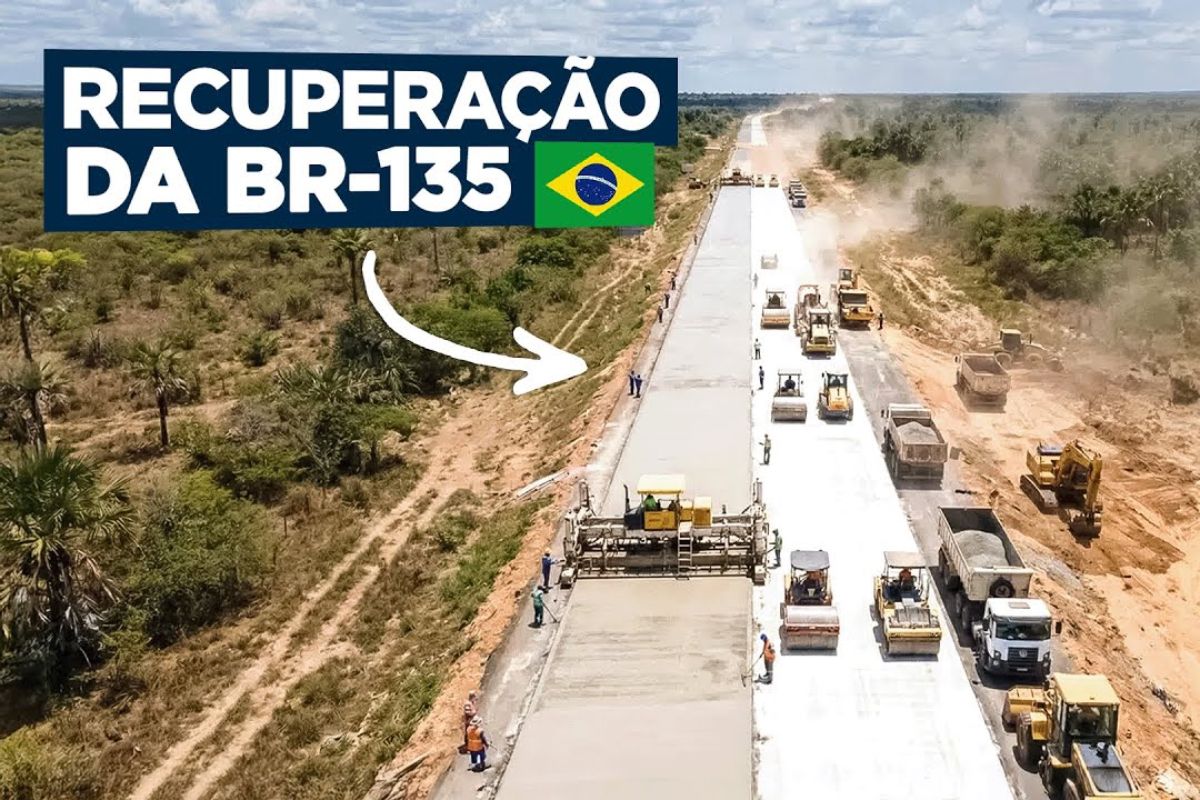


On BR-135, the stretch between Miranda do Norte and Alto Alegre do Maranhão is replacing asphalt with Concrete White Topping over 74 km. DNIT reports an investment of R$ 382 million, 43 km released, and 55% executed. The promise is a durability of 30 years, with delivery by the end of 2026.
The BR-135 has entered a transformation cycle that attempts to solve, with performance engineering, an old problem of a heavily loaded highway and constant maintenance. In October 2023, the order to start restoring 74 km with the White Topping technique was signed, applying concrete as a solution for heavy traffic on the Maranhão corridor.
Now, with 43 km already released in concrete and 55% of contractual execution, the BR-135 project is presented as a standard turn: R$ 382 million to aim for 30 years of durability on the stretch between Miranda do Norte and Alto Alegre do Maranhão, with completion expected by the end of 2026.
Where the Stretch Is Located and Why It Is Considered a Bottleneck
The BR-135 section under construction spans 74 km and is situated between the municipalities of Miranda do Norte and Alto Alegre do Maranhão, in the segment identified as km 125 to km 199.
-
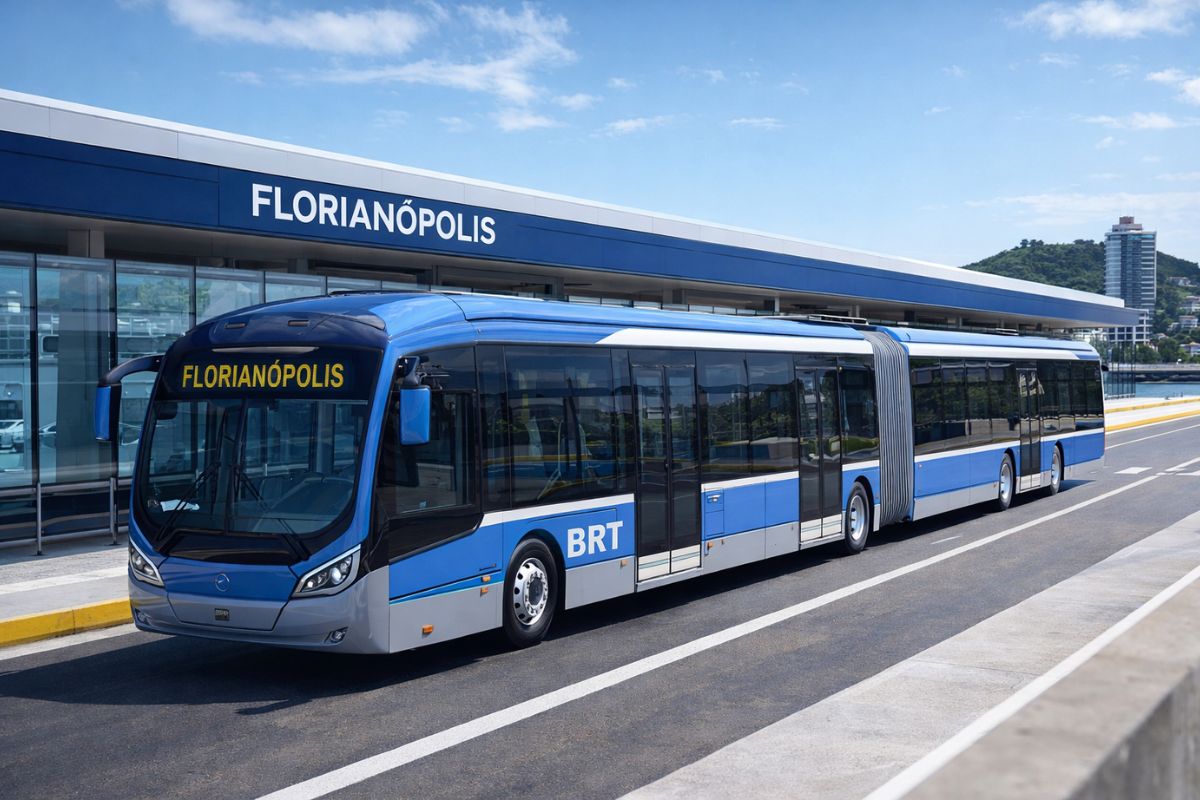
Florianópolis will receive a million-dollar BRT that will begin construction in 2026 with nearly 400 million in funding from the federal government and the Inter-American Development Bank, and the map already shows the routes for the exclusive bus corridors.
-
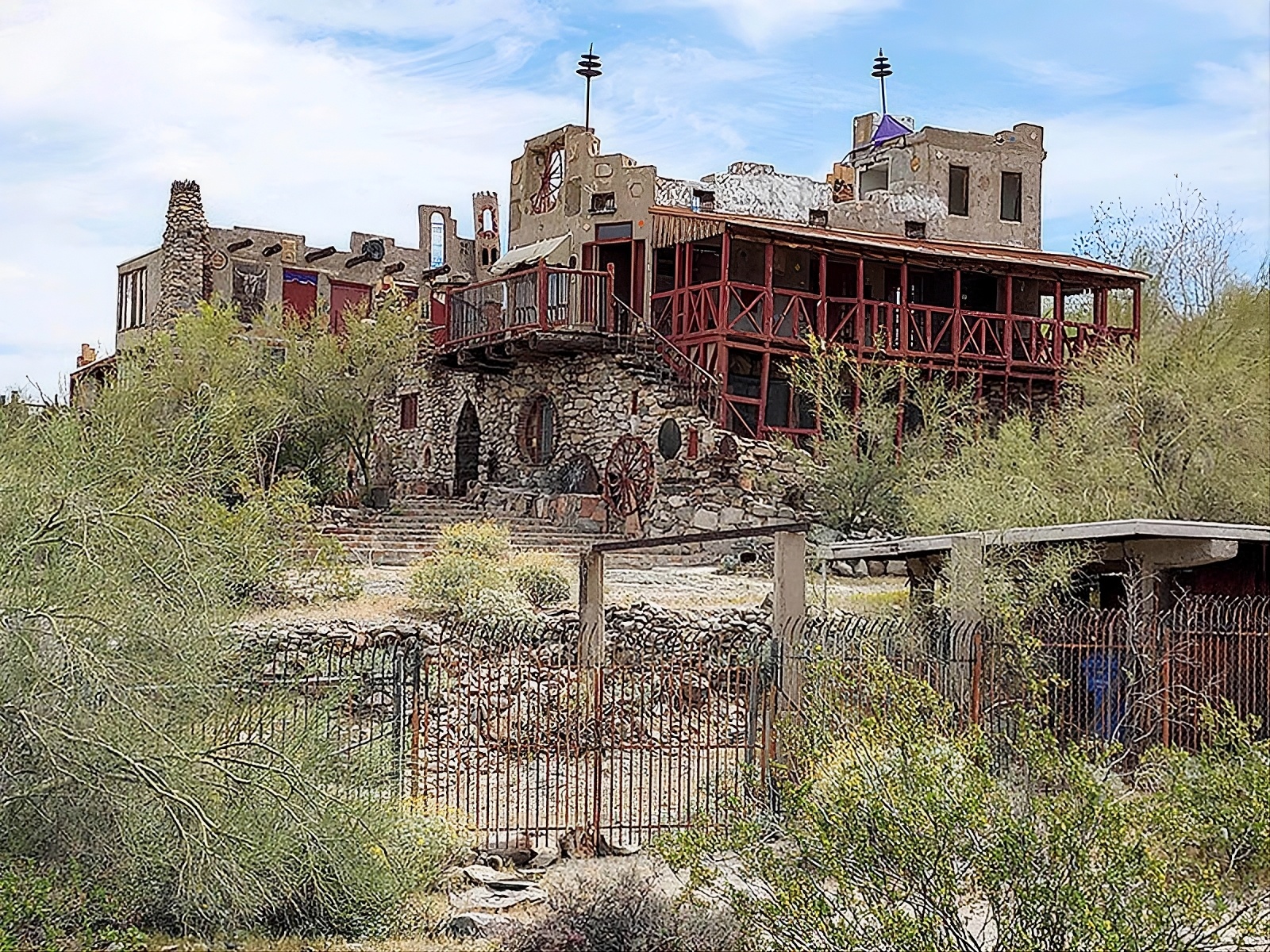
Without a blueprint, without an engineer, and using scrap from the dump, a father spends 15 years building an 18-room castle for his daughter, featuring tram tracks, 13 fireplaces, and over 700 m², which may now be demolished.
-
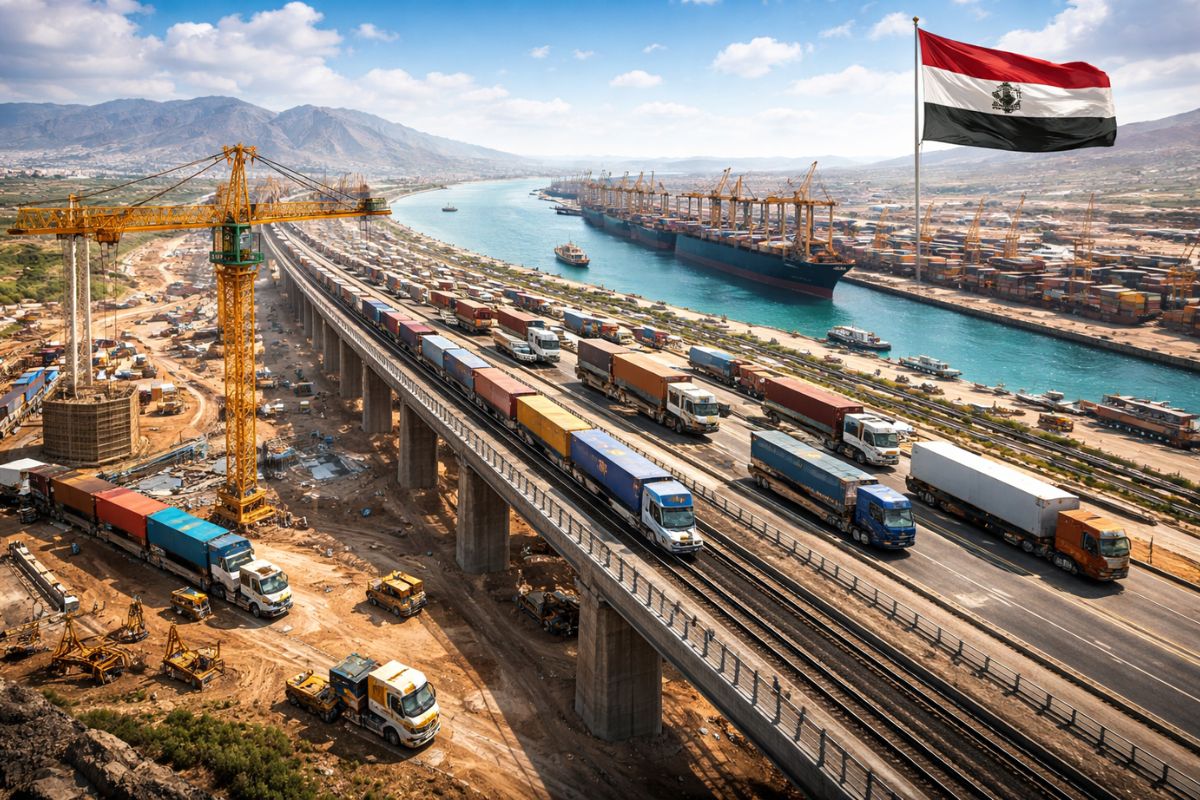
A megaproject worth R$ 89 billion is advancing in Iraq and promises to change the game in global trade by creating a new corridor between Asia and Europe, reducing traditional routes and repositioning the country as a logistics powerhouse.
-
Goodbye bedside table: floating shelves become a trend in 2026 by freeing up space in the bedroom, improving circulation, bringing visual lightness, and integrating technology without taking up floor space.


In practice, it is the type of short stretch on the map, but huge in daily life: when it jams, the state’s logistics feels it.
The strategic importance of BR-135 becomes clear when access is in question: for São Luís, the highway is viewed as the only land access route to the Maranhão capital. When there is only one “door,” any loss of predictability turns into costs.
What Is White Topping and Why Did BR-135 Become Concrete
The change of “skin” of the BR-135 is not merely aesthetic. White Topping is described as rehabilitation, with one layer of concrete applied over the existing structure when this base can still serve as support.
The logic is to gain stiffness, distribute loads, and reduce the pothole patching cycle as a routine.
This is why the construction is communicated as an attempt to move away from spot interventions and migrate to a pavement designed to withstand repetition and weight, seeking an estimated durability of 30 years in the project’s context.
Project Numbers: 74 km, R$ 382 Million, 43 km Released and 55% Executed
The data presented for the BR-135 is straightforward:
- Contract length: 74 km
- Approximate investment: R$ 382 million
- Concrete stretch already released: 43 km
- Reported contractual execution: 55%
- Reported deadline: completion by the end of 2026
Translating the investment into scale of construction, R$ 382 million for 74 km amounts to about R$ 5.16 million per kilometer, or approximately R$ 5.16 thousand per meter of rehabilitated highway, considering the contract includes more than just the pavement.
Why BR-135 Is Called the Logistics Axis of Maranhão
The BR-135 is described as a drainage corridor, connecting production and supply to the port system, with the Itaqui Port cited as the central cargo destination.
In this design, the port is associated with the agro corridor, with intermodal structures and terminals such as Tegram, noted for having handled more than 84 million tons in 10 years and with static capacity of 500,000 tons.
When a highway like BR-135 sustains this type of flow, the promised gain is not just comfort: it is transport predictability, fewer interruptions, and lower hidden costs in freight, vehicle maintenance, and delays.
What Changes for Those Who Travel: Safety, Cost, and Predictability
In communications, the justification for the intervention on the BR-135 relies on three expected deliveries:
Significant Gain in Safety, with a more stable pavement and different behavior under braking and rain.
Reduction in Maintenance Costs, with lesser recurrence of emergency repairs.
Greater Transport Predictability, a real asset for those who depend on the stretch for supply, delivery, and return.
This effect is especially important on a busy highway, where traffic does not “stop” for construction to happen. The routine becomes flow management, detours, signaling, and safely returning to the axis.
How Concrete Is Applied: From Preparation to Curing
The BR-135 project is presented as a layered process, with technical steps that determine the final outcome.
First comes preparation: the existing surface must be regularized, treated, and corrected where there is pathology, creating conditions for adherence and support.
Next, concrete enters as the structure: joints, details of planned cuts, and, when foreseen, load transfer bars, preventing edges from becoming weak points.
Then, texture and curing are introduced, which are crucial for performance and durability.
Curing, in particular, is treated as a critical step: without it, the pavement may appear ready on the outside but vulnerable on the inside.
And, in Maranhão, the text draws attention to the environment and execution: heat and wind can accelerate water loss on the surface and increase the risk of early cracking if the site does not adjust its pace and protection.
What Still Needs to Happen by the End of 2026
With 43 km released, the BR-135 project still has a way to go before completing the full stretch of 74 km.
In roadworks, the contractual execution often includes, in addition to the pavement, items like drainage, signaling, and safety devices, which also affect the timeline and users’ perceptions.
If the schedule holds, the published expectation is that the concrete stretch will solidify a new quality standard, reducing daily improvisation and making BR-135 more stable and predictable for the heavy traffic that crosses the corridor.
In your opinion, is this concrete restoration on the BR-135 a decisive step to unlock the bottleneck in Maranhão, or is it still insufficient given the volume of cargo that passes through?






Sim, eu tráfego pela rodovia semanalmente e no ano de 2019 trafeguei na lama no inverno e na poeira no verão.
Os trechos já entregues nos trazem trouxeram ganhos significativos de segurança e manutenção do veículo.
Em relação ao transporte de cargas trará também mais segurança e menos paradas por causa de problemas na pista.
Muito bom, ainda falta fazer nós outros corredores no Maranhão. Assim vale a pena pagar impostos, com certeza!
Esse trecho só vivia com operação tapa buracos.