





 Portuguese
  English
  Spanish
  5 min of reading
  0 comments


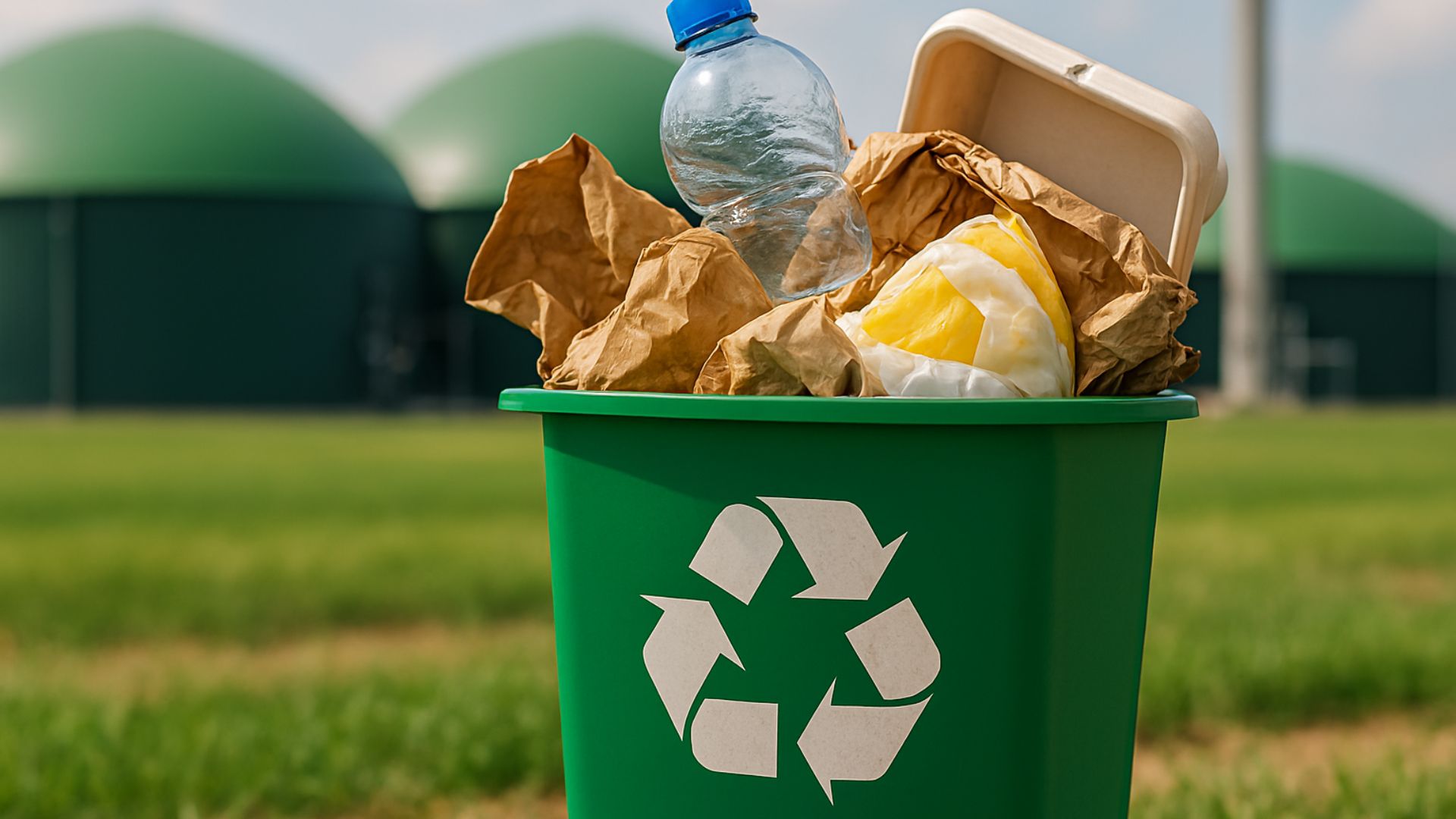
The New Study by Abrema Reveals How Brazil Still Wastes a Large Part of Urban Waste, Despite the High Potential to Generate Renewable Energy and Expand Biogas Production in 2024
The report Panorama of Solid Waste in Brazil 2025, published by Abrema (Brazilian Association of Waste and Environment), brought a troubling diagnosis about national environmental management. According to an article published by Agência iNFRA this Tuesday (9), the study reveals that only 11.7% of urban waste generated in 2024 was converted into renewable energy or fuels such as biogas and biometano, despite the enormous potential existing in the country.
Renewable Energy: Utilization of Urban Waste Is Still Low
Although the annual volume of waste is high — 81.6 million tons, equivalent to approximately 1 kg per person per day — the utilization is still very limited. Thus, the survey reinforces that the progress of energy recovery from waste remains slow, even amidst the growing demand for sustainable alternatives. The study shows that the country has made little progress in the last decade when it comes to transforming urban waste into renewable energy.
In 2024, of the total generated, 6.57 million tons were used to produce electricity from biogas. 2.6 million tons were allocated to biometano production, a renewable fuel that can replace fossil natural gas.
-
Renewable energy advances over protected areas in Brazil, and a survey by the Energy Transition Observatory reveals silent impacts that challenge environmental conservation and pressure sensitive traditional territories.

-
Rio Grande do Sul accelerates energy transition: State invests in renewable technologies and consolidates decarbonization strategies and pathways to attract billions in new industrial investments.

-
With 160,000 m² of collectors, an area larger than 20 football fields, Silkeborg, in Denmark, hosts a solar thermal plant that heats 19,500 homes and could become the largest solar heating plant in the world.

-
A study reveals the expansion of renewable energy procurement in Brazil and shows how companies are taking advantage of opportunities to reduce expenses, ensure energy efficiency, and strengthen strategic environmental commitments.


Even so, these numbers represent only a small fraction of Brazil’s potential. Abrema points out that if large municipalities directed their waste to landfills with infrastructure to capture biogas, the national production of biometano could reach 2.86 million Nm³ per day, which would mean a 525% increase compared to current capacity.
This data clearly indicates that Brazil has significant opportunities for expansion, but lacks consistent public policies and investments in infrastructure to reach this level.
Landfills Continue to Be a Hurdle to Expanding Renewable Energy
Despite policies that aim to end landfills, the country still faces a critical scenario. In 2024, 28.1 million tons, or 40.3% of collected waste, were directed to landfills and other irregular sites. Almost 3 thousand landfills remained active, even after their prohibition.
These numbers reveal that the existence of landfills makes energy recovery from waste unfeasible, as only proper landfills allow for the capture of biogas used in electricity generation or in biometano production. Additionally, these sites represent environmental, social, and sanitary risks, directly impacting vulnerable communities.
Therefore, the report highlights that the main obstacle is not technological, but structural. Without eliminating irregular disposal, the country will continue to waste raw materials that could be transformed into renewable energy and new products within a circular economy.
Regional Inequalities Hinder Advances in Renewable Energy in Brazil
The survey by Abrema reinforces that the country does not have a uniform standard for urban waste management. Regions advance at different paces, influenced by factors such as infrastructure, public investment, and administrative capacity.
In the Southeast and South, over 69% of waste is adequately managed in landfills. These regions concentrate most of the energy recovery plants. In the North, however, only 38.7% of waste receives proper treatment, making the region’s rate the worst in Brazil.
These differences show that the expansion of renewable energy directly depends on the quality of regional management. While more structured states can develop waste-to-energy conversion projects, less favored regions still struggle against clandestine disposal.
The lack of integration among municipalities also hampers the advancement of the biogas chain. Many projects would become viable if smaller cities operated in regional consortia, which would scale up operations and reduce costs.
Traditional Recycling Makes Little Progress and Depends on Scrap Collectors
In addition to the low energy utilization, recycling also faces structural challenges. In 2024, only 8.7% of dry waste was recycled. Almost two-thirds of the recovered material depend on the manual work of scrap collectors.
Although they play an essential role, scrap collectors mostly work under informal conditions, without adequate remuneration or infrastructure. The report reinforces that the formalization of cooperatives and the expansion of selective collection are crucial for the country to increase its rates.
Consequently, the low recycling rate also contributes to the sending of recyclable materials to landfills and dumps, wasting resources that could generate jobs, income, and positive environmental impact.
The Strategic Role of Biometano in the Energy Transition
Among the alternatives identified to transform the sector, biometano emerges as a strategic solution. In addition to being renewable, it shares characteristics with natural gas, being usable in bus and truck fleets, in industry, in thermal power plants, and for direct injection into the distribution network.
Since it is obtained from the decomposition of urban waste, biometano reduces emissions, alleviates pressure on landfills, and encourages circular economy practices. Thus, the expansion of the biometano chain is directly associated with the development of adequate infrastructure, requiring structured landfills, efficient collection systems, and incentives for production.
Currently, Brazil has operational plants in cities such as São Paulo, Caieiras, and Curitiba, but according to the report, the installed capacity is far below the real potential. With directed investments, the country could quickly expand the supply of this sustainable fuel.
Pathways to Boost Urban Waste Management in Brazil
To transform urban waste into opportunities for economic and energy development, experts cited by Abrema point out priority measures.
Among them are strengthening oversight to end landfills, expanding selective collection with active participation of scrap collectors, encouraging public-private partnerships to modernize landfills and plants, creating specific regulatory instruments for biogas and biometano, and promoting regional consortia to scale up and reduce costs.
These actions would allow waste to cease being a liability and become part of a sustainable chain based on renewable energy and circular economy.
Relevance of the Issue for the Future of Brazil
The study released in December 2025 reinforces that Brazil is still far from fully leveraging its potential to transform urban waste into renewable energy. However, the scenario also highlights significant opportunities to reverse this picture.
As cities grow and generate more waste, modern solutions are essential. Better waste utilization means producing clean energy, reducing environmental impacts, and generating economic development.
With adequate investments, effective policies, and integration among municipalities, the country can surpass the current 11.7% utilization rate and advance towards a more modern, efficient, and sustainable waste management system.









Seja o primeiro a reagir!