





 Português
  Inglês
  Espanhol
  5 min de leitura
  0 comentários


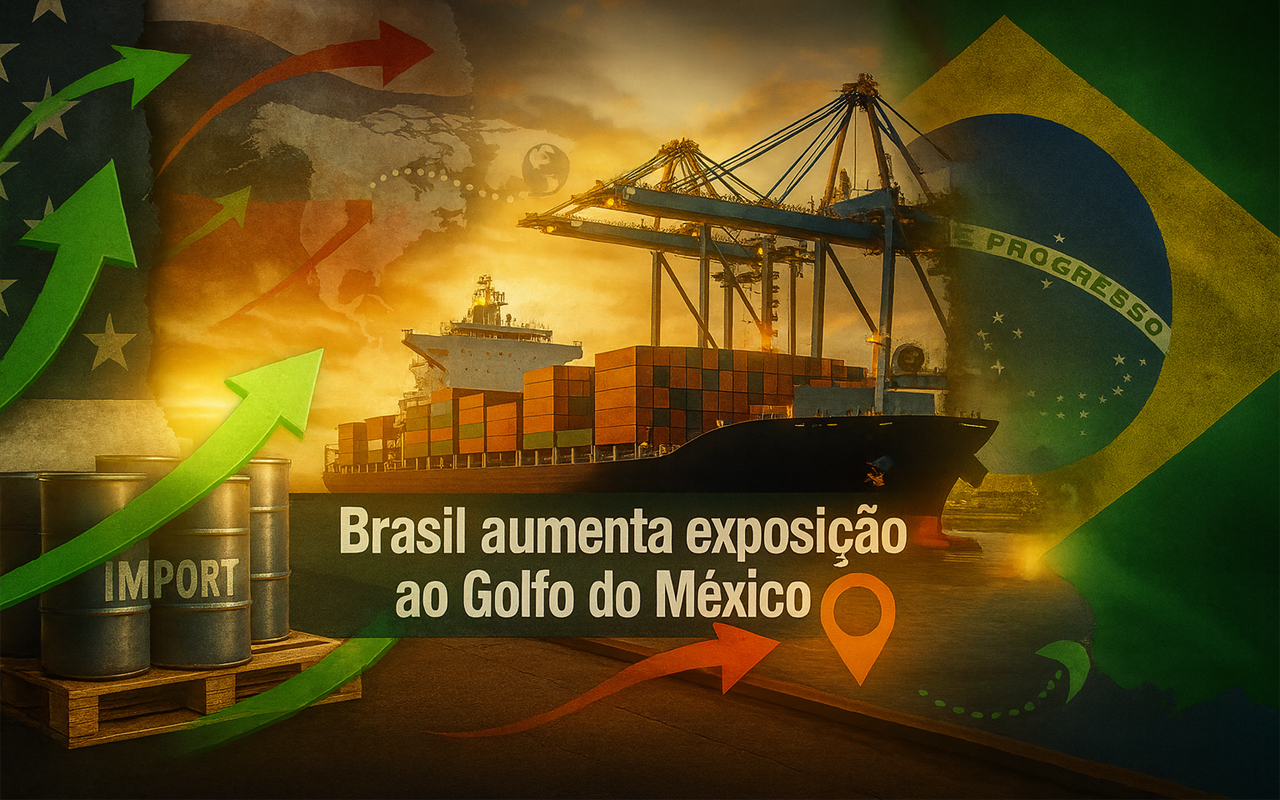
ANP Registers U.S. Advances in Fuel Imports Between July 1 and August 14: 30.5% of Total, Compared to 21% from Russia. With the Spread Practically Zeroed, U.S. Diesel Has Returned to Being the Competitive Route.
Brazil has changed the composition of fuel imports in recent weeks. With the price difference between products from the United States and Russia practically zeroed, importers increased purchases of derivatives from American refineries in August, especially imported diesel.
The figures are from ANP and show a recent reshaping of supply origins, with potential impacts on logistics costs, inventories, and price formation in the country.
What Do the Most Recent ANP Data Show About Fuel Imports?
From July 1 to August 14, 2025, the U.S. accounted for 30.5% of Brazilian fuel imports, Russia accounted for 21%, and the Gulf countries accounted for 12.6%. Thus, the United States gained ground in the most recent period compared to the average of the last year and a half. According to ANP, the American share is also more diversified by product than that of other suppliers.
-
Brazilian city gains industrial hub for 85 companies that is equivalent to 55 football fields.

-
Peugeot and Citroën factory in Argentina cuts production by half and opens a layoff program for more than 2,000 employees after Brazil drastically reduced purchases of Argentine vehicles.
-
A Brazilian city gains a factory worth R$ 300 million with the capacity to process 200 thousand tons of wheat per year, a mill of 660 tons/day, silos for 42 thousand tons, and an industrial area of 276 thousand m².
-
Havan will leave the shopping mall in Blumenau to inaugurate something that the chain has never done before: a megastore in half-timbered style in the Historic Center of the city, which is expected to be completed in May and change the landscape of local retail.


In the same report, the agency details that diesel continues to be the most imported product, having increased its share among the items entering the country. This growth helps explain why the variation by origin is particularly evident in diesel, which carries the most weight in the external purchasing balance.
ANP’s methodology relies on data from SISCOMEX and considers acquisition values in dollars at the shipping location (FOB prices). These values do not include freight, insurance, customs duties, or taxes, nor unexecuted operations, a key point to understand the spreads compared by origin.
Why Have U.S. Derivatives Become More Competitive for Brazil?
In August, the average price differential for U.S. diesel vs. Russia was around US$ 0.02 per liter, according to ANP monitoring. With the Russian advantage practically dissipated, traders and distributors began to “test other markets,” directing some of their purchases to American refineries. When the spread narrows, factors such as freight and timing gain importance and can favor already established routes with the Gulf of Mexico.
This movement does not negate the prominence that Russia has gained since 2022 in supplying Brazil but indicates a tactical adjustment: with prices more aligned, there is greater incentive to diversify suppliers, reduce operational risks, and negotiate better commercial conditions. According to ANP’s report, the American portfolio is broad and ranges from diesel and crude oil to LP Gas and methanol, which strengthens the resilience of the supply chain.
Companies in the sector signal that there is room for alternatives. Vibra Energia stated that it can maintain diesel supply even if imports from Russia are interrupted, as it purchases mainly from the Gulf of Mexico and has access to other origins in the Middle East. This assessment reinforces the view that the supply network is less dependent on a single supplier.
Geopolitics, Meetings in Washington, and the Effect on Brent Prices
The international backdrop has weighed in as well. While diplomatic signals from the U.S. to try to unlock the conflict in Eastern Europe fluctuate, analysts emphasize that the oil market tends to react more to sanctions policies than to isolated gestures. According to Reuters, although Washington is making efforts to advance negotiations regarding Ukraine, the direct impact on energy flows remains limited without material changes to restrictions.
In the short term, the price of the barrel reflected this combination. On August 19, Brent closed at US$ 65.79, down 1.22%, on a day when investors weighed the expectations of dialogue against the reality of the physical market and stocks. This movement was reported by financial outlets citing consolidated trading data.
For the following week, there was an attempt at recovery after recent losses, but without definitive triggers. Meanwhile, consultancy readings like those from Rystad Energy suggest that the likelihood of stricter U.S. sanctions against Russia has diminished, which contributes to normalize supply expectations in the medium term.
Impacts in Brazil: Stocks, Pump Prices, and the New E30 and B15 Blends
Domestically, ANP reports that diesel imports added up to 11.2 days of sales in July, helping form inventories and ensure supply security. For the most part, this cushion comes precisely from the recent cycle of stronger external purchases. More stock reduces vulnerability to short-term shocks.
For the consumer, the change in origin does not guarantee an immediate drop at the pump. Price formation incorporates exchange rates, international quotes, logistics, biodiesel, and taxes. Additionally, the advance of the mandatory blend beginning in August for E30 (gasoline with 30% anhydrous ethanol) and B15 (diesel with 15% biodiesel) also influences the final cost and the balance between imports and local production.
The central message, however, is one of risk reduction: with smaller spreads and active alternative routes, the supply system is less exposed to unilateral interruptions. This reading is consistent with the diversification data by product and origin presented by ANP and with Vibra‘s statements about access to multiple suppliers.
WTO, 50% Tariff, and Aviation Ethanol
On the trade front, the United States accepted Brazil’s request to open consultations at the WTO regarding the 50% tariff applied to Brazilian products, but argued that this measure falls under “national security”, a claim that often complicates a swift resolution. The case runs in parallel to the 10% surcharges already in effect and may influence fuel and biodiesel chains if there is an escalation or de-escalation.
As governments discuss countermeasures and sectoral cooperation, the Brazilian industry is pushing for market openings for ethanol and, in particular, for sustainable aviation fuel in the medium term, where the Brazil-U.S. partnership is seen as strategic by exporters and airlines. The outcome of the consultations at the WTO and any tariff adjustments may redefine relative advantages in relevant trade routes.
On the oil front, it is worth watching whether the U.S. vs. Russia spread remains close to zero. If the difference widens again in favor of the Russians or if freight becomes more expensive, the import matrix may adjust again. For now, official data indicate a gain in participation from the U.S., with diesel at the center of this recent shift.










-

-

-

4 pessoas reagiram a isso.