





 English
  Francês
  Alemão
  Italiano
  Japonês
  Norueguês
  Portuguese
  Spanish
 3 min of reading



For The First Time In History, Brazil Achieves Top 10 In Solar Energy Installed Capacity
The month of March brings an important moment in Brazil’s history in the solar energy sector. After all, we rank among the 10 main countries with installed capacity in the world, the first time we have held this position. The data comes from the International Renewable Energy Agency (Irena). According to Irena’s data, Brazil achieved 24 gigawatts in 2022, and there may be an increase with greater job creation in the coming years.
However, the Ministry of Mines and Energy (MME) estimates that installed capacity has already surpassed 26 gigawatts in 2023. Thus, we have been ranked as the 8th largest solar energy producer. The sector is very optimistic, and the trend is for us to climb a few more spots in this ranking in the coming years. Check out some numbers regarding our installed capacity.
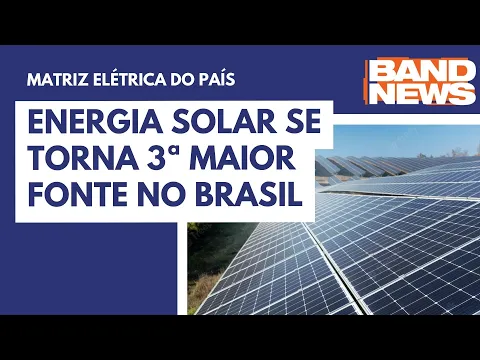
Solar Energy Is Already The Third Largest Source In Brazil. Check Out More Information In The Video Below

National Geography Favors The Production Of Solar Energy And Other Renewable Sources
Brazil has a diverse geography across its 5 regions, with solar incidence in the South, Southeast, and Northeast being very attractive for solar energy generation. Additionally, the winds offshore along the national coast favor the installation of more renewable sources, such as wind energy. Companies have been investing to make the most of these resources.
-
With 160,000 m² of collectors, an area larger than 20 football fields, Silkeborg, in Denmark, hosts a solar thermal plant that heats 19,500 homes and could become the largest solar heating plant in the world.

-
A study reveals the expansion of renewable energy procurement in Brazil and shows how companies are taking advantage of opportunities to reduce expenses, ensure energy efficiency, and strengthen strategic environmental commitments.

-
Roraima bets on the sun to escape high tariffs: Amid the energy crisis and price hikes, solar energy is growing in Roraima and transforming consumption in the North region.
-
Mato Grosso do Sul excels in the sugar-energy sector: the state reaches a milestone of 22 operating mills and accelerates the production of clean energy in MS with a focus on sustainability.


Moreover, the Ministry of Mines and Energy aims to bring Brazil to the forefront of the energy transition. After all, this is a highly achievable mission; it just requires investment in the efficient use of natural resources, which can contribute to job creation.
All of this has caused solar energy to move from the third to the second largest installed capacity in the country, also considering small and medium-sized enterprises. Furthermore, according to data from the Brazilian Association of Photovoltaic Solar Energy (Absolar), since July 2022, the installed capacity of solar energy in Brazil has been growing at around 1 gigawatt per month.
Solar Energy Production Grows 65.3% In Brazil In The First 15 Days Of March
The report from the Electric Energy Trading Chamber (CCEE) released recently indicates that national solar energy production grew by around 65.3% in the first 15 days of March. In this sense, we have about 1,978 megawatts average (MWmed) added to the grid, which is a larger increase than in the same period last year.
This was one of the sources that saw the most growth in 2023. After all, the wind energy sector grew by 42.3%, while generation from thermoelectric and hydropower plants saw a significant decrease. Regarding the increase in total energy production, the largest gains were from the states of Maranhão, Rondônia, and Acre, with 60%, 13%, and 11%, respectively.
Sector Expected To Generate Over 300,000 Jobs In 2023
Absolar has pointed out that in 2023, more than 300,000 jobs will be generated just in the solar energy sector. This is the result of a massive investment of over R$ 50 billion this year.
According to the association’s survey, there will be an increase of 10 gigawatts of installed capacity in 2023. Therefore, by the end of the year, the expectation is that we will reach 34 gigawatts of capacity, moving up in the global ranking.
However, it is worth noting that this implies a growth of 52% over the current solar energy capacity in Brazil. Thus, the sector is extremely optimistic, and the expectation is that this energy source will increasingly find its place in Brazilian homes.





Seja o primeiro a reagir!