





 Portuguese
  English
  Spanish
  4 min of reading
  0 comments


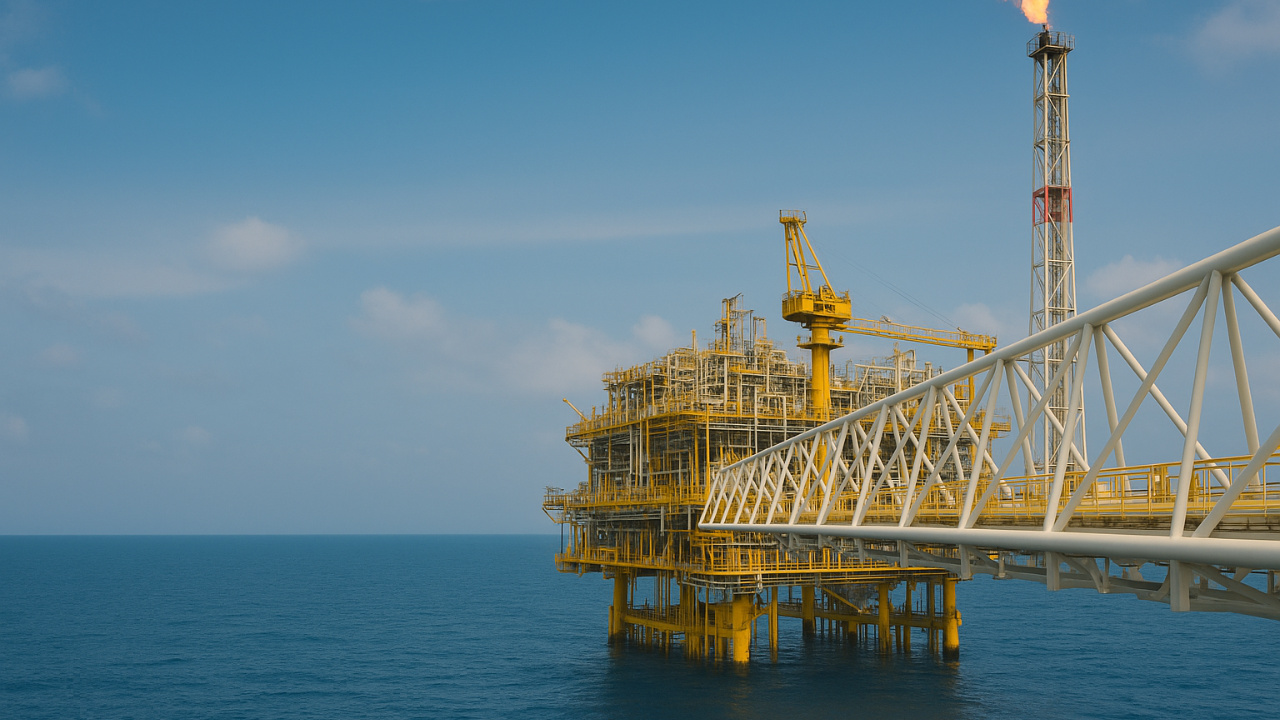
The Government Study Points to Pre-Salt Expansion, New Pipelines, and Billion-Dollar Investments to Ensure Natural Gas Supply Until 2035.
Brazil will double natural gas production by 2035, says the government, confirming that the country will see a 95% increase in national supply over the next 10 years, according to the new Natural Gas Notebook from the 2035 Ten-Year Energy Expansion Plan.
The document, released this Friday (Dec. 5, 2025) by the Ministry of Mines and Energy and the EPE, details how the progress will occur mainly in the Southeast region, which will continue to concentrate about 70% of the supply.
The projection gained momentum with the accelerated development of the pre-salt and new offshore processing systems, which are seen as pillars of national energy expansion.
-
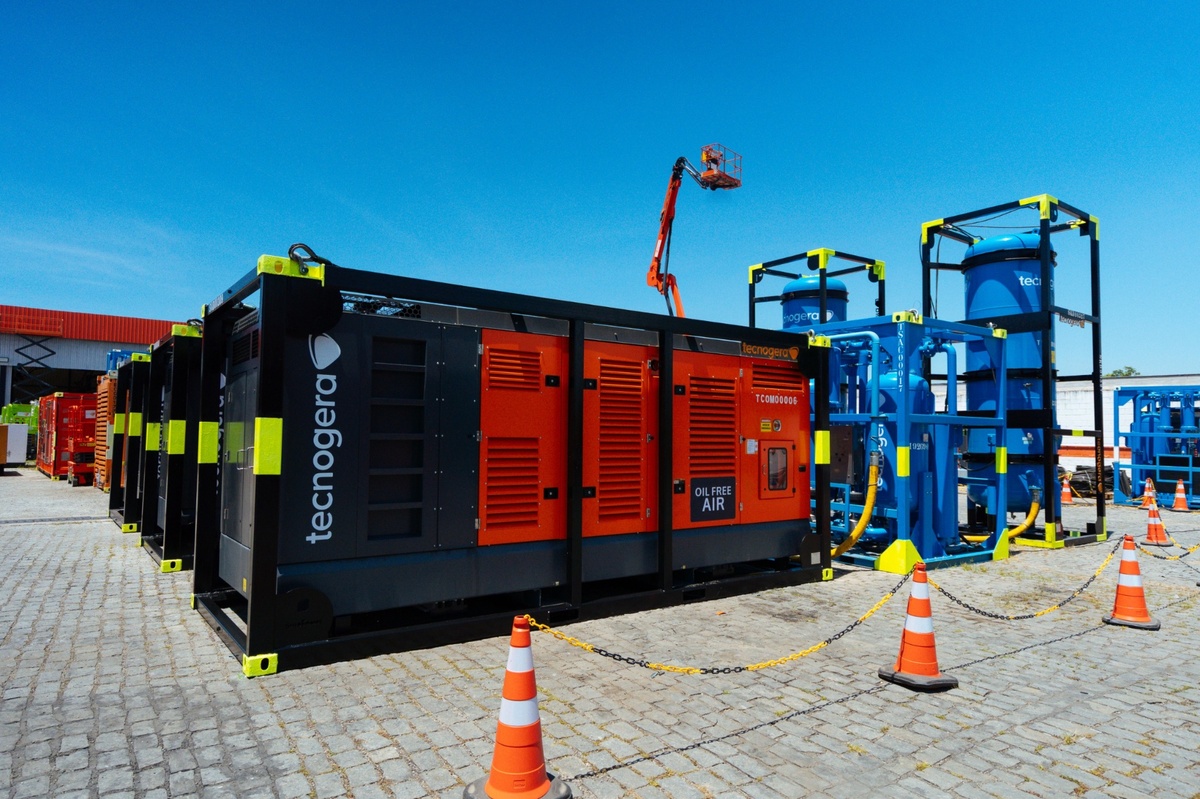
Offshore industrial demand in Macaé skyrockets with the recovery of oil and gas and could grow by up to 396% by 2026 in the Campos Basin.
-
Offshore industrial demand in Macaé surges with the recovery of oil and gas and could grow by up to 396% by 2026 in the Campos Basin.
-
Brazilian giant expands borders in the Southeast: Petrobras confirms new oil discovery in ultra-deep waters in the pre-salt of the Campos Basin.

-
Alert in the global energy market: Severe tropical cyclone hits the coast and disrupts gas production at major plants in Australia, threatening global supply.


According to the government, Brazil will double natural gas production by 2035 because it has favorable geological, technological, and logistical conditions to overcome old bottlenecks.
Thus, the country is preparing to enhance industrial competitiveness and strengthen the Gas for Employment program, which places natural gas as a vector of economic development.
Pre-Salt and Offshore Infrastructure Fuel the Production Leap
The projection that Brazil will double natural gas production by 2035, says the government derives mainly from advancements in the pre-salt, where new fields and flow systems will raise the net production capacity from the current 65 million to 127 million m³/day.
Thus, the integrated network is expected to see an increase of about 85% in potential supply.
The Minister of Mines and Energy, Alexandre Silveira (PSD), stated that the expansion reinforces natural gas as a strategic element for the country’s industrialization.
“The projections show that Brazil has favorable conditions to expand its national production, strengthen the flow infrastructure, and ensure a safe and competitive supply of natural gas,” the minister declared in a statement.
Moreover, offshore processing projects will reduce logistical costs and increase efficiency in delivering gas to industrial hubs.
Supply: Expansion of the Network and Fall in Imports
The study indicates that Brazil will double natural gas production by 2035, says the government, also because the import infrastructure will undergo adjustments.
Currently, the country has eight LNG terminals and is awaiting the installation of another one in Suape (PE).
At the same time, the dependency on Bolivian gas will decrease significantly: imports are expected to drop from 13 million to 5 million m³/day by 2035.
This reduction highlights the urgency of integrating regional networks to ensure efficient flow between the Southeast, Central-West, South, and the interior of São Paulo.
Today, structural bottlenecks limit the transport of large volumes, even when supply exceeds demand – a scenario that is expected to persist throughout the decade, according to the plan.
Demand Grows, Driven by Industry and New Uses of Gas
According to the document, the demand for natural gas will grow at an average rate of 6.2% per year, a pace primarily influenced by industry. This sector accounts for 65% of non-thermoelectric demand and is likely to increase consumption as prices become more competitive.
In addition to industry, segments such as commerce, residences, transportation, and downstream — which includes refineries and fertilizer factories — are also expected to see increases. On the other hand, thermolectric demand will continue to align with the evolution of the energy matrix, coming into operation more intensively during periods of lower renewable generation.
Billion-Dollar Investments to Sustain Growth
For Brazil to double natural gas production by 2035, says the government, it will be necessary to unlock significant investments.
The study points to R$ 16 billion in projects already close to the operational phase, such as the Raia flow pipeline, the Sergipe Deep Waters project, and the LNG terminal in Suape.
However, indicative projects total another R$ 34 billion, while EPE estimates raise the total potential to up to R$ 135 billion in additional investments.
These resources will be essential to eliminate bottlenecks, modernize pipelines, and expand national distribution capacity.
Integration and Competitiveness: The Next Steps for the Sector
As Brazil will double natural gas production by 2035, says the government, internal competitiveness is expected to increase.
The expectation is that the expansion of supply will reduce prices, boost new production chains, and attract energy-intensive industries.
The challenge now is to accelerate structural works and enhance coordination among the Union, States, operators, and investors.
Thus, the country can transform the new gas era into a driver of job creation and industrial growth.









Seja o primeiro a reagir!