





 Portuguese
  English
  Spanish
  2 min of reading



Brazil and Japan Were the First to Sign a Memorandum of Understanding in This Regard Since the Approval of Article 6 of the Paris Agreement at COP26
On July 13, the Minister of the Environment, Joaquim Leite, received Japanese Ambassador Teiji Hayashi to celebrate a bilateral agreement between Brazil and Japan to promote the regulated carbon credit market.
The countries were the first to sign a memorandum of understanding in this regard since the approval of Article 6 of the Paris Agreement at the COP26, held in Glasgow (Scotland) in November 2021.
In addition to recognizing the carbon market as a fundamental tool for reducing greenhouse gas emissions, the Ministries of the Environment of Brazil and Japan emphasize the importance of creating bilateral investment opportunities in green projects for solid waste treatment in order to generate clean energy and reduce methane emissions, thus helping the nations meet their announced goals during the last climate conference.
-
Renewable energy advances over protected areas in Brazil, and a survey by the Energy Transition Observatory reveals silent impacts that challenge environmental conservation and pressure sensitive traditional territories.

-
Rio Grande do Sul accelerates energy transition: State invests in renewable technologies and consolidates decarbonization strategies and pathways to attract billions in new industrial investments.

-
With 160,000 m² of collectors, an area larger than 20 football fields, Silkeborg, in Denmark, hosts a solar thermal plant that heats 19,500 homes and could become the largest solar heating plant in the world.

-
A study reveals the expansion of renewable energy procurement in Brazil and shows how companies are taking advantage of opportunities to reduce expenses, ensure energy efficiency, and strengthen strategic environmental commitments.


Based on this idea, the Ministries will promote the exchange of information, best practices, and experiences regarding market mechanisms for emission reduction, as well as encourage the business sectors of both countries to invest in climate change mitigation projects.
Boats with Batteries and Offshore Wind Turbines: Japan’s Largest Shipbuilding Company, Imabari, Will Build a Boat Capable of Transporting Energy from Offshore Plants to Shore
If offshore wind farms are much more efficient than onshore ones, why do we continue to put them in the “wrong” places? One of the obstacles that arise when installing wind turbines offshore is transporting energy via cables to the coast. But what if we could develop wind energy almost anywhere on the planet, regardless of its location? The Power ARK boats from a Japanese startup could play a key role in solving this challenge.
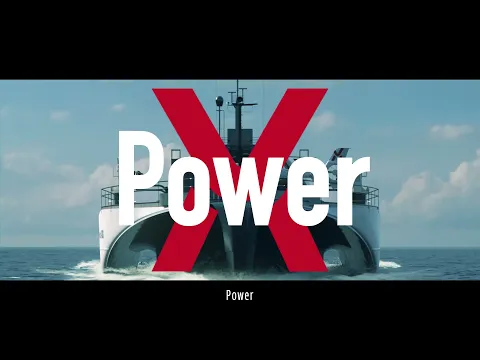

PowerX is developing a vessel designed to transport the energy generated by offshore wind farms to the shore. The boat, measuring 100 meters in length, will operate on electricity and can travel a distance of 300 km. However, it will also have a backup biodiesel engine that, if necessary, will allow the initial range to be extended.
Unlike other vessels that have been designed to transport crude oil, gas, or coal, the Power ARK will have 100 batteries capable of providing a capacity of 220 MWh of energy generated by offshore plants. According to PowerX, this will be enough to cover the daily energy needs of 22,000 Japanese households with a single trip.









Seja o primeiro a reagir!