





 Português
  Inglês
  Espanhol
  4 min de leitura
  0 comentários


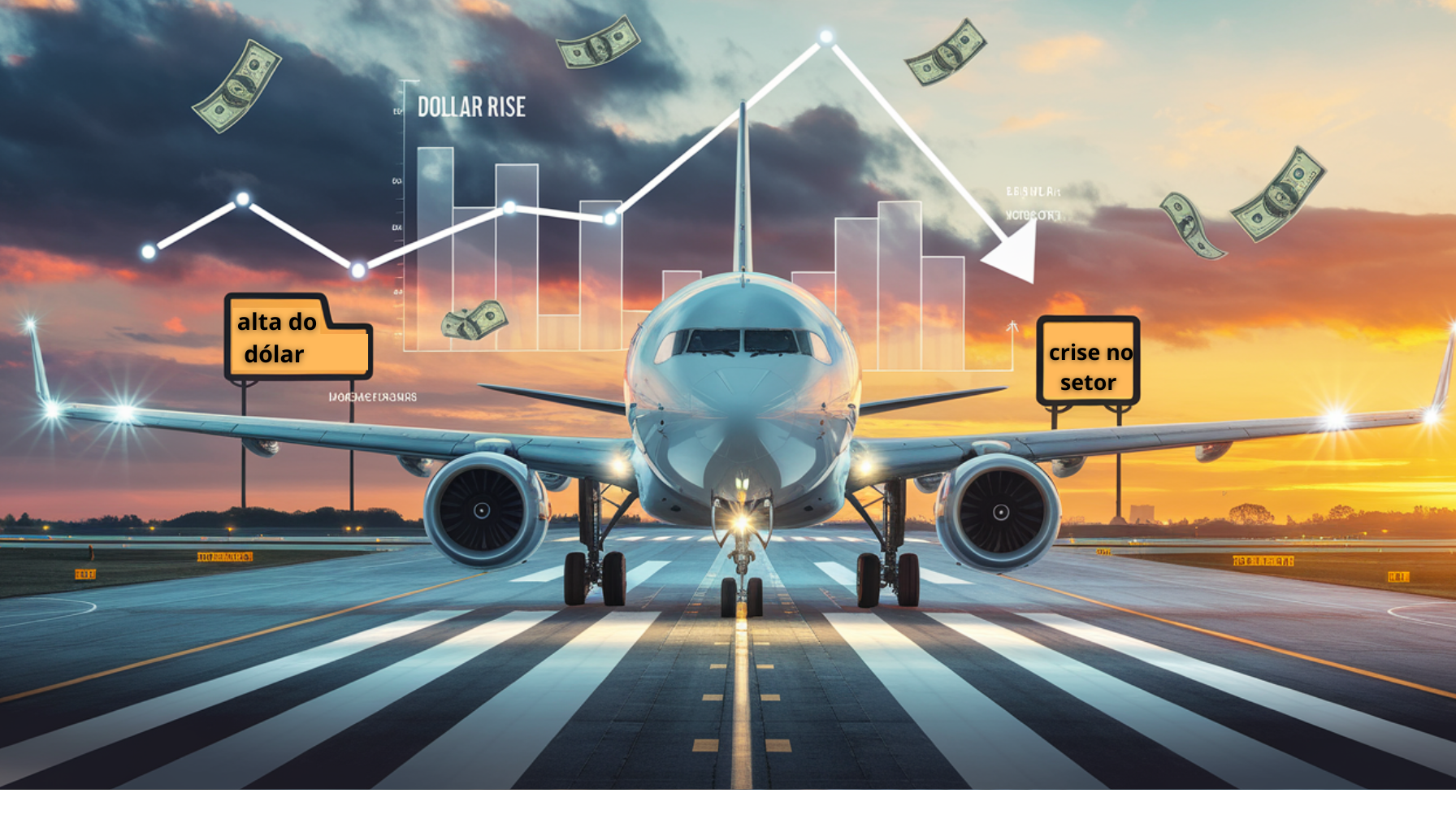
Brazil, the Third Largest Airline Market in Growth, Faces Severe Turbulence. With the Weak Real and Dollarized Costs, Companies Struggle to Stay in the Skies. Rumors of Mergers Among Giants Like Azul and Gol Generate Speculation, While Poor Infrastructure Delays Progress.
The aviation sector in Brazil lives a paradox. The country is the third largest growing market in the airline sector, behind only India and China, according to recent data from the International Air Transport Association (IATA).
However, this expansion faces significant barriers caused by the devaluation of the real against the dollar.
The currency imbalance directly impacts the operational costs of airlines, which have a large portion of their expenses denominated in the US dollar.
-
Brazilian city gains industrial hub for 85 companies that is equivalent to 55 football fields.

-
Peugeot and Citroën factory in Argentina cuts production by half and opens a layoff program for more than 2,000 employees after Brazil drastically reduced purchases of Argentine vehicles.

-
A Brazilian city gains a factory worth R$ 300 million with the capacity to process 200 thousand tons of wheat per year, a mill of 660 tons/day, silos for 42 thousand tons, and an industrial area of 276 thousand m².

-
Havan will leave the shopping mall in Blumenau to inaugurate something that the chain has never done before: a megastore in half-timbered style in the Historic Center of the city, which is expected to be completed in May and change the landscape of local retail.


In July 2024, the domestic market transported 8.5 million passengers, a 1% increase compared to the same period in 2023.
The international segment, in turn, grew by 17% in the same interval, according to data from ANAC (National Civil Aviation Agency).
These numbers show that the demand for air travel continues to grow rapidly but also highlight the challenges posed by an adverse economic scenario.
Impacts of the Dollar Rise
Dollarized Costs: The Achilles’ Heel of Airlines
The rise of the dollar increases the costs of several essential items for airline operations, such as fuel, aircraft leasing, maintenance, and insurance.
According to Willie Walsh, Director General of IATA, “no matter how efficient an airline’s management is, the devaluation of the real has a disproportionate impact on operational costs.”
This statement was made during a recent event in Geneva, where Walsh highlighted that many Brazilian companies are unable to fully transfer these costs to ticket prices.
In Brazil, about 60% of airline costs are dollarized, while revenues are mostly in reais.
This discrepancy makes the market highly vulnerable to currency fluctuations. “With the exception of US carriers, almost all global airlines face financial difficulties, but emerging markets feel an even greater burden,” Walsh adds.
Sustainable Growth or Bubble?
Post-Pandemic Recovery Brings New Challenges
Since the end of COVID-19 restrictions, the Brazilian airline sector has shown remarkable recovery.
Data from ANAC shows that the levels of passengers transported in 2024 are equivalent to or higher than those recorded before the pandemic. The international market stood out with a 4.3% increase compared to 2019.
However, experts warn of the risks of a bubble in the sector. The increase in demand for travel is accompanied by inflationary pressures and rising costs.
Despite advances such as the introduction of more efficient aircraft and bilateral agreements that enhanced international connectivity, companies are struggling to balance their accounts.
Mergers and Acquisitions: Solution or Problem?
Azul and Gol: A Possible Marriage of Giants
Recently, rumors about a merger between Azul and Gol have gained strength again. Although IATA does not see this movement as harmful to competition, many analysts question the impact on consumers and small market players.
“Even in a consolidation scenario, there is always room for new companies to enter the market,” argues Walsh.
On the other hand, mergers can bring benefits, such as cost reduction and greater operational efficiency. The entry of new players, such as low-cost carriers, also helps maintain competitiveness and improve consumer experience.
Infrastructure: An Obstacle to Growth
Brazilian Airports Need Modernization
Another challenge faced by the sector is airport infrastructure. Despite advances through concessions and private investments, many airports still lack significant improvements in capacity and efficiency.
According to the consultancy Rayol, the lack of modern infrastructure limits the growth potential of the Brazilian airline market.
Freight movement also faces difficulties. In July 2024, the market processed 40.7 thousand tons of domestic cargo and 75.3 thousand tons of international cargo. Despite the growth compared to 2023, experts point out that Brazil is still behind other global markets in terms of logistical efficiency.
Future of Aviation in Brazil
Solutions for a More Competitive Market
To overcome challenges, Brazil will need to adopt a multifaceted approach. This includes policies that mitigate the impact of a rising dollar, as well as incentives for fleet and infrastructure modernization.
Expanding international agreements and reducing bureaucracy in the sector are also fundamental.
Companies like Embraer play a crucial role in this scenario. Recently, the Brazilian manufacturer announced partnerships for the development of more sustainable aircraft, aligned with the global trend of decarbonization.
With the growth of the airline sector in Brazil, but the challenges posed by the rising dollar, what solutions do you believe can be implemented to balance the market?








-

Uma pessoa reagiu a isso.