





 Portuguese
  English
  Spanish
  4 min of reading
  1 comment


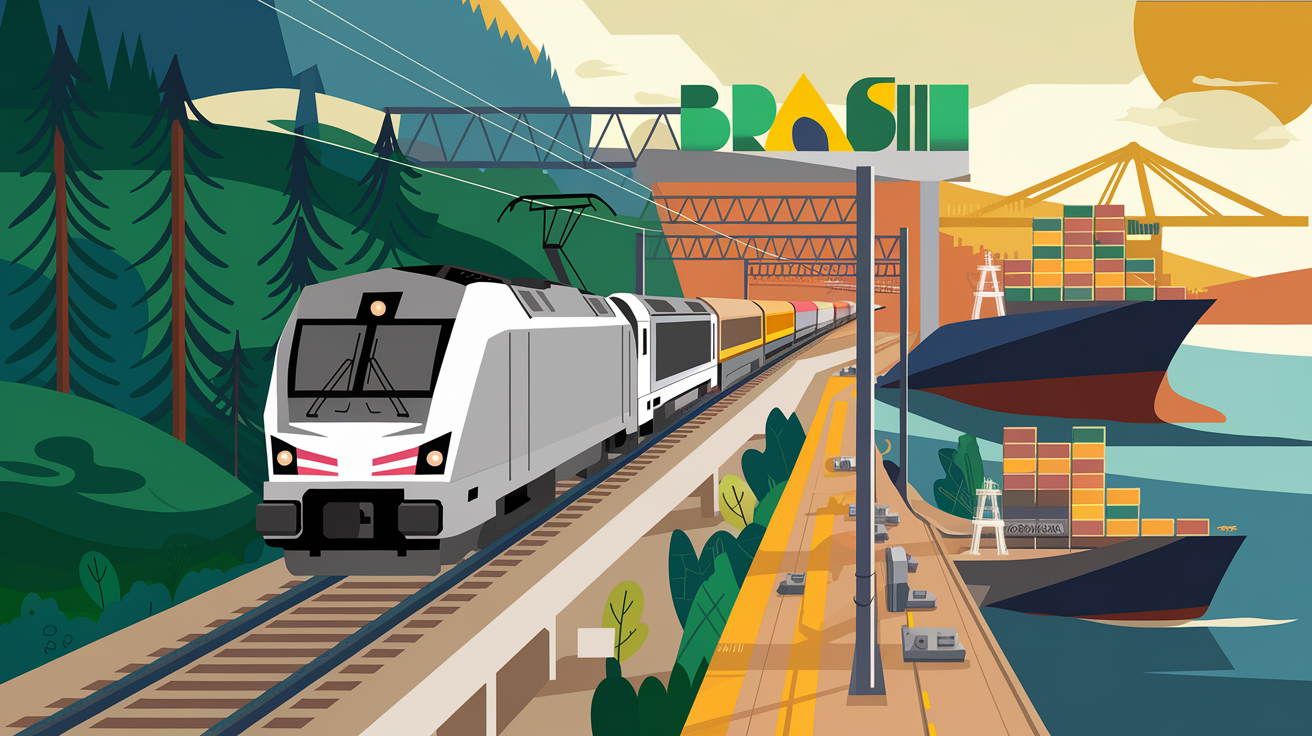


With an Investment of R$ 100 Billion, Brazil May Be on the Brink of a Revolution in Rail Transport. New Projects Connecting North, Northeast, and Southeast Promise to Transform the Logistics Scenario of the Country, While Abandoned Tracks Will Be Revitalized.
For Decades, Rail Transport in Brazil Was Relegated to the Background, While Highways and Ports Concentrated the Largest Share of Infrastructure Investments.
However, a New Era May Be Emerging.
The Federal Government is Working on the Final Details of the Ambitious National Rail Plan, a Project that Promises to Change the Logistics Landscape of the Country with Investments that May Exceed R$ 100 Billion.
-
50 viaducts, 4 tunnels, 28 bridges, and 40 kilometers of bike paths: BR-262 in Espírito Santo will receive 8.6 billion reais for the largest engineering project in the state’s history, inspired by the Immigrant Highway in São Paulo.

-
Brazil produces too much clean energy and doesn’t know what to do with it: over 20% of solar and wind capacity was wasted in 2025 while investors flee and 509 renewable generation projects were abandoned in the last year.

-
Piauí will produce a new fuel that replaces diesel without needing to change anything in the truck’s engine and reduces pollutant gas emissions by half: truck drivers from all over the Northeast are already celebrating the news that will arrive later this decade.

-
A new Brazilian shopping center worth R$ 400 million will be built in an area equivalent to more than 4 football fields, featuring 90 stores, 5 cinemas, a supermarket, a college, and parking for 1,700 cars, potentially generating 3,000 jobs.


This Plan Not Only Aims to Connect Strategic Regions but Also Promises to Revitalize a Rail System that Has Long Needed Attention.
The Plan in Detail
According to Information Released by the Folha de S. Paulo, the Package of Rail Concessions Will Be Officially Announced in February by the Ministry of Transport.
It Foresees the Offering of Approximately 4,700 Kilometers of Railways to the Private Sector, Covering Projects that Span the Southeast, North, and Northeast of Brazil.
The Government Estimates that Approximately 20% of the Total Costs of Each Project Will Count on Public Resources to Ensure Its Economic Viability.
Renan Filho, Minister of Transport, Confirmed to the Folha that the Recent Renegotiation of Contracts with Companies Like Vale, Rumo, and MRS Logistics Has Already Guaranteed an Initial Injection of R$ 21.2 Billion.
These Funds Are Intended for the Construction of New Sections and the Modernization of Existing Routes. Among These Agreements, the One with Vale Stands Out, Which Injected R$ 17 Billion into the Project.
“With the Approval of the Renegotiations by the TCU (Federal Audit Court), We Managed to Secure Funds to Make These Concessions Viable.
Historically, the Public Power Has to Contribute Approximately 20% of the Budget for Rail Projects to Have Economic Viability.
Now, We Will Be Able to Move Forward with This”, Affirmed the Minister.
Main Projects of the Railway Package
The National Rail Plan Includes Five Major Projects that Promise to Transform Rail Transport in Brazil. Among Them Are:
Norte-Sul: the Section Between Açailândia (MA) and the Port of Vila do Conde, in Barcarena (PA), Will Be Granted to the Private Sector. This Segment, Measuring 477 Kilometers, Is Strategic for Connecting the North to the National Rail Network.
Transnordestina: the Plan is to Interconnect Eliseu Martins (PI) to Estreito (MA), in a Section of 600 Kilometers that Will Connect to Norte-Sul.
Fico-Fiol: the Concession Brings Together the Railways of the Midwest (Fico) and West-East Integration (Fiol), Forming a Route of 2,400 Kilometers. This System Connects Lucas do Rio Verde (MT) to Ilhéus (BA), Crossing Key Regions for Agribusiness.
Railway Ring of the Southeast: with 300 Kilometers, this Route Will Link Vitória (ES) to Itaboraí (RJ), Connecting the Vitória-Minas Railway to MRS Logistics Network.
Ferrogrão: with 933 Kilometers, It Will Link Sinop (MT) to Miritituba (PA), Facilitating the Flow of Agribusiness to Ports in the North. Despite Its Importance, This Project Faces Challenges Related to Environmental Licensing Due to Its Location in Amazon Territory.
Problems and Challenges
While Some Sections Already Have Part of the Works Completed, Others Face Significant Obstacles.
The Ferrogrão, for Example, Is Subject to Legal Proceedings and Awaits Approval from the Federal Supreme Court (STF) Due to Environmental Concerns.
Additionally, the Concession of the Fico-Fiol Route Depends on Negotiations with Bahia Mineração, Which Faces Financial Difficulties and Is in the Process of Returning Part of the Route to the Union.
The Concession Model Proposed by the Government Also Introduces a Novelty: the Company that Presents the Least Dependence on Public Resources Will Win, Stimulating Competitiveness and Efficiency.
Recovery of Abandoned Sections
Another Important Aspect of the Plan Is the Recovery of 11.1 Thousand Kilometers of Abandoned Tracks, which Represent Approximately 36% of the National Rail Network.
Part of These Sections Have Turned into Scrap Over the Years. Now, the Government Seeks to Return Them to Operation Through Compensation to Current Concessionaires and New Biddings.
According to the Ministry of Transport, the Revitalization of Abandoned Rail Sections Could Bring Logistical and Environmental Gains, Reducing Dependence on Road Transport, Which Is More Expensive and Generates More Carbon Emissions.
A Leap in National Transport
The Rail Plan Is an Important Step to Diversify Transport Modes in Brazil.
In 2023 and 2024, the Road and Port Sectors Advanced Significantly, with Nine Road Concessions and 18 Port Terminal Auctions, Totaling Investments of R$ 71 Billion.
However, the Rail Sector Remained Stagnant, with Advances Limited to Contract Renegotiations.
With the Implementation of the National Rail Plan, the Government Hopes to Attract Private Investments, Reduce Logistical Costs, and Boost Brazil’s Competitiveness in International Trade.
Promising Future or Challenges Ahead?
Despite the Government’s Optimism, Many Challenges Still Need to Be Overcome, Especially Regarding Environmental and Financial Issues.
Will Brazil Finally Take the Necessary Leap to Transform Its Railways into a Logistic Power?
Do You Believe That the National Rail Plan Will Be Sufficient to Revolutionize Transport in Brazil or Are the Challenges Still Greater Than the Investments? Leave Your Opinion in the Comments!








É o nosso trem rápido de passageiros
Como vai ficar ?……