





 Portuguese
  English
  Spanish
  4 min of reading
  0 comments



With Unprecedented Tax Incentives and Global Competition for Data Infrastructure, Petrobras’ Billion-Dollar Contract with Elea Data Center Reinforces Brazil’s Role in the Global Technology and Clean Energy Market
The billion-dollar contract between Petrobras and Elea Data Center, signed in São Bernardo do Campo (SP), marks a turning point for the technology and infrastructure sector in Brazil. With the new tax incentive program set for 2026, the country may receive up to R$ 60.8 billion in data center investments, according to projections from Brasscom, an association that brings together major companies in the technology sector.
According to a report by O Globo, these investments are occurring amid a global competition for attracting data centers, as countries compete for billions in contributions from the artificial intelligence industry. In Brazil, the scenario becomes even more favorable with the use of clean energy and tax exemptions on equipment, factors that attract foreign giants and strengthen the country’s position in Latin America.
Tax Incentives and Global Race for Digital Infrastructure
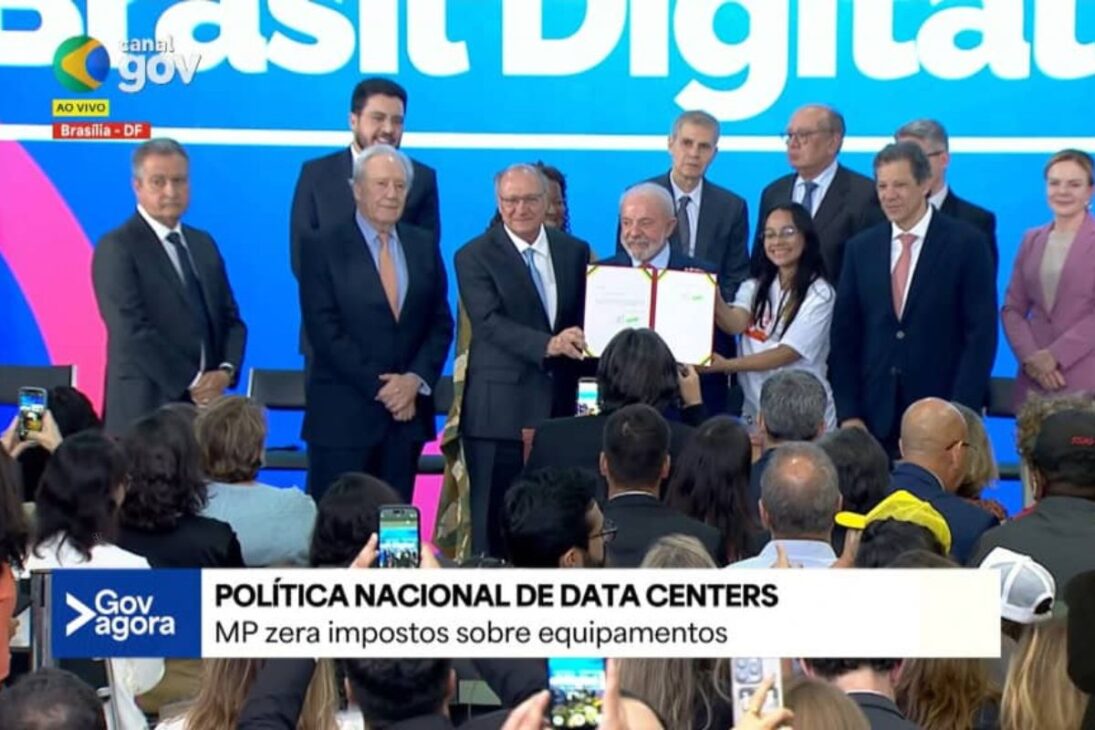
The national plan Redata, launched by the federal government, anticipates the effects of Tax Reform and creates an temporary incentive for the installation of data centers.
-
50 viaducts, 4 tunnels, 28 bridges, and 40 kilometers of bike paths: BR-262 in Espírito Santo will receive 8.6 billion reais for the largest engineering project in the state’s history, inspired by the Immigrant Highway in São Paulo.

-
Brazil produces too much clean energy and doesn’t know what to do with it: over 20% of solar and wind capacity was wasted in 2025 while investors flee and 509 renewable generation projects were abandoned in the last year.

-
Piauí will produce a new fuel that replaces diesel without needing to change anything in the truck’s engine and reduces pollutant gas emissions by half: truck drivers from all over the Northeast are already celebrating the news that will arrive later this decade.

-
A new Brazilian shopping center worth R$ 400 million will be built in an area equivalent to more than 4 football fields, featuring 90 stores, 5 cinemas, a supermarket, a college, and parking for 1,700 cars, potentially generating 3,000 jobs.


Companies that join the program will be exempt from IPI, PIS/Cofins, and import tax on information technology equipment, in exchange for commitments to sustainable energy use and investment in the national industry.
The validity of benefits until 2026 has led the sector to project a boom in investments as early as next year.
According to estimates from Brasscom, US$ 8.6 billion will be allocated to the purchase of equipment and US$ 2.9 billion to physical infrastructure, fueling a production chain that ranges from chip manufacturers to electricity suppliers.
The Billion-Dollar Petrobras Contract and the Role of Elea Data Center
The R$ 2.3 billion contract between Petrobras and Elea Data Center is considered a strategic milestone within this new context.
The project plans to implement a data center for artificial intelligence in São Paulo, which will serve as a base to process information for the state-owned company with high performance and energy efficiency.
According to the president of Elea, Alessandro Lombardi, the agreement has sparked immediate international interest.
“Since the Provisional Measure was signed, foreign investors have been reaching out to us with projects that exceed billions of dollars,” he stated.
For experts, the combination of tax incentives, a clean energy matrix, and corporate demand places Brazil in a privileged position compared to countries like Mexico, India, and Chile.
Brazil Advances in the Global Competition for Data Centers
The international competition for investments in digital infrastructure has intensified.
Chile offers local tax policies, Colombia has created a free trade zone for the sector, and India relies on lower energy and labor costs.
However, the dependence on coal in Asian countries contrasts with Brazil’s renewable matrix, which has become a competitive differential.
The president of Brasscom, Affonso Nina, sees the moment as strategic:
“Brazil can position itself as a regional hub for processing data from American and Asian companies, leveraging its electrical infrastructure and legal stability.”
Meanwhile, Eduardo Carvalho, president of Equinix in Latin America, emphasizes that abundant clean energy is the national trump card to attract large global players.
Internal Challenges: Labor and Regulation
Despite the favorable scenario, the sector faces two bottlenecks: the lack of specialized professionals and regulatory delays.
AWS, a subsidiary of Amazon, has trained more than 900,000 Brazilian professionals since 2017, but still considers the number of trained technicians insufficient to keep up with the pace of expansion.
Additionally, large-scale projects depend on environmental licenses and connections to the electricity grid, which can delay new ventures.
According to the Brazilian Association of Data Centers (ABDC), the country currently has 162 active units, of which 110 are in the Southeast.
The growing demand for cloud infrastructure and AI is expected to double this number by the end of the decade.
Tax Waiver and Economic Impact
The Redata program foresees a waiver of R$ 7.5 billion in taxes over the next three years, according to the federal government.
To participate, companies will need to allocate 2% of investments to research and ensure that at least 10% of the services offered are aimed at the domestic market.
Tax lawyer Leonardo Homsy from the Mattos Filho law firm explains that the tax exemption on imports can generate savings of up to 40% on certain equipment.
“The rates vary, but can reach up to 70% in some cases. The exemption is an important relief for those looking to invest heavily in digital infrastructure,” he emphasized.
The billion-dollar contract with Petrobras symbolizes more than just an isolated deal: it is the catalyst for a global race for data centers and the repositioning of Brazil as a technological and energy protagonist.
With unprecedented tax incentives, renewable energy, and an appetite from large investors, the country has the chance to attract up to R$ 60 billion in new projects by 2026.
Do you believe that these tax incentives will really make Brazil a global hub for technology and AI? Or do you fear that the tax waiver will only benefit large corporations? Share your opinion in the comments — we want to hear from those who are in the field.









Seja o primeiro a reagir!