





 Portuguese
  English
  Spanish
  3 min of reading
  0 comments


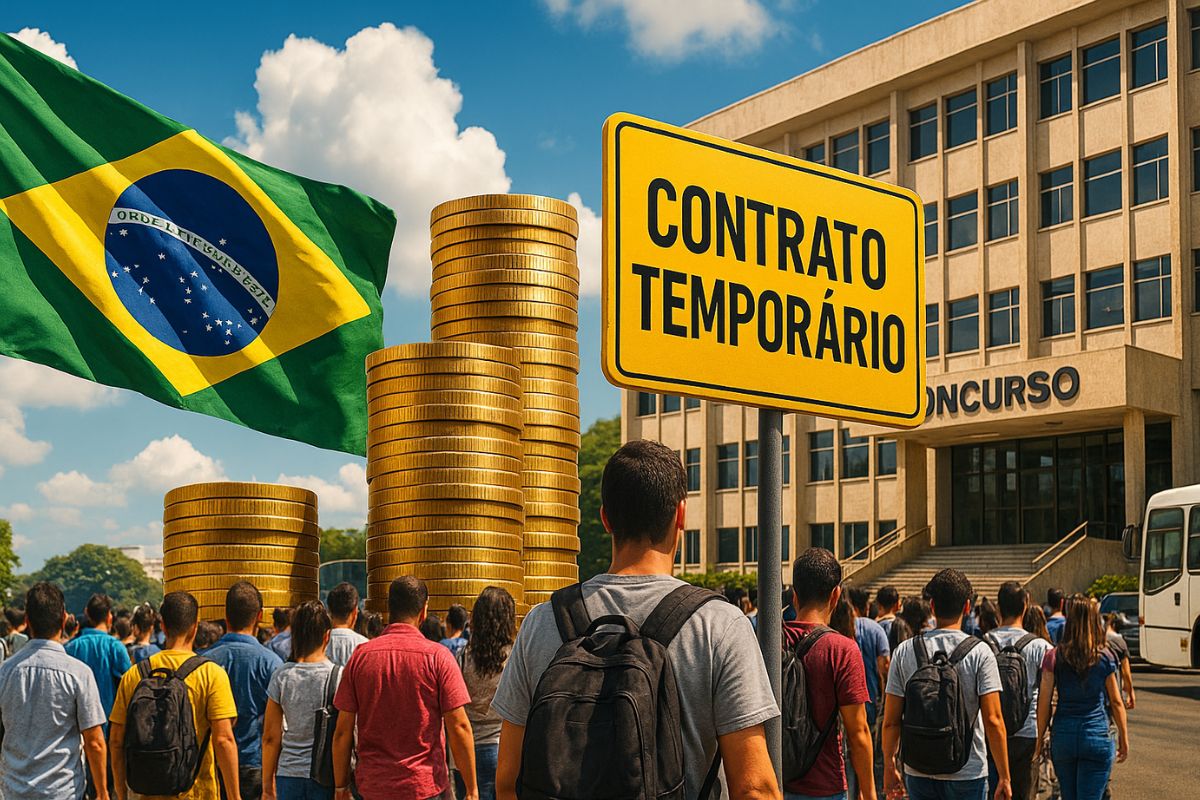
Technical Note Shows 42.1% Increase in Temporaries in States, Almost 10% Decrease in Union Permanent Staff, and Congressional Debate on Limits for Temporary Hires: The Silent Change in Public Service.
Brazil has been replacing permanent staff with temporaries and commissioned positions in public service, in a move that worries experts and parliamentarians. According to a survey published by the Jornal de Brasília, states increased the number of temporaries by 42.1% between 2017 and 2023, while the Union reduced the total number of permanent servers by 9.9%.
The data is part of a technical note prepared by the Movimento Pessoas à Frente, which brings together experts, parliamentarians, and public servants focusing on administrative reforms.
The study shows that the trend is marked by a lack of uniform rules and the transformation of emergency hires into permanent practices.
-
50 viaducts, 4 tunnels, 28 bridges, and 40 kilometers of bike paths: BR-262 in Espírito Santo will receive 8.6 billion reais for the largest engineering project in the state’s history, inspired by the Immigrant Highway in São Paulo.

-
Brazil produces too much clean energy and doesn’t know what to do with it: over 20% of solar and wind capacity was wasted in 2025 while investors flee and 509 renewable generation projects were abandoned in the last year.

-
Piauí will produce a new fuel that replaces diesel without needing to change anything in the truck’s engine and reduces pollutant gas emissions by half: truck drivers from all over the Northeast are already celebrating the news that will arrive later this decade.

-
A new Brazilian shopping center worth R$ 400 million will be built in an area equivalent to more than 4 football fields, featuring 90 stores, 5 cinemas, a supermarket, a college, and parking for 1,700 cars, potentially generating 3,000 jobs.


According to the Jornal de Brasília, the Union also recorded a 10.6% increase in temporaries, even in a scenario of reduction in the overall number of servers.
The Growth of Temporaries and the Decline of Permanent Staff
The survey reveals that, between 2017 and 2023, the number of temporaries jumped from 474,000 to 674,000 in the states, and from just over 13,000 to almost 15,000 in the federal government.
Commissioned positions, tied to political appointments, increased by 14.2% in the states but fell by 24.1% in the Union.
The consequence is clear: the occupation of permanent staff with temporaries has led to a decline of 11.8% in state permanent staff and 9.9% in the Union.
According to the Jornal de Brasília, state governments justify the increase with emergency hires in health, education, and public safety, but experts warn of risks of discontinuity of policies and weakening of state careers.
Institutional Impacts and Identified Risks
For researchers, the growth of temporaries and commissioned positions compromises long-term planning and devalues public service structured around careers.
The study suggests creating a General Law on Temporary Hiring to impose limits and greater transparency on the process.
The data also shows regional disparities. Sergipe, for example, reported a 1,473% increase in temporaries over six years.
On the other hand, Minas Gerais was an exception, managing to increase the number of permanent staff while reducing temporary and commissioned links.
The Role of Congress and Administrative Reform
The topic has already reached the National Congress, where the administrative reform should include specific rules for temporary hiring.
Deputy Pedro Paulo (PSD-RJ), rapporteur of the proposal, argues that contracts should have a maximum duration of five years and be followed by a quarantine before any potential rehire.
According to the Jornal de Brasília, the idea is to create a national standard to prevent abuses, such as strategic dismissals to avoid paying for vacations or bonuses.
The proposal also seeks mechanisms to prevent nepotism and political favoritism.
Rights and Inequalities Among Temporaries
The study also points out labor fragilities. Only ten states offer maternity leave for temporaries; 20 pay a 13th salary, and 21 guarantee paid vacations.
In many cases, temporary teachers already outnumber permanent staff in state networks, raising alarms about the precarization of permanent functions.
For experts, the indiscriminate use of temporaries represents a distortion of the Constitution, which allows this type of link only in exceptional situations.
The Jornal de Brasília highlights that even the Supreme Federal Court (STF) had to intervene in some states to block rules that excessively expanded this model.
The substitution of permanent staff with temporaries exposes dilemmas in Brazilian public service: on one hand, the need for flexibility in the face of crises and fiscal limitations; on the other, the risk of precarization and weakening of stable careers.
The debate in Congress may define the limits of this practice and its impact on the future of public administration.
And you, do you believe that the increase in temporaries weakens public service or ensures flexibility in times of crisis? How do you view this exchange of permanent staff for temporaries in your state? Leave your opinion in the comments; we want to hear from those who live this in practice.










-

6 pessoas reagiram a isso.