





 Portuguese
  English
  Spanish
  4 min of reading
  4 comments


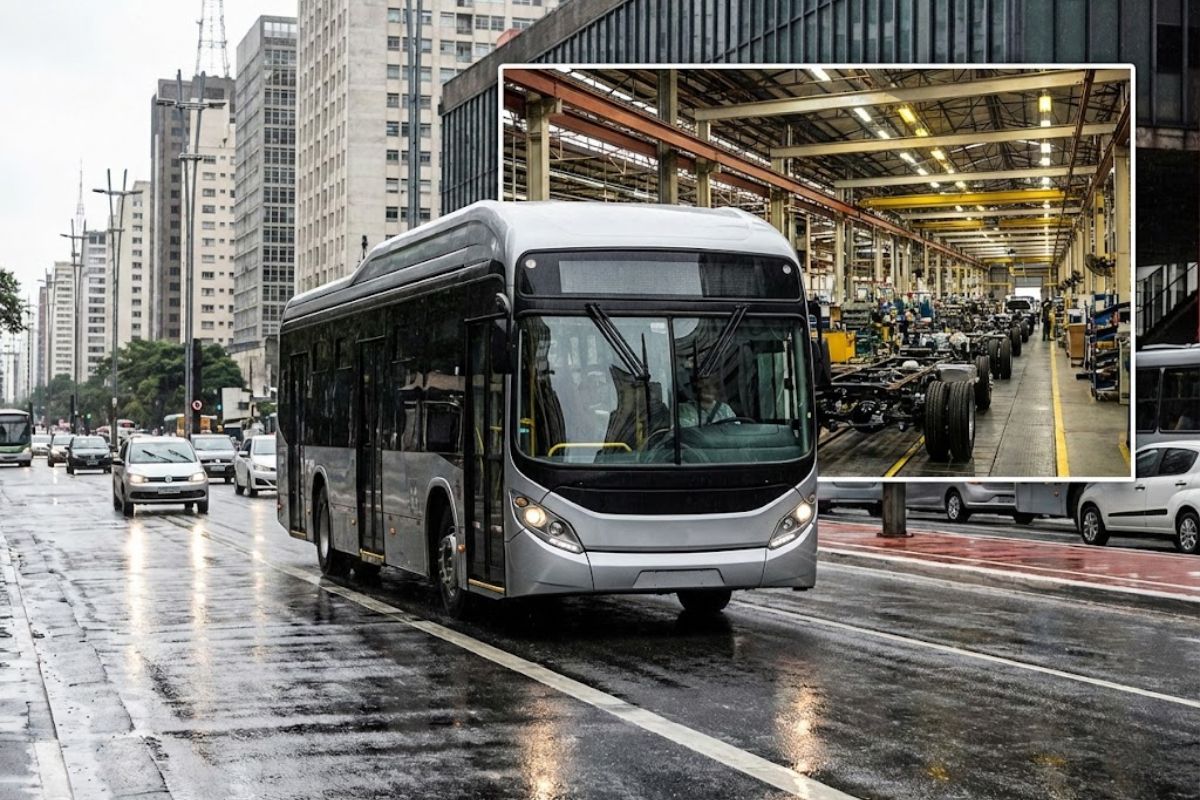


With Leadership in Urban Electric Buses, Brazilian Eletra Invests R$ 40 Million in National Chassis Production, Expands Capacity from 1,800 to 3,000 Vehicles Per Year, Dominates Fleet in São Paulo and Aims to Make Brazil Surpass Chile and Mexico in Electrified Fleet by the End of 2026.
Between 2022 and November 2025, Eletra’s electric buses moved from niche to prominence in urban fleets, concentrating the majority of registered vehicles in the country and transforming São Paulo into the most advanced laboratory of this energy transition.
In October 2025, the company confirmed a new industrial investment of R$ 40 million in São Bernardo do Campo to expand local chassis production, paving the way for Brazil to accelerate the transition to low-emission urban buses and compete for the leadership of the electric fleet in Latin America by the end of 2026.
Eletra Consolidates Leadership in Electric Buses in Brazil
Founded in 1988, Eletra specializes in sustainable public transportation solutions and today accounts for over 60% of the national market for electrified vehicles, including electric buses, hybrids, and trolleybuses.
-
50 viaducts, 4 tunnels, 28 bridges, and 40 kilometers of bike paths: BR-262 in Espírito Santo will receive 8.6 billion reais for the largest engineering project in the state’s history, inspired by the Immigrant Highway in São Paulo.

-
Brazil produces too much clean energy and doesn’t know what to do with it: over 20% of solar and wind capacity was wasted in 2025 while investors flee and 509 renewable generation projects were abandoned in the last year.

-
Piauí will produce a new fuel that replaces diesel without needing to change anything in the truck’s engine and reduces pollutant gas emissions by half: truck drivers from all over the Northeast are already celebrating the news that will arrive later this decade.

-
A new Brazilian shopping center worth R$ 400 million will be built in an area equivalent to more than 4 football fields, featuring 90 stores, 5 cinemas, a supermarket, a college, and parking for 1,700 cars, potentially generating 3,000 jobs.

According to the Brazilian Electric Vehicle Association, the brand’s models represented about 63% of the electric buses registered in the country between 2022 and November 2025, which placed the company in a dominant position in this segment.
The state of São Paulo concentrates the largest market for electric buses in the country. By November 2025, there were over 655 Eletra vehicles among the 960 electric buses in operation in the regular fleet of São Paulo, ensuring the company over 68% market share in this universe.
In practice, a significant portion of the new electric buses that passengers see on the streets of São Paulo today comes from Eletra’s line in São Bernardo do Campo.
100% National Electric Chassis and Boosted Factory in São Bernardo
The company operates an industrial park in São Bernardo do Campo dedicated to the production of electric and hybrid buses, with a current capacity of about 1,800 units per year, including midibuses and articulated models.
With the new investment cycle, this capacity may reach 3,000 vehicles annually, reinforcing the role of the São Paulo ABC region as a technology hub for low-emission mobility.
The R$ 40 million investment announced in October 2025 is directed towards the expansion of an exclusive assembly line for electric chassis fully produced in Brazil.
By internalizing the production of electric bus chassis, Eletra reduces dependence on international suppliers, gains industrial scale, and positions itself to compete for contracts previously dominated by foreign manufacturers.
Electric Bus Market Grows 136% and Brazil Aims for Regional Leadership
The pressure for decarbonization and sustainable transportation goals has created a favorable environment for electric buses in Brazilian cities.
In 2025, sales of electrified models grew 136% in the country, driven mainly by purchases made in São Paulo city, which has been accelerating the replacement of diesel vehicles in the municipal fleet.
Despite this progress, Brazil is still behind its Latin American neighbors in terms of the absolute number of electric buses in operation.
Data from the E-Bus Radar platform indicates that there are about 730 electric buses in Brazilian urban fleets, with 588 in São Paulo, around 20 in the metropolitan region of Salvador, and fewer than 20 units in states like Pará, Paraná, and Goiás.
Chile has approximately 2,655 electric buses and Colombia, 1,590, showing the room Brazil still has to grow.
Goal is to Surpass Chile and Mexico in Electric Bus Fleet by 2026
Eletra projects that if the current pace of public and private investments is maintained, Brazil should surpass Chile and Mexico in the number of electric buses by the end of 2026, concentrating the largest fleet in Latin America.
The combination of national chassis production, market dominance in São Paulo, and new international financing is seen by the company as the foundation for this shift in the regional ranking.
In this scenario, the electric buses manufactured in São Bernardo do Campo gain strategic weight, as they allow the company to meet contracts in major capitals and at the same time open up space for competitive offers in other Latin American countries.
The idea is for the local industry to stop being just a supplier for the São Paulo fleet and compete for transport corridors in various metropolitan areas in the region.
São Paulo and Curitiba Drive New Investments in Electric Buses
São Paulo has already received about R$ 1.4 billion from the Inter-American Development Bank to accelerate the transition of urban transport, with the goal of incorporating approximately 2,200 electrified buses between 2025 and 2028.
This volume of purchases is expected to consolidate the city of São Paulo as a global showcase for urban electric bus systems operating on a large scale.
Curitiba is also advancing towards a cleaner fleet.
The National Bank for Economic and Social Development is expected to release around R$ 380 million for the purchase of 54 electric buses as early as next year, as part of the renewal of the city’s public transport fleet.
If these projects are implemented on schedule, Brazil will make a significant leap in the adoption of electric buses in major capitals.
Would you use public transport more if your city invested in a robust fleet of electric buses like São Paulo’s?









Brasil não fábrica baterias, como pode ser 100% nacional?
Não atendem os 250 km com apenas uma carga de bateria solicitado pela SPTrans, como foi aprovado?
A MAMATA ACABOU!
Sem dúvida, muitos usariam
Aqui em SJC já existem alguns e nota-se que são ágeis e silenciosos
Sem poluição am ambiental tanto do ar quanto do som pois são silenciosos