





 Portuguese
  English
  Spanish
  5 min of reading
  0 comments


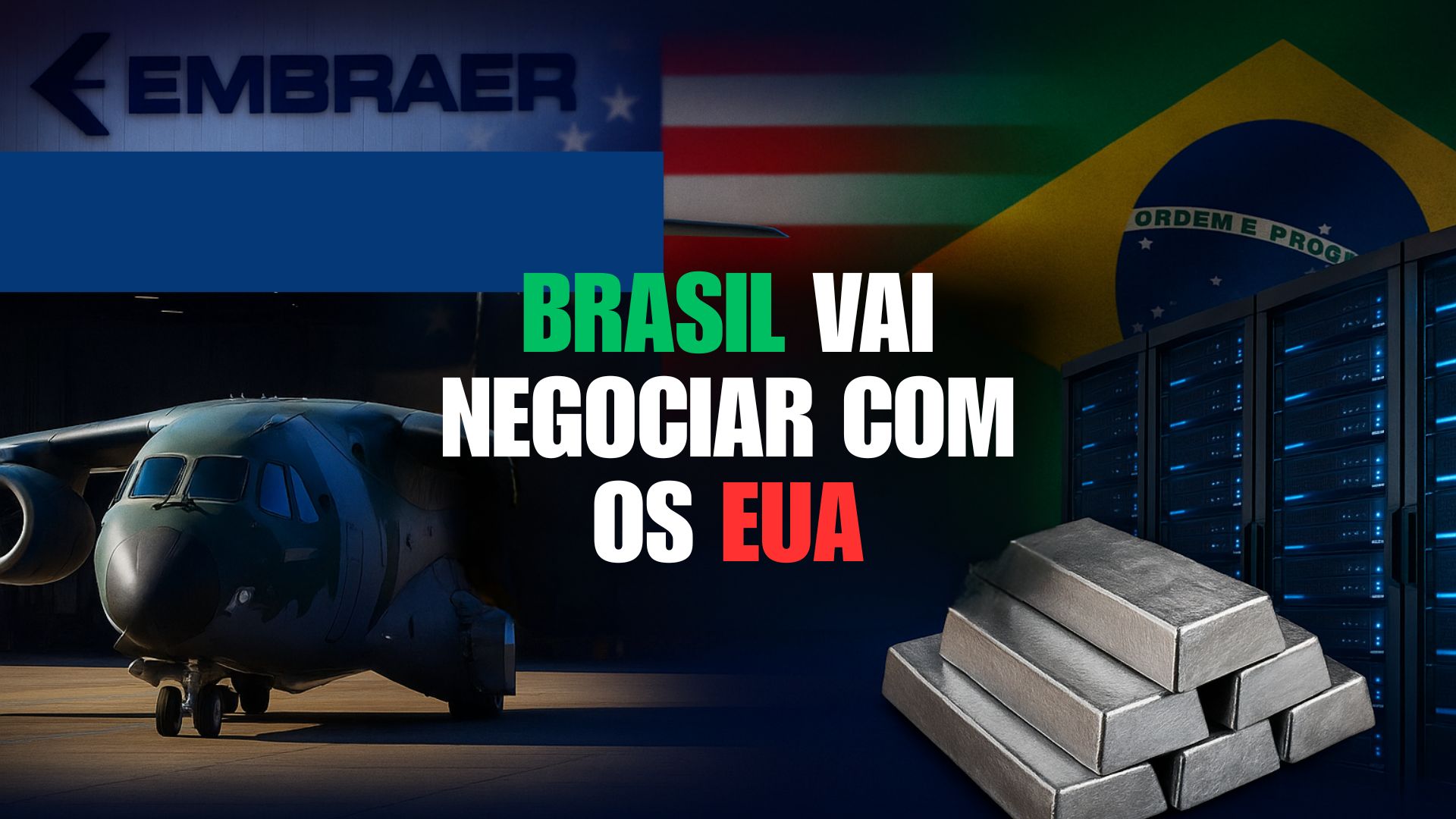
Brazil Prepares Negotiation With the U.S. Involving 50% Tariffs, Billion-Dollar Investments, and Strategic Sectors Like Aviation, Critical Minerals, and Technology, Amid Government Lula’s Effort to Reduce Trade Barriers and Expand Exceptions.
The Brazilian government is preparing a negotiation agenda that includes Embraer, rare earths, and data centers for the meeting that Luiz Inácio Lula da Silva intends to hold with Donald Trump, with the aim of easing the 50% tariffs applied to a significant portion of the country’s exports.
The strategy combines requests for new tariff exemptions for agricultural and industrial products and the presentation of Brazilian investments on U.S. soil that could total up to US$ 1 billion, particularly in the aerospace sector.
The openness for dialogue was reinforced after a brief and cordial meeting between the two leaders on the sidelines of the UN General Assembly, where they agreed to advance in technical discussions.
-
Unemployment rises again to 5.8% at the beginning of 2026, raising alarms about the end of temporary positions and its impact on the Brazilian job market.

-
Document organization can cut invisible costs in small businesses, a simple step that prevents waste, rework, and losses in daily operations.

-
Chinese giant worth nearly R$ 4 billion that manufactures cables for electric cars, solar energy, and robotics wants to open a factory in SC.
-
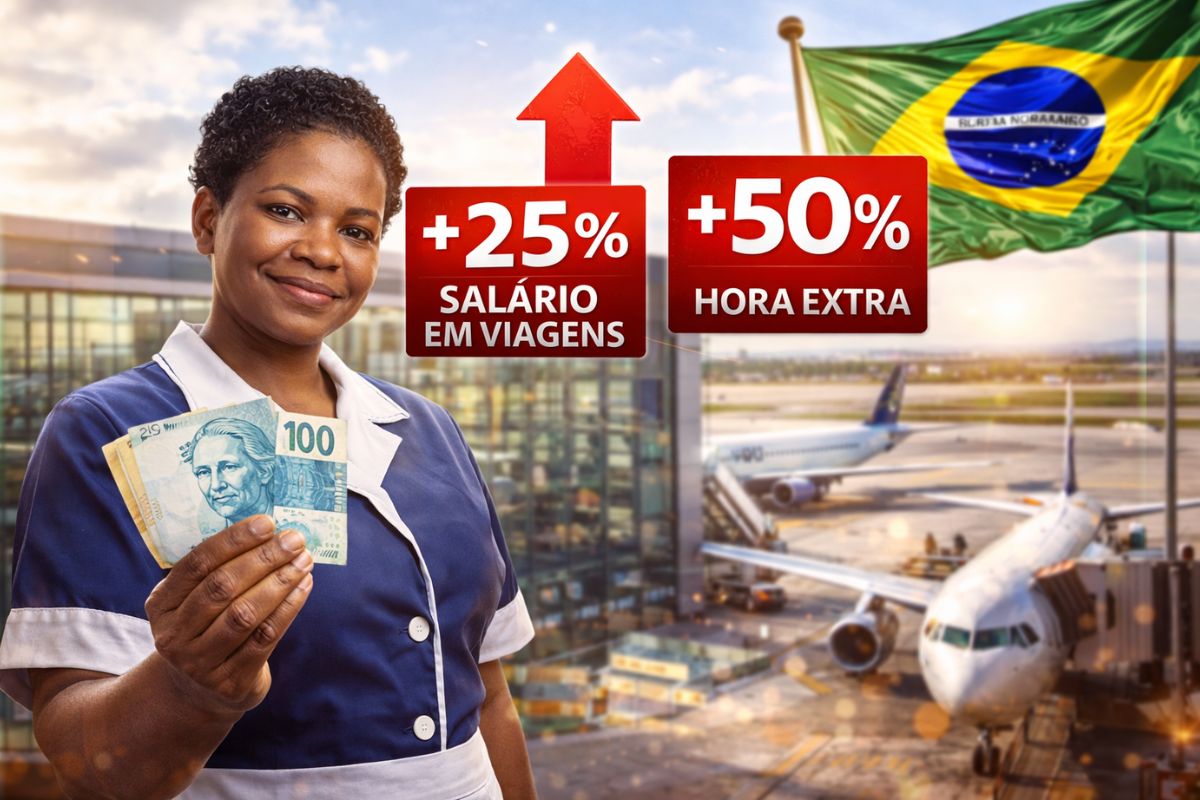
Many employers do not know, but the law guarantees domestic workers a 25% increase in salary during trips, 50% for overtime, 20% for night shifts, and 17 additional benefits that can lead to labor lawsuits if not paid.

50% Tariff in Focus and Search for Exceptions
Since the end of July, the Trump administration has raised the charge to 50% on “many” Brazilian items, a decision that has raised alarms in supply chains such as coffee and beef.
Part of the sales remained protected by previously published exception lists, but high-value products for the trade balance are still outside this relief.
Official estimates indicate that about one-third of Brazil’s exports to the U.S. have been directly affected, and Brasília is trying to expand the scope of exemptions.
Today’s U.S. tariff design combines a global floor of 10% and sectoral or country-specific surcharges, which explains the coexistence of released items and others still under the full rate.
The calibration has undergone revisions and specific agreements with different partners, which encourages Brazilian economic diplomacy to pursue a negotiated solution.
What’s on the Table: Embraer, KC-390, Minerals, and Technology


On the industrial front, Embraer confirmed an investment of US$ 500 million in units in the U.S., mainly in Florida, as part of a strategy to mitigate the effect of tariffs on the air sector.
The company also discussed a second investment, of a similar magnitude, linked to the establishment of a KC-390 assembly line in U.S. territory, a proposal still under review by Washington.
If the complete package progresses, the amount could reach US$ 1 billion.
The agenda of critical minerals and rare earths appears as an additional bargaining chip.
Brazil has been trying to attract capital and technology to increase domestic exploration and processing, a move that, in Brasília’s view, can be articulated with the U.S. supply security needs.
Recent studies show an increase in interest in copper, lithium, and rare earth elements, reinforcing the potential for cooperation in strategic supply chains.
In the digital environment, data centers are entering the discussion as a productive integration axis.
Brazilian proposals to unlock investments and provide regulatory predictability to high-energy-demand installations have gained traction in recent months, and private sector interlocutors argue that cross-border partnerships should be used as bargaining chips in negotiations with Washington.
Agro and Industry: Who Feels It More
Coffees, meats, and footwear are mentioned by business entities as immediate priorities for expanding exceptions, given the relevance of sales to the North American market.
In particular, coffee and beef remain among the most pressed items, with representatives from the supply chain warning of loss of competitiveness and requesting explicit exclusions from tariff lists.
The prevailing assessment is that, even with the maintenance of political dialogue, a complete reversal of surcharges is not guaranteed in the short term.
On the industrial side, manufacturers of machines and components are assessing asymmetric impacts.
Some items have been protected by exemptions, while others remain exposed to high rates.
The Brazilian government is working on the hypothesis of proceeding in blocks, prioritizing products with high price elasticity and greater risk of trade diversion.
Political Tone and Limits of the Agenda
In recent statements, Lula stated that he would treat Trump “with the respect due to the President of the United States” and demanded reciprocal treatment, stating that sovereignty and democracy are non-negotiable.
The Brazilian president has indicated that internal issues, such as the trial and conviction of former president Jair Bolsonaro, will not enter the trade agenda.
The Palácio do Planalto seeks to limit the negotiation to tariffs, investments, and productive chains, reducing political friction.
Behind the scenes, diplomats highlight that the White House has been conducting a broader tariff policy, with successive sectoral investigations and adjustments by country.
This environment makes the U.S.-Brazil table part of a larger board, which includes specific agreements with other partners and frequent revisions of rates.
Brazil is trying to avoid having its agenda “frozen” while Washington closes deals with third parties.
Next Steps in the Negotiations
The instruction for the economic team is to arrive in Washington with a lean and technically defensible list of products to exempt, combined with investment projects that generate jobs in the U.S.
The plan includes direct engagement with Brazilian companies with a presence in that market and with American importers willing to support, with data, the convenience of new exceptions.
At the center of the proposal are Embraer, critical minerals, data centers, and renewable energy, as well as agricultural items with strong demand elasticity.
Even though entrepreneurs see the reopening of the political channel as a necessary step to unlock bilateral trade, the assessment is one of “cautious optimism.”
The experience of other countries shows that partial reductions can occur in waves, while sectors not included in the first round remain under high tariffs and pressured by costs.
In this scenario, the effectiveness of the Brazilian strategy will depend on the ability to link tariff relief to concrete investments in U.S. territory.
If the meeting progresses and initial concessions materialize, what should be Brazil’s priority: to protect coffee and beef in the short term or to first tie agreements on technology and minerals with long-term impact?









-

-

-

4 pessoas reagiram a isso.