





 Português
  Inglês
  Espanhol
  4 min de leitura
  0 comentários


Copom Maintained The Selic At 15% Per Year And Consolidated Brazil As The 2nd Country With The Highest Real Interest Rate Among 40 Economies, Behind Only Turkey, August Deflation And Weak Activity Help To Explain The Scenario
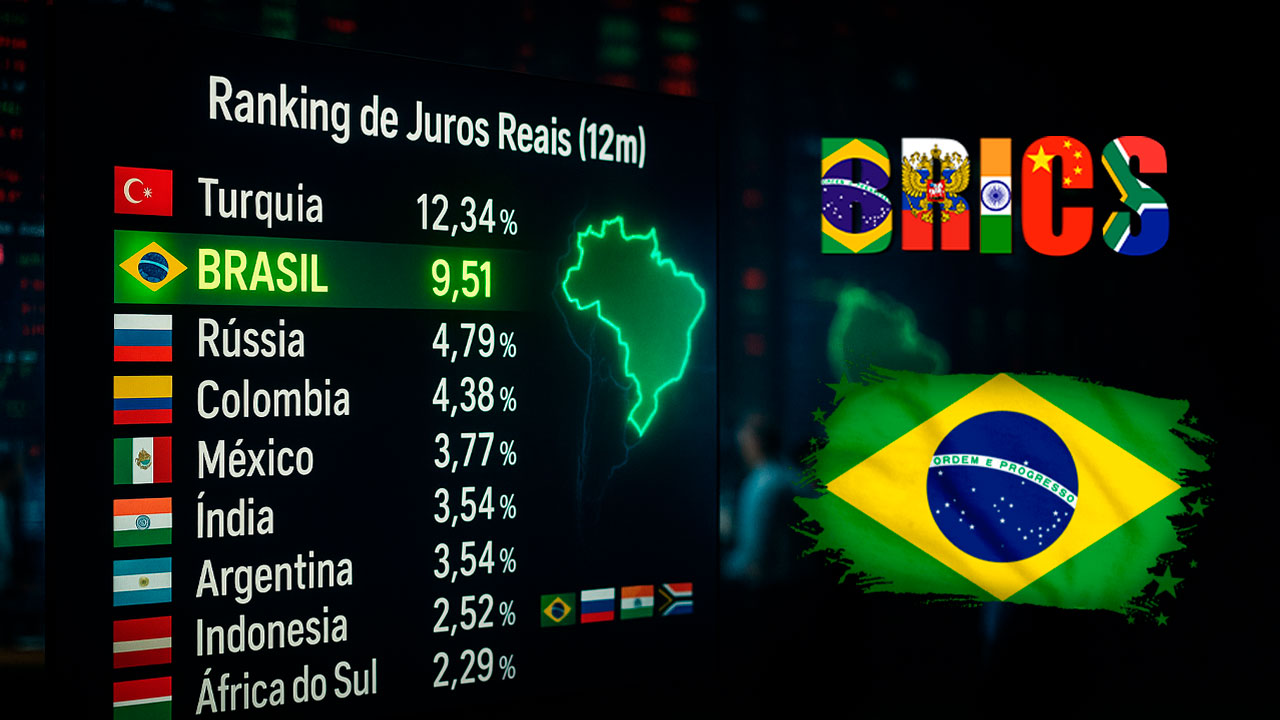
Brazil maintained the Selic rate at 15% per year this week and, with this, consolidated the 2nd position in the global ranking of real interest rates, according to the MoneYou & Lev Intelligence survey. The country has 9.51% real interest rate (after projected inflation), falling behind only Turkey (12.34%).
The Central Bank’s decision comes amid inflation still above the target in the relevant horizon and signs of economic slowdown.
What Changes With The Selic Stopped At 15%
The unanimous decision of the Copom reinforces that the country will continue for a longer time with high credit costs, affecting company financing, household consumption, and long-term investments. In practice, the real yield of investments tied to the Selic remains high, while credit becomes more expensive and selective.
-
Brazilian city gains industrial hub for 85 companies that is equivalent to 55 football fields.

-
Peugeot and Citroën factory in Argentina cuts production by half and opens a layoff program for more than 2,000 employees after Brazil drastically reduced purchases of Argentine vehicles.

-
A Brazilian city gains a factory worth R$ 300 million with the capacity to process 200 thousand tons of wheat per year, a mill of 660 tons/day, silos for 42 thousand tons, and an industrial area of 276 thousand m².

-
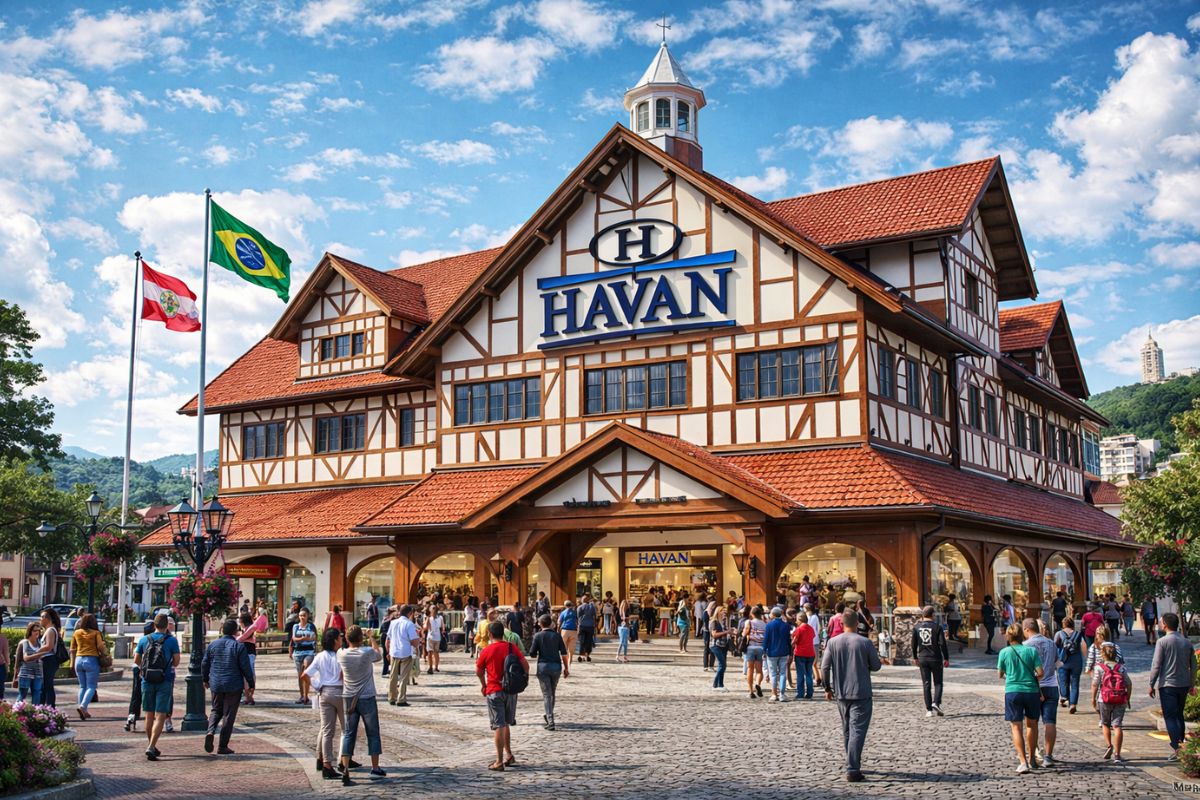
Havan will leave the shopping mall in Blumenau to inaugurate something that the chain has never done before: a megastore in half-timbered style in the Historic Center of the city, which is expected to be completed in May and change the landscape of local retail.

The Central Bank pointed out that, although inflation projections have improved marginally, convergence to the 3% target requires caution. In other words: there is no promise of cuts in the short term, and if the scenario worsens, new hikes are still on the radar.
This environment helps to anchor expectations and hold price pass-throughs, but comes at a cost to activity. Among the side effects, the increasing costs of working capital and housing financing tend to cool the economy in the coming quarters.
Brazil x World: Why Are We 2nd In The Real Interest Rate Ranking
The MoneYou & Lev ranking combines projected inflation for 12 months (via Focus) with the market interest rate. It is an international comparison indicator that shows the purchasing power of interest in each country. In the most recent assessment, Turkey leads, Brazil is in 2nd place, followed by Russia, Colombia, Mexico, and India. Argentina, Indonesia, Hungary, and South Africa complete the top 10.
In Latin America, Brazil surpasses Colombia (4.38%) and Mexico (3.77%) in real interest rates. Among the expanded Brics, it is ahead of Russia (4.79%), India (3.54%), Indonesia (2.73%), and South Africa (2.29%). In nominal terms, the Selic of 15% places Brazil in 4th place, below Turkey, Argentina, and Russia.
For the foreign investor, this differential attracts flows to fixed income and the stock market, especially when major central banks start to cut interest rates, as is the case in the USA, whose Fed cut rates for the first time in 2025, a move that tends to ease the global dollar and favor emerging markets with high-interest premiums.
Inflation Takes A Breather, But Services Still Apply Pressure
The IPCA fell 0.11% in August, the first deflation of the year, driven by housing, food, and transportation. Over the 12-month period, inflation stands at 5.13%, above the target, which helps explain the cautious stance of the Central Bank. Still, services remain under more pressure and disinflation is uneven among groups.
The reading of deflation does not guarantee immediate cuts. The Central Bank highlighted that external shocks — such as tariffs and global uncertainties, and the resilience of domestic prices require prudence. In other words, the committee wants to see more months of contained inflation, with cores cooling, before initiating any significant relief on the Selic.
For families and companies, the combination of high interest rates and falling inflation increases the short-term real interest rate, reinforcing the brake on demand, but raises the real gain of those positioned in post-fixed assets. This balance is central to understanding the dynamics of consumption and investment until the end of the year.
Activity Shows Signs Of Fatigue: IBC-Br Falls For The 3rd Month
The IBC-Br, an indicator from the Central Bank that anticipates GDP, fell 0.5% in July compared to the previous month, marking the third consecutive decline and worse than expected by the market. The weakness was widespread, affecting agriculture, industry, and services. This data reinforces that the economy is losing traction due to high interest rates.
With activity cooling, part of the market is already speculating about cuts in early 2026, if inflation continues to decline and the external scenario cooperates. For now, the Central Bank prefers to wait for more evidence of sustained disinflation before making any changes.
For the investor, the scenario suggests more careful selection of assets: post-fixed income remains attractive in the short term, while the stock market tends to fluctuate according to signals from the Fed, the balance between growth and inflation, and the reading of corporate results.
And The Effect Of The Fed’s Cut?
The Federal Reserve cut interest rates this week, a gesture to support a weaker labor market and combat risks to activity. For Brazil, the trend of lower interest rates in the US may ease the exchange rate and reduce part of external financing, opening up space for a less restrictive Selic in the future, if domestic inflation cooperates.
Still, the persistence of tariffs and global uncertainties keeps the scenario volatile. The Central Bank will continue to look at the risk balance (domestic and external) before any changes to the basic rate. Therefore, the message from the Copom was one of vigilance and patience.
Do you agree with the BC’s strategy to keep the Selic at 15% even with deflation in August and activity declining? Do you think the Fed’s cut opens up space to ease interest rates here sooner, or does the inflationary risk still loom larger? Leave your comment.









Seja o primeiro a reagir!