





 Portuguese
  English
  Spanish
  3 min of reading
  0 comments


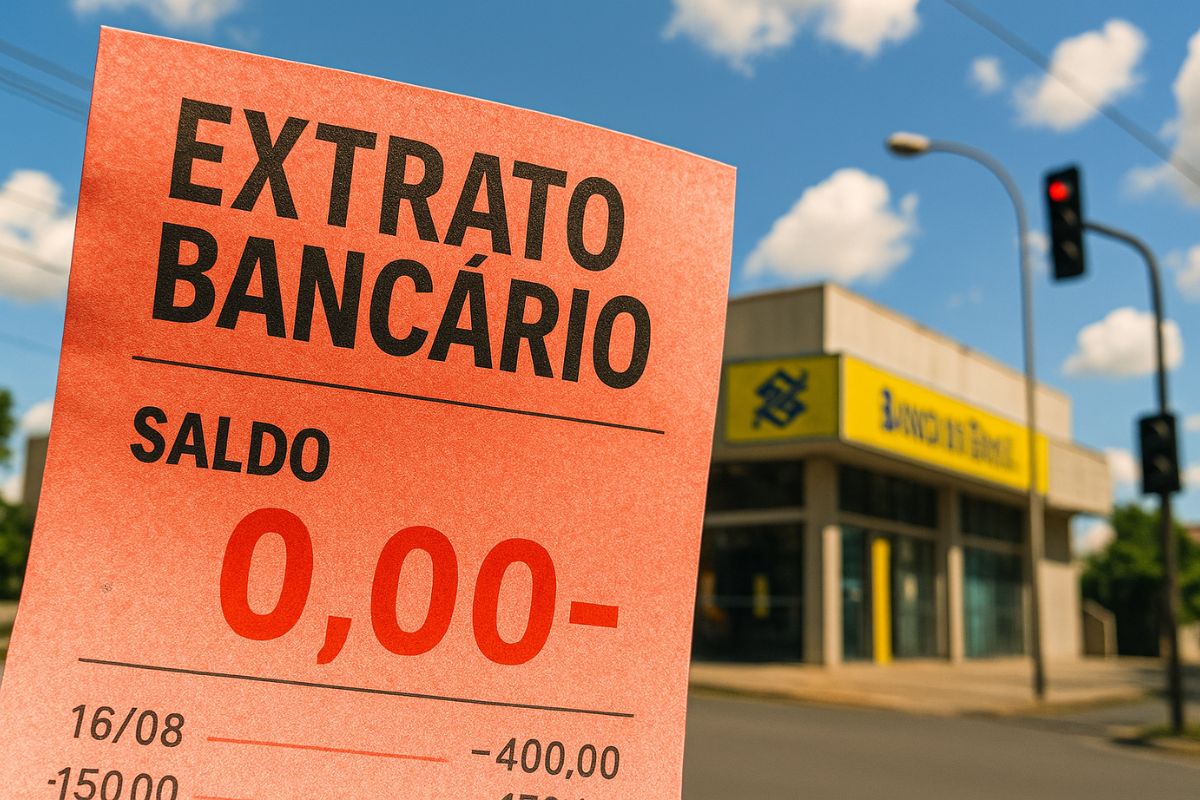
The Flash of Real Life: Brazilians Spend Their Salary in Up to 36 Hours. A Study Reveals That Many Brazilians Cannot Keep Their Money for Even Two Days, Spending Their Entire Salary in Up to 36 Hours After Payment.
A survey by klavi, a fintech specialized in financial data intelligence via Open Finance, revealed an alarming fact: Brazilians spend their salary in up to 36 hours after receiving it. The analysis of over 7,000 bank transactions showed that a large part of the population cannot keep funds in their account for more than a day and a half, revealing the financial fragility of families.
According to the study, 18% of people spend everything in up to 24 hours and this number jumps to 42% in 36 hours. More than half of the respondents, 56%, are left with less than R$ 100 available during this period. The behavior indicates that income is quickly consumed by debts, fixed bills, and basic expenses, leaving little or no margin for unforeseen events.
The Picture of Hurry to Spend
According to klavi’s CEO, Bruno Chan, this scenario reflects a pattern of financial vulnerability that has been observed in other contexts. What enters the account exits almost immediately to pay essential expenses or to recover limits used in overdraft.
-
Larger than entire cities in Brazil: BYD is building a 4.6 km² complex in Bahia with a capacity for 600,000 vehicles per year, but the discovery of 163 workers in conditions analogous to slavery has shaken the entire project.

-
With an investment of R$ 612 million, a capacity to process 1.2 million liters of milk per day, Piracanjuba inaugurates a mega cheese factory that increases national production, reduces dependence on imports, and repositions Brazil on the global dairy map.

-
Brazilian city gains industrial hub for 85 companies that is equivalent to 55 football fields.

-
Peugeot and Citroën factory in Argentina cuts production by half and opens a layoff program for more than 2,000 employees after Brazil drastically reduced purchases of Argentine vehicles.

The practice of using overdraft as “personal working capital” worsens the situation, as this type of credit is expensive and creates a cycle of chronic indebtedness. Thus, even when the balance seems to be positive, it is often just an artificial recovery with more debt.
Record Delinquency
The data from the study adds to information from Serasa, which indicates that Brazil reached in June 2025 the highest number of delinquents in the historical series: 77.8 million people. The average debt exceeds R$ 6,000 per individual, totaling R$ 477 billion in debts.
This scenario reinforces the difficulty for Brazilian families to save and balance their finances, as fixed bills consume almost all monthly income. According to experts, the problem is not only the limited income but also the lack of financial planning and access to credit with high interest rates.
What the Study Reveals About the Future
For klavi, this pattern serves as a warning for consumers and financial institutions. On one hand, it shows that a significant part of the population lives on the edge, while on the other, it highlights the need for more responsible credit policies, accessible renegotiations, and greater encouragement of financial education.
Without structural changes, the cycle tends to repeat: salary comes in, disappears in hours, and opens space for more debt. This behavior threatens not only the stability of families but also consumption and the economic growth of the country.
The fact that Brazilians spend their salary in up to 36 hours shows that a large part of the population lives in a restricted flow, with no room for emergencies or investments. It is a harsh yet necessary picture for us to reflect on consumption, indebtedness and the role of companies and governments in creating more sustainable alternatives.
And you, can you hold onto your salary for longer or have you ever found yourself in this race against time? How long does your money last after payment? Share your experience in the comments.









-

-

3 pessoas reagiram a isso.