





 Português
  Inglês
  Espanhol
  7 min de leitura
  387 comentários


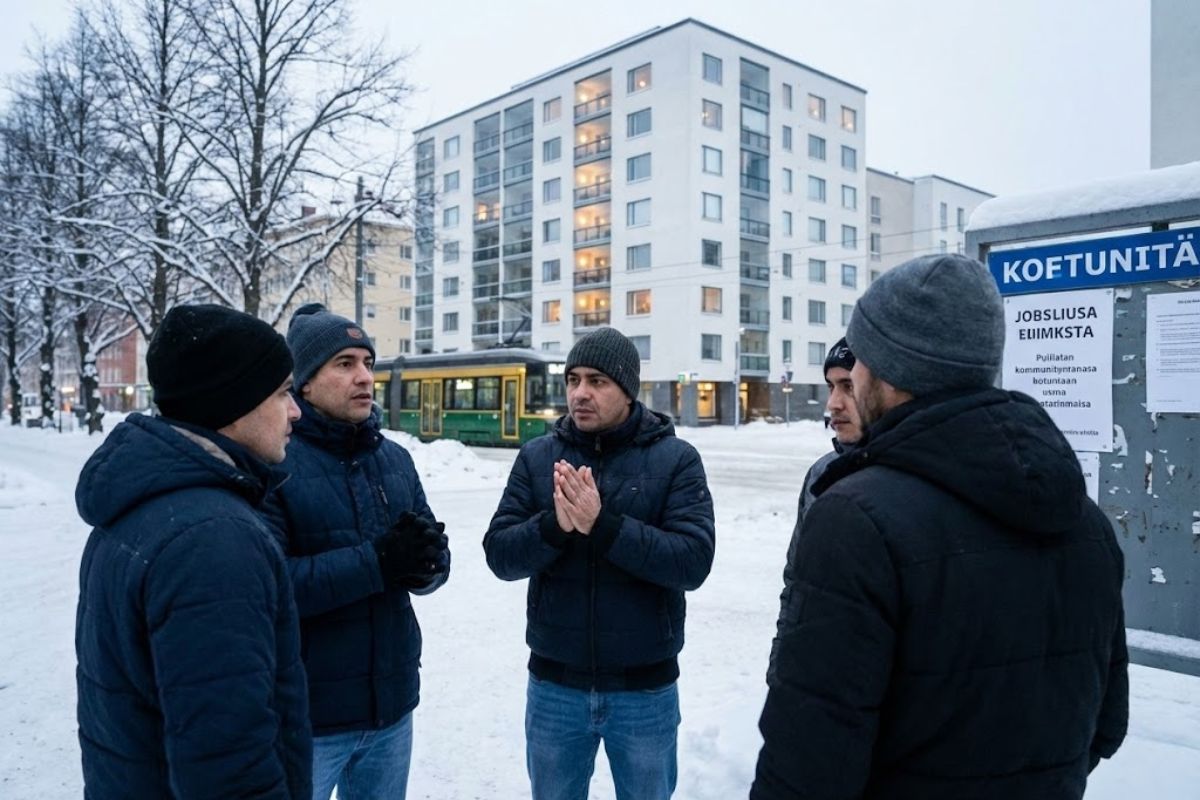


Among Accounts of Isolation, Difficulty Finding Work, Long Winters Without Light, and Mental Health Crises, Brazilians in Finland Question the Label of the Happiest Country in the World in Light of Longing, Loneliness, and Doubt About Staying, Restarting, or Returning Permanently to Brazil with Family, Friends, and Roots
For eight consecutive years, Finland has topped the UN ranking that measures happiness, combining income distribution, social security, trust in institutions, and robust public services. However, for many Brazilians in Finland, the happiest country in the world is also a scene of intense silence, rare social relationships, long and dark winters, and a type of loneliness that sets in even when the bank account and security seem under control.
Since 2022, for example, Aim has been trying to adapt to life in Tampere, in the center of the country, while facing the lack of light in November, unemployment, and the dependence on state aid. Other Brazilians in Finland, such as Maria in Helsinki and Gabriela, who decided to return to Brazil after four and a half years, report that material stability did not prevent the arrival of sadness, depression, and the desire to leave.
The Happiest Country in the World Seen from the Window of Those Who Immigrated

The official narrative speaks of a country with security, equality, universal public health, free education, and a strong social safety net, capable of ensuring a simple yet dignified life in constant contact with nature.
-
Brazilian city gains industrial hub for 85 companies that is equivalent to 55 football fields.

-
Peugeot and Citroën factory in Argentina cuts production by half and opens a layoff program for more than 2,000 employees after Brazil drastically reduced purchases of Argentine vehicles.

-
A Brazilian city gains a factory worth R$ 300 million with the capacity to process 200 thousand tons of wheat per year, a mill of 660 tons/day, silos for 42 thousand tons, and an industrial area of 276 thousand m².

-
Havan will leave the shopping mall in Blumenau to inaugurate something that the chain has never done before: a megastore in half-timbered style in the Historic Center of the city, which is expected to be completed in May and change the landscape of local retail.
Happiness indices measure this average satisfaction, based less on euphoria and more on emotional and social stability.
For many Brazilians in Finland, however, this secure base coexists with a daily life of grey landscapes, few people on the streets, almost absolute silence, and a contained social life, distant from Brazil’s noisy and spontaneous sociability.
The artist Rafael translates this contrast into canvases of discreet colors, where white, gray, and a touch of blue predominate, associating the beauty of the local nature with the constant presence of loneliness and longing for other lands.
Loneliness, Silence, and Softened Identity

The experience of Professor Babel, who arrived in 2016 with his family and became a reference for Brazilian families in Helsinki, illustrates the impact of silence.
He describes one-kilometer walks encountering only one person with a dog in a cold, dark, almost soundless environment, until he noticed an internal buzzing, the result of a level of quiet he was not accustomed to.
Over the years, Babel realized that Finnish society seems to require immigrants to adopt a kind of softened version of themselves, less expansive, less noisy, more contained.
Many Brazilians in Finland report that they start to speak more quietly, laugh less, and avoid gestures that might be seen as excessive.
Maria, who has been living in Helsinki for three years, fears losing exactly the sociability she has always considered a central part of her identity, as she finds herself laughing less loudly, making fewer jokes, and carefully calculating each sentence to avoid cultural gaffes.
This constant adaptation, combined with the difficult language and climate, creates a feeling of identity in suspension, as if a part of life had been frozen outside, in the country of origin, while the body tries to fit into unspoken new rules.
Difficult Work, Public Assistance, and a Sense of Instability
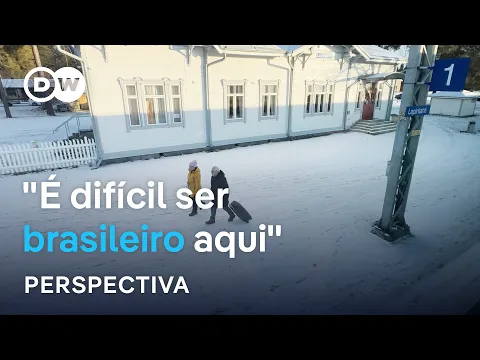

Despite the good reputation of the skilled job market, unemployment in Finland is at its highest level in 15 years and hits foreigners the hardest, according to reports.
Aim discovered after moving that the idea of getting a job just with English does not correspond to reality: even in the capital, Helsinki, finding a position without speaking Finnish is very difficult.
She is currently unemployed, living on state assistance of about 500 to 600 euros, while learning the language and her husband is pursuing a master’s degree with a scholarship that is less than the unemployment benefit.
The couple can pay their bills but lives with the prospect that, if the string of temporary jobs and aid requests continues for two, three, or five years, they might need to leave the country, despite enjoying the local security and structure.
At 42 years old, Maria also reports having to reinvent herself professionally, going back to school to work in another field.
Restarting a career after 40 in a market that values fluency in Finnish and requires complete retraining amplifies the feeling of vulnerability and life delay for some Brazilians in Finland.
Dark Winter, Depression, and the Decision to Return Home
Accounts converge on one point: winter. Months with very little sunlight, negative temperatures, persistent snow, and empty streets form the backdrop that many Brazilians associate with the worst phase of the year.
In small towns in the interior, such as Kajaani, the landscape consists of forests, few urban spaces, and a permanent feeling of isolation, with empty streets at 10:30 AM under snow and a wind chill below zero.
Gabriela, who lived in Finland for four and a half years with her husband and daughter, decided to return to Brazil before Christmas.
She shares that she had never experienced depression in Brazil and entered a deep depressive state right in the first winter, repeated year after year with the combination of intense cold, prolonged darkness, and extreme feelings of loneliness.
In the end, she concluded that insisting on staying no longer made sense, despite the good quality of life and security.
The same logic appears in the words of another Brazilian who migrated with two small daughters to a city of 36,000 inhabitants in the center of the country.
Her main concern, she says, was how to guarantee the basics for the children, but the lack of community weighs heavy: between one town and another, in the forest landscape, neighborhood relationships are scarce and many residents even avoid crossing paths with their neighbors in the hall to avoid having to exchange greetings, the opposite of what Brazilians learn from an early age.
Loneliness as an Epidemic and a Public Health Challenge
The experience of Brazilians in Finland intertwines with a global phenomenon.
The World Health Organization classifies loneliness as a public health issue, estimating that one in six people worldwide considers themselves lonely, with direct impacts on cardiovascular diseases, strokes, and cognitive decline.
Around 100 deaths per hour are associated with isolation, in addition to broad mental health impairments.
The UK and Japan have already created specific policies to address loneliness.
In Finland, nearly 60 percent of the population reports feeling lonely at least occasionally, with more frequent reports among people with lower incomes.
Almost 47 percent of households in the country are formed by people living alone, a much higher proportion than in Brazil, where single-person households do not reach 20 percent.
Living alone is not an automatic synonym for loneliness but indicates a society where individualized life has become the norm.
Experts note that Finns, on average, can maintain high satisfaction levels even while living alone, while Brazilians may be used to another level of social life, with more togetherness and proximity, making adaptation more difficult.
Loneliness, they explain, is a feeling that comes and goes, like hunger or sleep, and can arise even in crowded environments but becomes sharper when there is no local support network.
Between Staying, Adapting, or Restarting Somewhere Else
Not all Brazilians in Finland experience the country in the same way.
Some, who arrived while still in high school or college, say they have managed to build friendship networks with Finns, colleagues, and local families, feeling welcomed in more diverse neighborhoods and in larger cities like Helsinki.
For these, loneliness arises in specific moments but does not dominate their daily lives.
Others remain in doubt.
There are those, like Aim, who accept the state’s protection and the time to learn the language but project a possible exit if job instability persists for a few more years.
There are those, like Gabriela, who close the cycle, pack their bags, and return to Brazil with the feeling that life does not fit in long and silent winters.
And there are still those who remain, trying to balance material comfort, the ever-present nature, and the weight of longing.
In the end, the happiest country in the world can be, for different Brazilians in Finland, both a laboratory for social well-being and an enlarged mirror of their own emotional fragilities, life expectations, and needs for belonging, forcing each one to measure if statistical happiness compensates for the intimate cost of loneliness.
In your opinion, if you had the opportunity to live in a very safe and stable place like Finland, would you be able to adapt to the silence and long winters, or would you ultimately choose to return closer to your support network in Brazil?








Quando li que os finlandeses fogem de cumprimentar os vizinhos kk.. pensei comigo, nós Curitibanos já estamos preparados! Tudo igual por aqui, cada um no seu quadrado, pouca interação social e tá tudo certo.
O inverno e o silêncio levam uma pessoa a confrontar a si mesma. Muitas não aguentam isto. Precisam constantemente procurar divertimento e convívio com outras. Dependência emocional.
Voltar para a rede afetiva no Brasil.