





 Portuguese
  English
  Spanish
  5 min of reading
  0 comments


Brava Energy Details Expansion Plan With New Offshore Wells, Aiming to Increase Oil Barrel Production by 2027 and High Investments in Atlanta and Papa-Terra Fields
On December 17, 2025, Brava Energy announced that it aims to reach, by 2027, a production capacity of 100,000 barrels of oil per day, driven by the commissioning of new wells in the Atlanta and Papa-Terra fields. The strategy involves high investments, primarily focused on offshore drilling and asset maintenance, with an emphasis on sustainable growth and financial discipline.
According to an article published by the MegaWhat website on Wednesday (17), the information was detailed by company executives during a meeting with the press. According to the company, the expansion plan seeks to compensate for the natural decline of mature fields and establish Brava Energy as one of the leading independent operators in the oil and gas sector in Brazil.
Brava Energy’s Production Is Expected to Reach 100,000 Barrels of Oil Per Day by 2027
Brava Energy expects to close 2025 with production close to 90,000 barrels of oil per day, serving as a basis for the planned growth by 2027. The jump to 100,000 daily barrels corresponds to an increase of about 10% in the company’s total production capacity.
-
Brazilian giant expands borders in the Southeast: Petrobras confirms new oil discovery in ultra-deep waters in the pre-salt of the Campos Basin.

-
Alert in the global energy market: Severe tropical cyclone hits the coast and disrupts gas production at major plants in Australia, threatening global supply.

-
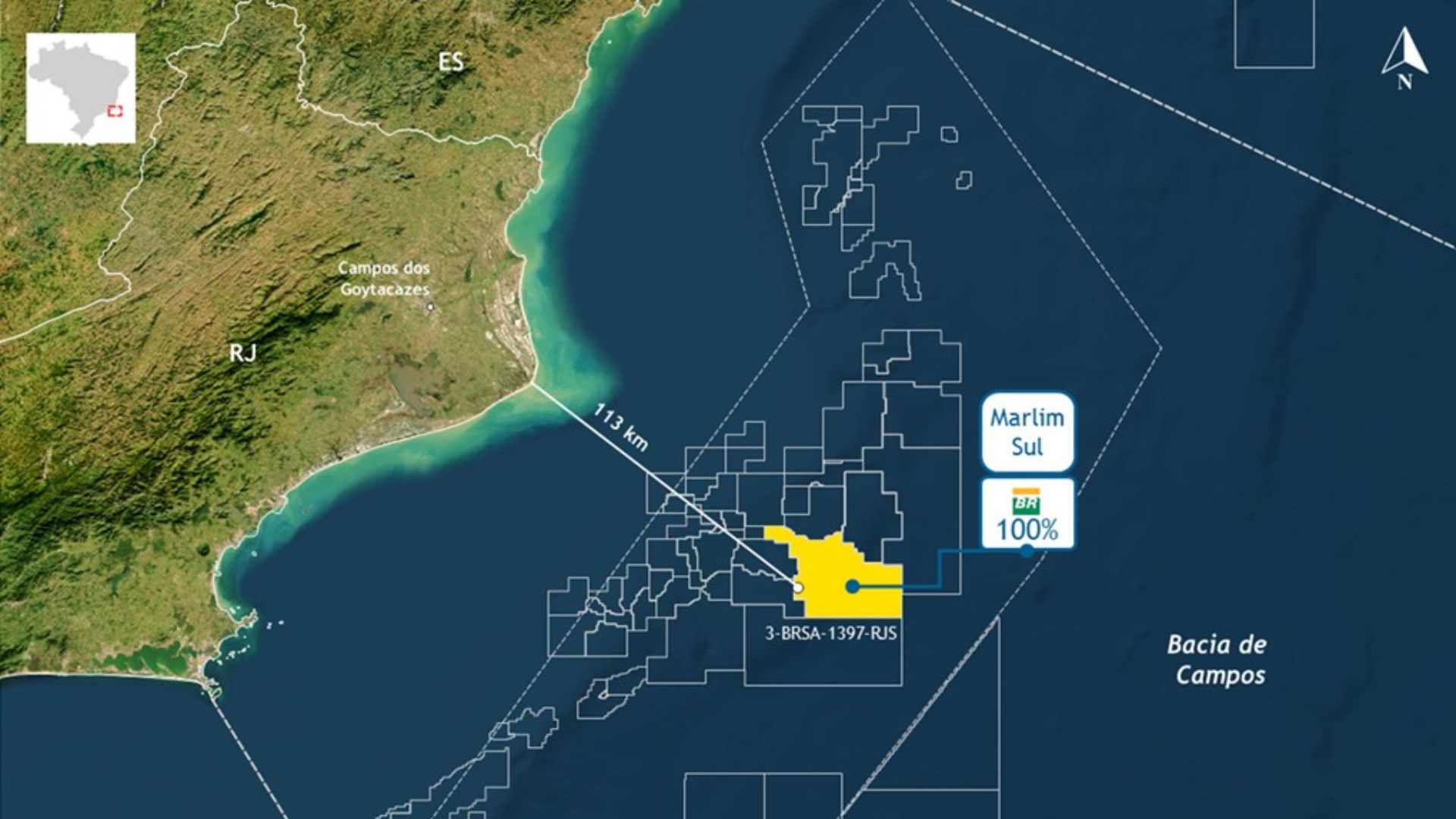
Petrobras finds high-quality oil in the pre-salt at 113 km from RJ and reignites expectations about strategic reserves in the Campos Basin.

-
Ocyan opens registrations for startups focused on innovation in the oil and gas sector and will select projects for Innovation Day with the support of Nexio.


This growth occurs even amid the natural decline of fields, globally estimated at between 8% and 10%. According to the company’s CFO, Luiz Carvalho, the new wells planned more than compensate for this reduction, ensuring stability and production growth in the medium term.
New Wells in Atlanta and Papa-Terra Boost Production
The expansion plan of Brava Energy is directly linked to the development of the Atlanta and Papa-Terra fields, considered strategic for the company.
In Papa-Terra, located in the Campos Basin, two new wells are planned, with an estimated operational start in the fourth quarter of 2026. The expectation is that each well will have a production capacity between 6,000 and 8,000 barrels of oil per day.
In the Atlanta field, in the Santos Basin, another two wells are expected to start operating between the first and second quarters of 2027. Each well has an estimated productive potential between 8,000 and 12,000 barrels of oil per day, volumes considered significant for the company’s portfolio.
High Investments Concentrate Resources on Offshore Drilling
To enable the planned growth, Brava Energy is betting on high investments, especially starting in 2026. The projected Capex for that year totals US$ 550 million, with approximately two-thirds allocated to the drilling of wells in Atlanta and Papa-Terra.
The remaining third will be directed to asset maintenance, ensuring operational safety, productive efficiency, and continuity of operations. According to the company, the drilling of the wells will occur in a combined manner throughout 2026, with the arrival of rigs expected in January. This strategy allows for cost optimization and better logistical planning.
Capex for 2025 Will Be Lower, with Focus on Operational Preparation
For 2025, Brava Energy‘s investment projection is more conservative. The Capex is expected to be below US$ 500 million, according to estimates presented by the Investor Relations Manager, Rodrigo Godoy.
The executive emphasized that the figure is still a projection, as the 2025 fiscal year had not concluded at the time of the announcement. Nevertheless, the company remains focused on operational and financial preparation for the more intense investment cycle expected to start in 2026.
Operational Impacts Affect Production in the Fourth Quarter of 2025
Despite positive outlooks, Brava Energy acknowledges that production in the fourth quarter of 2025 will be affected by specific factors. One of the main events was the suspension of operations in the Potiguar Basin by the National Agency of Petroleum, Natural Gas and Biofuels (ANP), which occurred in October.
According to the company, the impacts are estimated at around 3,000 barrels of oil per day. Additionally, there was a scheduled shutdown in Papa-Terra, initially planned for 12 days, but completed in 10 days, partially reducing the negative effects. There were also scheduled shutdowns in the Parque das Conchas, operated by Shell, alongside operational adjustments in the Atlanta field.
Adjustments in Atlanta Strengthen Brava Energy’s Future Efficiency
According to Luiz Carvalho, the Atlanta field began operations with better performance than expected. Nonetheless, some adjustments were necessary over the past few months, especially in the last quarter of 2025.
These adjustments are considered normal in large-scale offshore projects and do not alter the positive outlook for the asset. The company highlights that operational learnings contribute to greater efficiency when the new wells come online.
Reduction of Financial Leverage Remains a Priority
In addition to expanding production, Brava Energy continues to focus on reducing financial leverage. In the past, the indicator has exceeded 3 times, but finished the third quarter of 2025 at 2.3 times.
The company’s expectation is that leverage will decrease a bit more in the fourth quarter of 2025, influenced by factors such as oil prices. The declared goal is to reach a level below 1.5 times, reinforcing the company’s financial solidity in a high investment scenario.
Company Dismisses Negotiations and Evaluates M&A Market
During the meeting with the press, executives from Brava Energy denied any negotiations with Eneva and claimed to be unaware of any potential movement by Ecopetrol to acquire shares of the company. Luiz Carvalho also commented on the mergers and acquisitions market in the Brazilian oil and gas sector.
According to him, Petrobras’ divestments in recent years have enabled the emergence of a more dynamic market, with greater asset trading and revitalization of mature fields. In the executive’s assessment, any further offerings from Petrobras should mainly occur in offshore assets and not in large corporate mergers.
What Brava Energy’s Plan Reveals About the Future of Oil in Brazil
Brava Energy‘s strategy to reach 100,000 barrels of oil per day by 2027 highlights a planned growth movement, supported by high investments, operational efficiency, and financial discipline. The new wells in Atlanta and Papa-Terra are key to offsetting the natural decline of fields and ensuring productive stability.
At the same time, the reduction of leverage strengthens the company’s position in an increasingly competitive sector. The plan reinforces the role of independent operators in the new cycle of Brazilian oil, focusing on offshore assets, efficiency, and long-term value creation.








-

Uma pessoa reagiu a isso.