





 English
  Francês
  Alemão
  Italiano
  Japonês
  Norueguês
  Portuguese
  Spanish
  4 min of reading
  0 comments


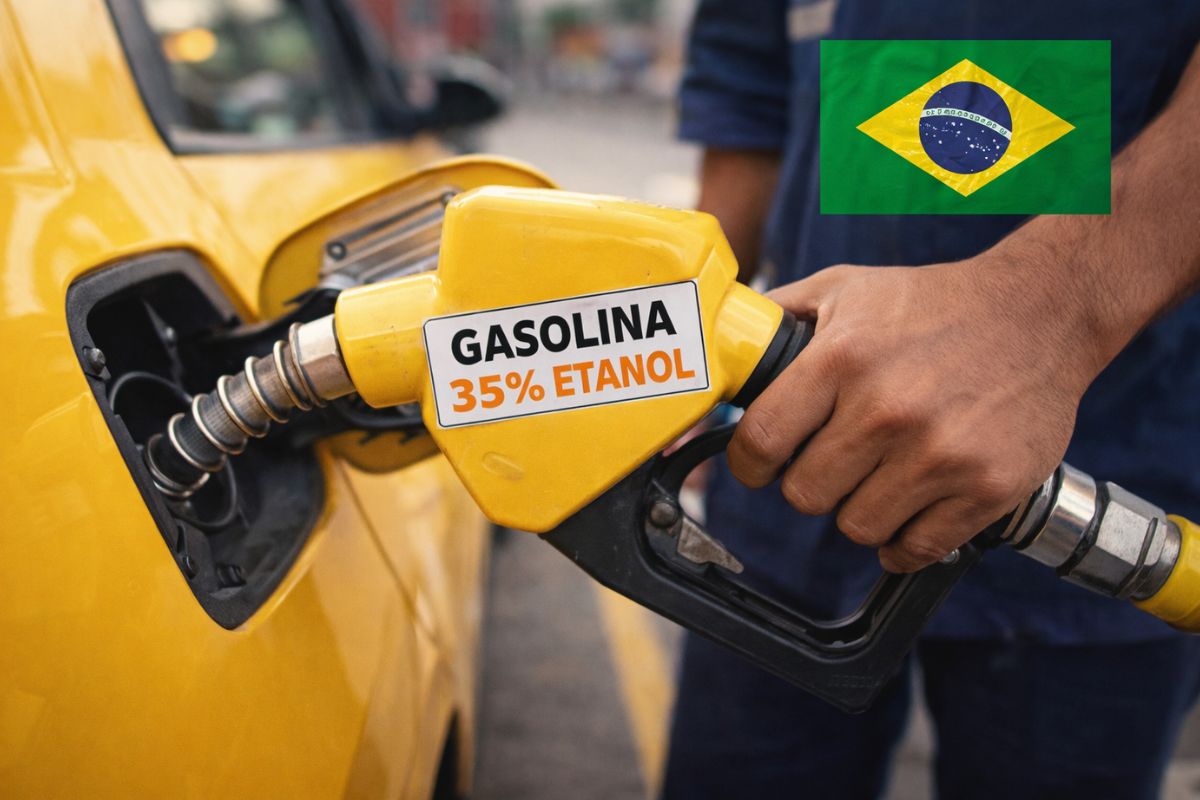
The gasoline sold in Brazil is set to contain up to 35% ethanol and diesel up to 25% biodiesel, according to the Future Fuel Law. The government has established a national research network coordinated by the ANP with an investment of R$ 30 million and a forecast of three years of testing in laboratories of eight universities and institutes.
The gasoline sold in Brazil is about to undergo a historic change. The federal government announced that it has structured a series of technical studies and laboratory tests to evaluate the impact of increasing the ethanol blend in gasoline from 27% to 35%, as well as raising biodiesel in diesel from 14% to 25%. The investment is R$ 30 million and the studies are expected to last three years. The initiative aims to provide the necessary scientific evidence to ensure that the new blends do not compromise engine performance or the safety of vehicles operating in the country.
According to Fecombustíveis, the tests will be conducted by a national research network coordinated by the National Agency of Petroleum, Natural Gas and Biofuels, the ANP. The network includes laboratories from eight institutions: UFMG, IPT, IMT, INT, LACTEC, UFG, UFRJ, and UFRN. The changes are outlined in the Future Fuel Law, enacted in 2024, which sets the targets for increasing gasoline E35 and diesel B25 as part of Brazil’s decarbonization strategy for the transport sector.
What changes in gasoline and diesel with the new biofuel blends

Currently, Brazilian gasoline contains 27% anhydrous ethanol, known as gasoline E27. With the new regulation, this percentage could rise to 35%, resulting in gasoline E35. In the case of diesel, the biodiesel blend will increase from the current 14% to up to 25%, referred to as diesel B25.
-
Expansion of Federal Institutes: 38 new campuses and R$ 200 million for public education; see the cities included.

-
Lula’s government changes rule in important benefit and thousands of Brazilians will no longer receive it; see what has changed.

-
New Gripen fighter makes Argentines surrender to Brazil, and the heavy reaction exposes envy, frustration, and shock at Brazil’s technological leap.

-
This discovered deposit near the Andes could change the future of Argentina, attract billions, and even shake up the global metals market.

These changes will not happen overnight. Technical tests need to prove that the engines of Brazilian vehicles can handle the new proportions without loss of performance, increased consumption, or mechanical damage.
For consumers, the change in gasoline and diesel will be imperceptible at the time of refueling. The composition is altered at the distributor, not at the gas station.
The government’s goal is to increase the share of renewable biofuels in the energy matrix of transportation without requiring drivers to make any adaptations to their vehicles. But for this to be possible, the tests with gasoline E35 and diesel B25 need to demonstrate total compatibility with the existing fleet.
R$ 30 million in research: how the tests will work in practice
The investment of R$ 30 million will be distributed among the laboratories that are part of the national research network coordinated by the ANP. The studies include performance tests of engines with the new gasoline E35, analysis of wear on mechanical components, measurement of emissions, and evaluation of consumption.
In the case of biodiesel B25, the testing plan has already been submitted for public consultation to ensure transparency in the process.
The studies are expected to last three years. The eight institutions involved cover different regions of Brazil and have proven experience in fuel and engine research.
The Permanent Technical Committee of the Future Fuel monitors the entire process, involving not only the government but also vehicle manufacturers, engine manufacturers, and biofuel producers. This joint participation is essential for gasoline E35 and diesel B25 to reach the market safely.
The Future Fuel Law: what it provides and why gasoline will change
The Future Fuel Law (14.993/24), enacted in 2024, is the legal framework that authorizes the increase of the ethanol blend in gasoline and biodiesel in diesel. The legislation is part of Brazil’s strategy to reduce greenhouse gas emissions in the transport sector, one of the largest emitters in the country.
According to the Ministry of Mines and Energy, increasing the ethanol blend in gasoline could prevent emissions of about 55 million tons of CO2 by 2037.
Brazil is already a world reference in the use of biofuels. The ethanol program has been in place since the 1970s, and biodiesel was incorporated into diesel starting in 2005. The jump from E27 to E35 in gasoline and from B14 to B25 in diesel represents the most significant advancement in biofuel proportion in the last two decades.
For the transition to be successful, the R$ 30 million in research is the minimum investment needed to ensure that the Brazilian fleet, composed of millions of vehicles of different ages and technologies, is not harmed.
What drivers need to know about the new gasoline and new diesel
For the average driver, the change in the composition of gasoline and diesel should not require any practical action. The alteration is made at the distribution stage, before the fuel reaches the gas station.
The goal is for gasoline E35 to work in the same engines that currently use gasoline E27, without the need for adaptations. The same applies to diesel B25 in relation to the current B14. However, this compatibility will only be confirmed after the completion of the three years of testing.
There are concerns about how older vehicles, with engines designed for lower proportions of ethanol in gasoline, will react to the new blend. This is exactly the issue that the laboratories will investigate.
The participation of manufacturers in the Technical Committee is a guarantee that the manufacturers are monitoring the results and will be able to guide owners if any adjustments are necessary. Until the tests are completed, the gasoline and diesel sold at gas stations will continue with the current composition.
What do you think about this change in gasoline?








Seja o primeiro a reagir!