





 Portuguese
  English
  Spanish
  5 min of reading
  0 comments


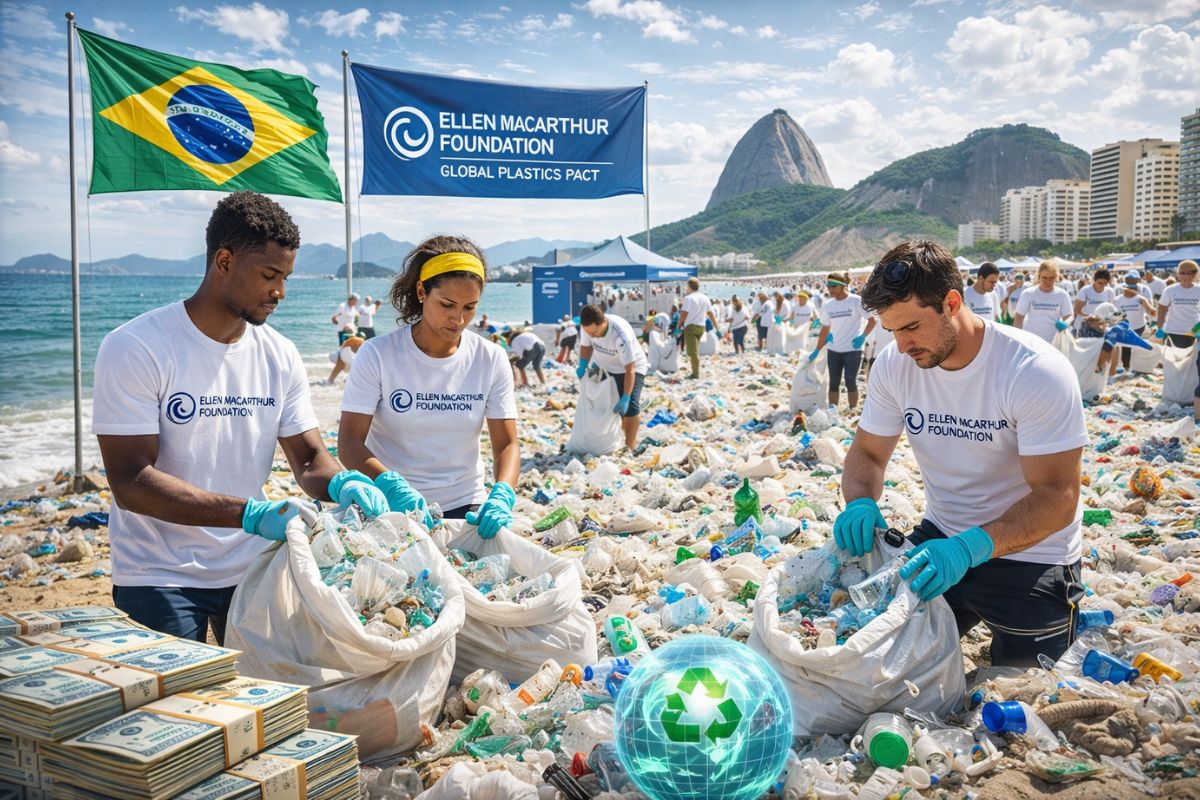
Brazil has been selected as a pilot project for an international plan to combat plastic waste led by the Ellen MacArthur Foundation. The circular economy initiative aims to restructure the production and recycling of packaging in the country with an investment of tens of millions of dollars over five to seven years.
Brazil has just been chosen as the starting point for one of the most ambitious international programs to tackle the plastic crisis. The Ellen MacArthur Foundation, a global reference in circular economy, selected the country as a laboratory to test a model that aims to eliminate plastic waste at the source, redesign packaging, and structure efficient recycling systems all with an estimated investment of tens of millions of dollars and a duration of five to seven years.
The decision transforms Brazil into a testing ground for an issue that affects the entire planet. According to Rob Opsomer, global lead for circular economy for plastics at the Ellen MacArthur Foundation, millions of tons of plastic enter the oceans every year and, at the current rate, there could be more plastic than fish in the seas by 2050. The project starts at the municipal level, tests replicable solutions, and if successful, aims to scale up to states and eventually serve as a model for other countries.
Why Brazil was chosen to combat plastic waste
The choice of Brazil was not random. The country combines continental scale that serves as a stress test for any model with recent advances in environmental regulation.
-
A new study suggests that the Strait of Gibraltar may disappear because the rocks beneath it are triggering a subduction process that could reshape the entire Atlantic Ocean in the next 20 million years.

-
There is a little-known function that allows you to earn a salary in dollars working from home without knowing anything about programming, and Brazilians are already making up to R$ 35,000 per month organizing inventories and routes for American companies.

-
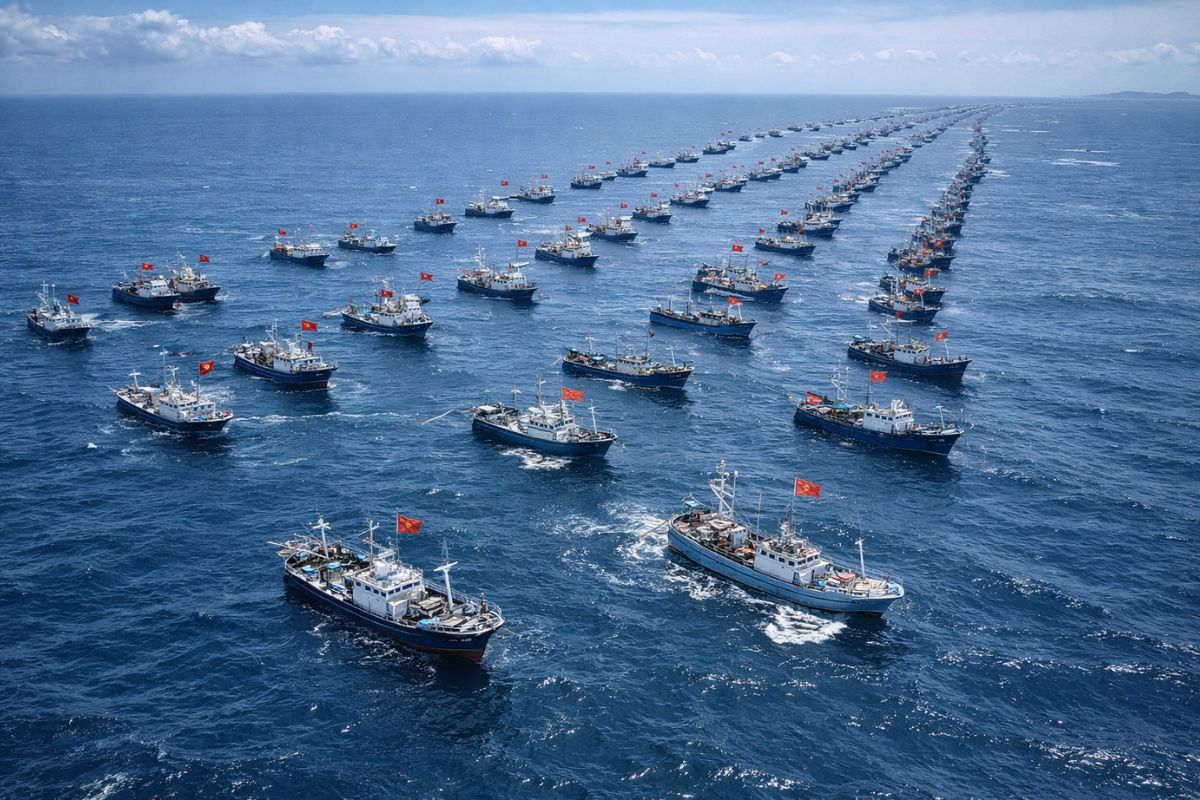
China has deployed over 1,400 fishing boats in formation, creating a barrier of 320 kilometers at sea, and the whole world wants to know if this is fishing, military exercise, or a message of war.
-
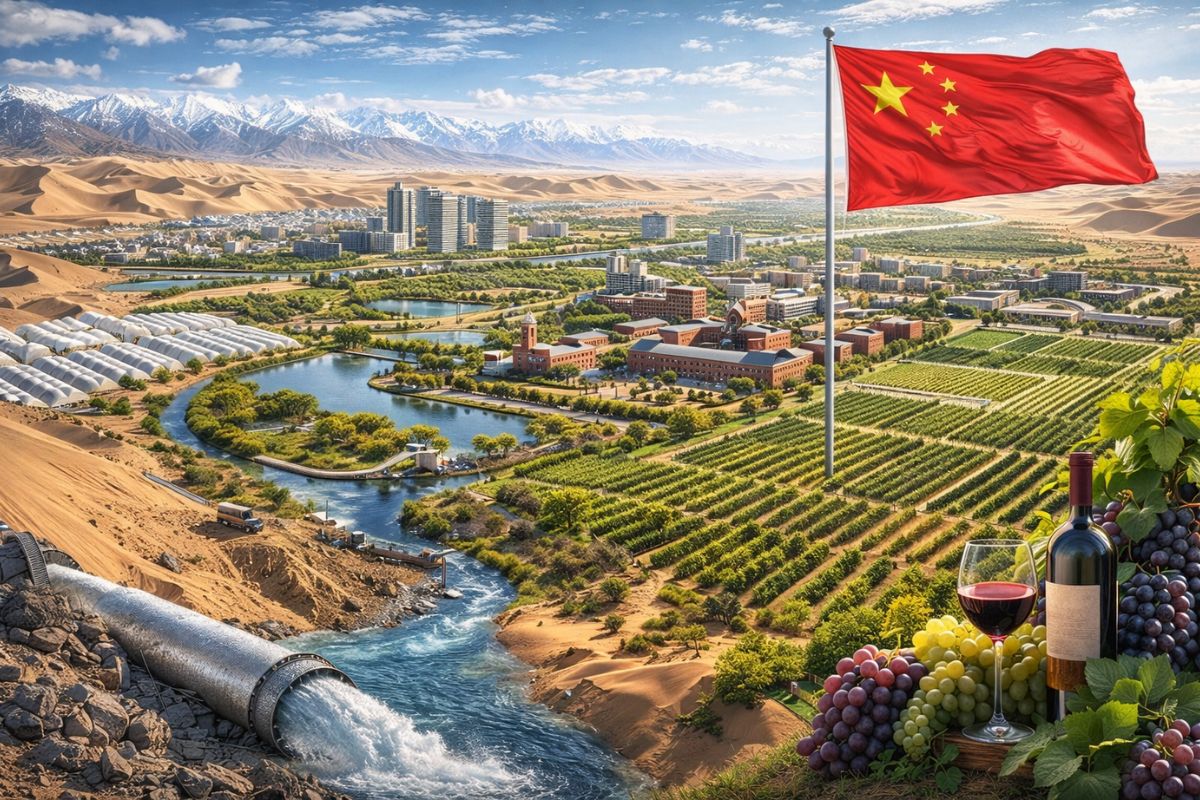
Where there was only sand and wind at 40 degrees, China built a megacity of 500,000 inhabitants with farms, wineries, and universities in the middle of the desert using melted glacier water from hundreds of kilometers away.

Targets for the use of recycled content and incentives for reuse models are already part of the Brazilian regulatory framework, providing the project with an institutional base to work from.
The country’s recent international leadership also weighed in the decision. The hosting of COP-30 and Brazil’s prominence in global environmental negotiations have placed the country in a spotlight.
The project will be developed in partnership with Clean Rivers and will start at the municipalities, with direct dialogue between companies, government, waste picker cooperatives, and recyclers, all key players in the Brazilian plastic waste management system.
The three pillars of the circular economy against plastic
The strategy proposed by the Ellen MacArthur Foundation is based on three pillars. The first is eliminating unnecessary plastics, such as straws, single-use disposable packaging, and items with low recycling value. Instead of simply recycling more, the idea is to reduce the volume of plastic entering the market by replacing it with reusable alternatives.
The second pillar is redesigning packaging to facilitate recycling. This point involves decisions that may seem small but have a huge impact. Transparent bottles, for example, yield more money to recyclers than colored ones, because they cost less to be reused.
The problem is that colors attract consumer attention; a red bottle stands out more than a translucent one. To ensure that no company is individually disadvantaged, the model proposes that the entire sector changes the rules at the same time, in a collective agreement.
The third pillar is structuring efficient systems for the collection and reuse of plastic on a national scale.
The obstacle of financing plastic recycling
One of the biggest challenges of the project is ensuring financial stability for recycling. The costs of the sector vary according to the price of oil, which directly impacts the value of virgin plastic.
When oil is cheap, new plastic costs less than recycled plastic, and the entire reuse system loses economic competitiveness.
To circumvent this problem, the model proposes the creation of a permanent fund funded by contributions from companies that place plastic products on the market. The amount would be calculated proportionally to the volume of packaging produced, creating a mechanism of shared responsibility that does not depend on fluctuations in the commodities market.
This structure is considered essential for plastic recycling to function sustainably in the long term, without relying on temporary government subsidies.
Complex packaging continues to be a technical barrier
Even with advances in redesigning simple packaging, items like snack bags with multiple layers of different materials remain a significant technical obstacle for recycling.
These products combine plastic, aluminum, and other materials in structures that are extremely difficult to separate in current reuse processes.
To solve this type of problem, the project foresees negotiations with the industry so that changes in packaging design occur in a coordinated manner. The idea is for manufacturers in the same sector to adopt common packaging standards, facilitating recycling without any company losing visual competitiveness compared to another.
It is a process that requires time, consensus, and the industry’s willingness to accept that product design directly influences the viability of plastic recycling.
The international pressure for a global agreement on plastic
The project in Brazil takes place in a context of increasing pressure for international regulation. A Business Coalition for a Global Plastics Treaty brings together hundreds of companies advocating for a global agreement to reduce plastic production and harmonize rules among countries.
The logic is that, without international standardization, companies that invest in sustainability are at a competitive disadvantage compared to those that do not invest.
The diagnosis supporting this mobilization is alarming. The majority of plastic produced in the world—about 79%—ends up as waste, and the material takes approximately 400 years to decompose.
If the Brazilian project works and demonstrates that the circular economy is viable in a country of continental dimensions, it could offer a concrete path to reduce plastic pollution on a global scale and serve as a reference for other developing countries.
With information from the portal VEJA.
What do you think about Brazil being chosen as a global laboratory against plastic waste? Do you believe that the circular economy can work in a country of this size, or are the challenges too great? Leave your opinion in the comments.








Seja o primeiro a reagir!