





 Portuguese
  English
  Spanish
  5 min of reading
  0 comments



Brazil wasted more than 20% of the clean energy it could have produced in the last year, a volume equivalent to 10 months of generation from the Belo Monte Hydroelectric Plant. The loss reached 6.5 billion reais, and the crisis led to the abandonment of 509 solar and wind generation projects while the country contracts diesel thermal plants to cover the imbalance.
Brazil has become a global reference in clean energy and now faces a problem that seems paradoxical: it produces more than it can use, transmit, or store. In the last year, more than 20% of the installed capacity of solar and wind energy was wasted, mainly in the North and Northeast regions, where plants are forced to interrupt production because there is not enough infrastructure to transport the surplus. The accumulated loss reached 6.5 billion reais, according to a report from Volt Robotics.
The waste of clean energy is not just a technical problem; it is a sign that the growth of renewable generation in Brazil has surpassed the system’s capacity to absorb it. The share of solar energy in the energy matrix jumped from 1.1% in 2019 to about 20% in 2026, and wind energy increased from 8.8% to approximately 16% in the same period. This advancement has brought an imbalance that the country has yet to resolve: there is excess clean energy during the day and a lack of infrastructure to take it where it is needed.
Why Brazil wastes clean energy it has already produced

The national electric system operator needs to coordinate in real-time the production of hydroelectric, thermal, wind, and solar plants, keeping the generation volume exactly equal to the country’s demand.
-
Piauí will produce a new fuel that replaces diesel without needing to change anything in the truck’s engine and reduces pollutant gas emissions by half: truck drivers from all over the Northeast are already celebrating the news that will arrive later this decade.

-
A new Brazilian shopping center worth R$ 400 million will be built in an area equivalent to more than 4 football fields, featuring 90 stores, 5 cinemas, a supermarket, a college, and parking for 1,700 cars, potentially generating 3,000 jobs.

-
Larger than entire cities in Brazil: BYD is building a 4.6 km² complex in Bahia with a capacity for 600,000 vehicles per year, but the discovery of 163 workers in conditions analogous to slavery has shaken the entire project.

-
With an investment of R$ 612 million, a capacity to process 1.2 million liters of milk per day, Piracanjuba inaugurates a mega cheese factory that increases national production, reduces dependence on imports, and repositions Brazil on the global dairy map.


When the system detects excess supply, it automatically reduces the input of energy and the first to be cut are precisely the solar and wind plants in the North and Northeast.

The problem has two roots. The first is the lack of transmission lines connecting the producing regions to the consuming regions.
The second is the absence of storage technologies on a scale sufficient to hold the surplus clean energy and release it in the early evening when demand increases and solar generation drops to zero. Without transmission and storage, the only option is to shut down the plants and waste energy that could already be in use.
The 509 abandoned projects and the flight of investors
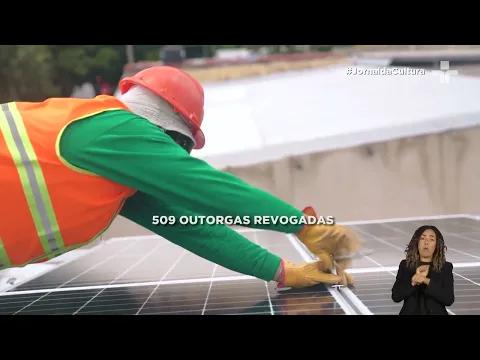
The waste has generated direct consequences in the market. In the last year, the National Electric Energy Agency revoked 509 requests for grants for solar and wind generation projects and the revocations were requested by the entrepreneurs themselves, who assessed that their projects had become unfeasible. The race for subsidies that attracted investors in previous years has turned into a retreat.
Experts point out that the root of the problem lies in the excess subsidies granted to clean energy, especially solar, which stimulated investments without considering the system’s real capacity to absorb the new generation.
“Investors engaged in a sort of gold rush”, summarized an industry analyst. The result is that projects were built where there is not enough demand or infrastructure to transmit the production, generating losses that now scare away national and international capital.
The paradox of contracting diesel thermal plants to compensate for clean energy
In one of the most evident contradictions in the Brazilian energy sector, the government negotiated new contracts for thermal plants powered by diesel oil, fuel oil, and biodiesel—the very type of dirty energy that solar and wind expansion should replace.
In practice, these thermal plants function as a capacity insurance: they stand by to operate when clean energy is not available, especially in the early evening.
The cost of this insurance is significant. The thermal plant auction will generate an annual cost of approximately R$ 40 billion to keep these plants available, even if they do not operate most of the time.
The situation has led experts to describe the scenario as “sweeping ice with thermal plants,” a costly and polluting solution to a problem that should be solved with transmission and storage of clean energy.
The 1,468 km transmission line that can help
One of the ongoing solutions is the construction of the Graça Aranha-Silvânia transmission line, extending 1,468 km. The project will cross Maranhão, Tocantins, and Goiás, interconnecting the clean energy production from the North and Northeast to the Central-West, South, and Southeast regions, where most of the demand is located. The forecast is for it to be completed in early 2028, at a cost of R$ 18 billion.
When operational, the line should significantly reduce waste, allowing the solar and wind energy produced in the Northeast to reach consumer centers.
But until then, the country will continue to waste clean energy every day, accumulating losses and keeping polluting thermal plants in operation to cover the gap created by the lack of infrastructure.
Large-scale batteries: the other missing piece
The first large-scale clean energy storage system in Brazil has been operating since 2023 in Registro, in the interior of São Paulo.
There are 180 battery racks occupying 5,000 square meters, with a power of 30 MW capable of delivering 60 MWh for two hours.
The system acts as a reinforcement to the electrical grid during peak hours, benefiting about 2 million people in the southern coast of São Paulo.
The Ministry of Mines and Energy expects that the first battery auction in Brazil will take place in the first half of the year.
The expectation is that systems like this can be deployed in regions where the surplus clean energy would be stored during the day and released at night, eliminating the need to cut solar production and reducing dependence on thermal plants.
However, the speed of implementation is still considered insufficient given the scale of the problem.

With information from the Jornalismo TV Cultura.
What do you think of this paradox? Is a country that wastes clean energy and contracts diesel thermal plants on the right path or does it need to change strategy? Leave your opinion in the comments.








Seja o primeiro a reagir!